About Bonaire
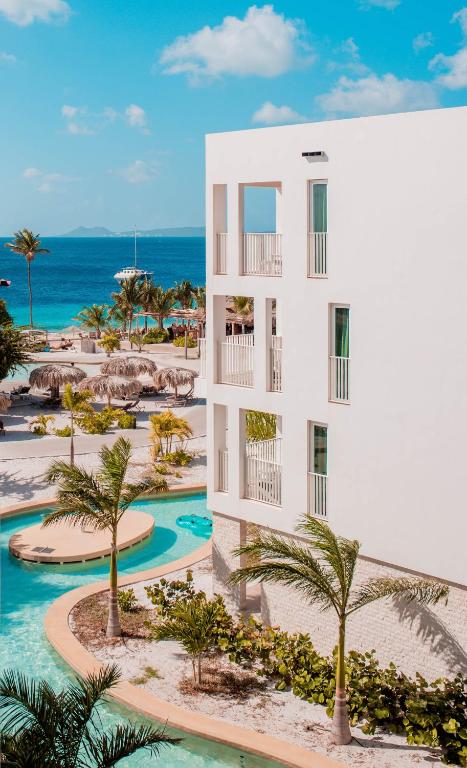
Bonaire rewards a week built around the water, with shore diving on the west coast, windsurfing at Lac Bay and boat trips to Klein Bonaire's white sand. Kralendijk adds colourful streets, restaurants and a waterfront to return to after a day outside.
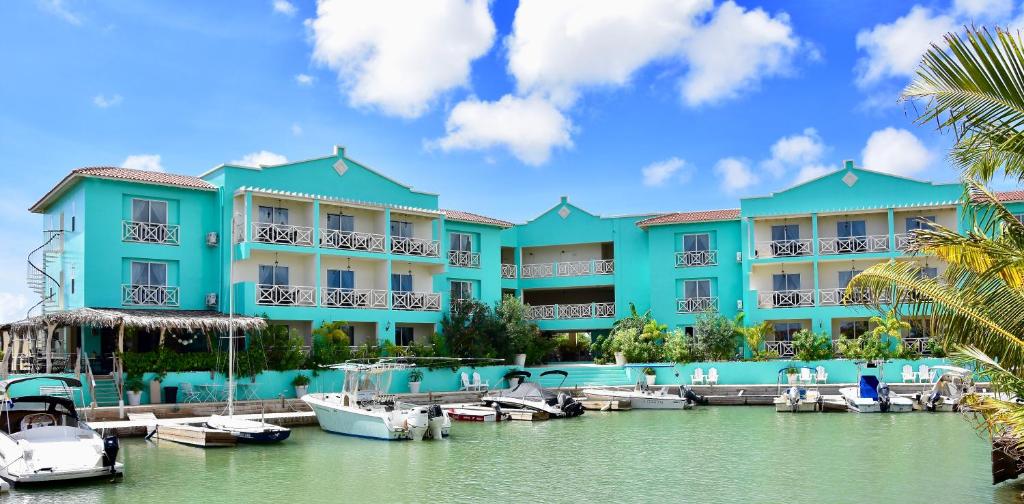
The accommodation choice changes the routine: Hato concentrates dive-oriented stays; Belnem puts southern coast outings within reach; Sorobon keeps the lagoon close. None of these labels guarantees a sandy bathing beach.
Compare the actual water entry, gear facilities and driving needs, then leave room for Rincon's heritage, salt landscapes and the dry hills of Washington Slagbaai.
Common questions
Where should I stay for a first visit, and for how long?
Central Kralendijk works for restaurant choice and organised outings; Hato or Belnem makes sense when the dive centre and water access drive the decision. We suggest 5–7 nights to combine water days with Klein Bonaire and a land excursion without repeatedly packing up. One base usually works well for that plan, while Sorobon is a deliberate choice for spending much of the holiday at Lac Bay rather than returning from the western coast each morning.
Which airport should I use, and how do I reach the accommodation?
Arrive at Bonaire International Airport, also called Flamingo Airport, code BON, just south of Kralendijk. The airport taxi stand is on the left as you leave the terminal, and rental companies also operate there; arrange a pickup if your accommodation offers one. Send the actual property address and arrival details, especially for a Lac Bay stay, and do not assume that an airport-side address means a comfortable walk with luggage.
Do I need a rental car?
A car makes it easier to combine scattered shore entries, groceries, Lac Bay and the north of the island; a pickup is particularly useful when carrying dive tanks and wet equipment. A central stay can work without one if your outings include transfers and you arrange taxis for the remaining journeys. Traffic keeps right, so confirm the vehicle and insurance arrangements with the rental company, reserve an automatic if needed, and leave extra time for unfamiliar roads and roaming animals.
What matters when choosing accommodation for shore diving?
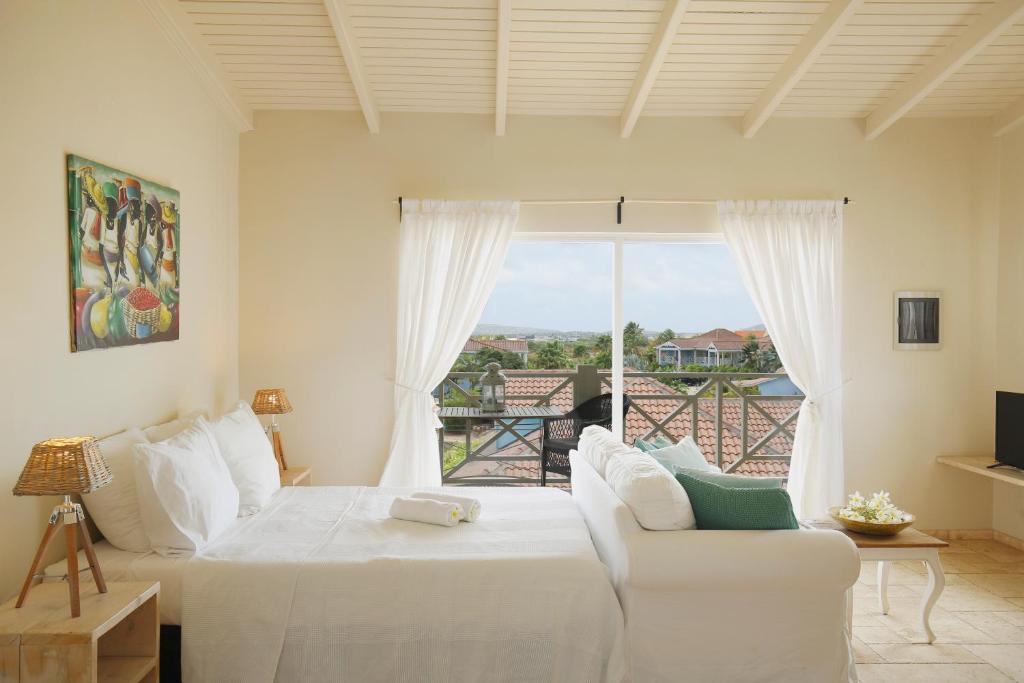
Compare the dive operation, tank collection, rinsing and storage facilities, and the exact route from your room to the water; these can matter more than a balcony view. Shore sites use yellow name stones, but rocky entries and ladders vary, so complete the required arrival orientation dive and choose sites with your operator rather than assuming every reef suits beginners. STINAPA asks divers and snorkellers to disinfect equipment before their first and after their last island session, and to follow current site restrictions without touching or collecting marine life.
Is Bonaire suitable for a beach holiday with children?
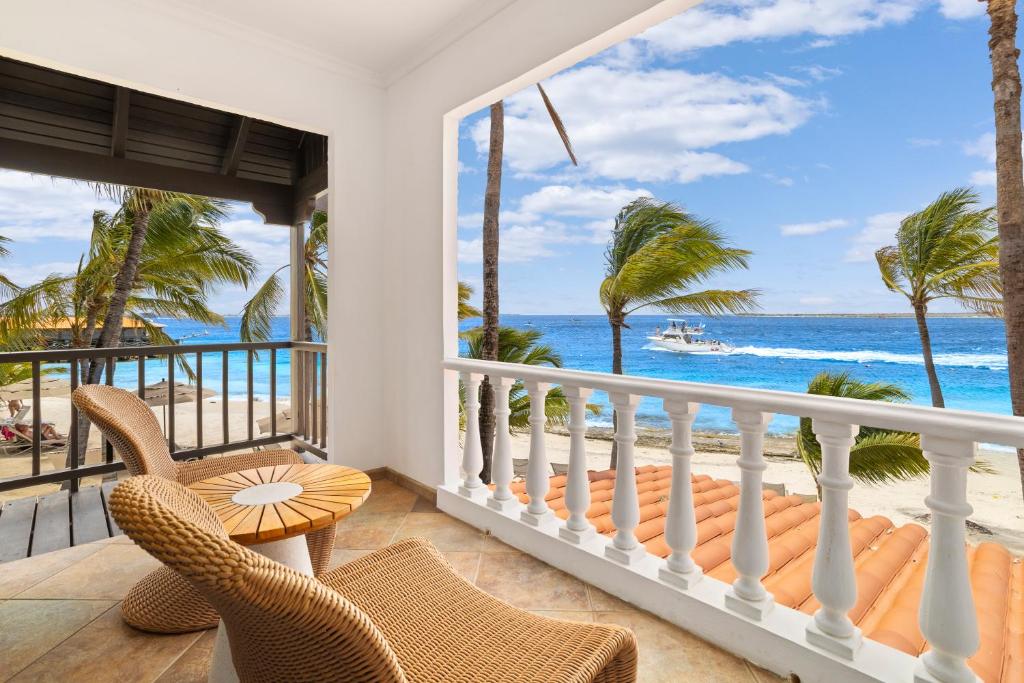
It can be, provided you choose the actual beach and pool rather than relying on a beachfront label: many western stays reach the sea by rocks or a ladder. Sorobon has sandy, shallow water within designated swimming areas, while Bachelor's Beach has steps and the town shoreline requires attention to harbour activity. Check child policies, shade and water conditions, and arrange the required STINAPA Nature Fee before sea activities, consulting its current exemptions; this is separate from the island's visitor entry tax.
Can I combine windsurfing, snorkelling and a mangrove visit at Lac Bay?
Yes, but plan each activity in its designated area: Lac Bay's windsurfing water, swimming areas and protected seagrass are not interchangeable. Use a certified guide to enter the mangrove forest; the Mangrove Center offers a one-hour paddle and a longer kayak outing with optional snorkelling, so companions can choose how much time to spend in the water. Follow the current local zoning, keep off seagrass and allow for the bumpy access road, particularly after rain; Sorobon's windsurfing setting is different from the kitesurfing entry at Atlantis on the southwest coast.
How does a day trip to Klein Bonaire work?
Water taxis reach No Name Beach from the Kralendijk waterfront and the Hato side; allow roughly 15–30 minutes depending on the departure pier and confirm your return boat with the operator. Klein Bonaire is uninhabited, with white sand, limited shelters and no running water or toilets, so bring drinking water, food and sun protection. Follow the crew's instructions for any drift-snorkelling drop-off and the marine-park rules, keeping this as a day trip from your main-island accommodation.
When should I come for water activities?
Bonaire stays warm throughout the year, with easterly trade winds; February–May is generally drier, while October–January brings more rain. Choose windsurfing dates with your school and check wind, swell and sea conditions for boat or snorkelling plans rather than using rainfall alone. The island lies on the southern fringe of the Atlantic hurricane region, where direct impacts are less frequent than farther north, but distant storms can still affect the water and heavy rain can disrupt unpaved routes.
What should I know before visiting Washington Slagbaai?
The park normally opens Tuesday–Sunday; check the day's entry arrangements because holidays and heavy rainfall can change access. Choose a suitable high-clearance vehicle or organised tour, carry food, water, identification and your Nature Fee proof, and follow the rangers' decision on road conditions. STINAPA's information checked in November 2026 keeps the park closed to scuba diving while other activities continue, so plan it for dry landscapes, birds, walks and permitted swimming or snorkelling rather than a diving day.
What else can I do between water days?
Spend time in Rincon and at Mangazina di Rei for the island's cultural history, then make a separate southern outing past the salt landscape. The small historic huts there were sleeping quarters for enslaved salt workers, so they deserve attention as part of Bonaire's history. Look for flamingos from the public road or permitted viewing points with binoculars, without entering the Pekelmeer sanctuary, and return to Kralendijk for a choice of local and international restaurants.
Prices are set by the booking site. We may earn a small fee, at no cost to you.