On this page
Short answer.
Book Yufuin if dinner, a long soak and a walk to Lake Kinrin in the morning are the trip you want. Choose central Beppu if you are arriving late or want to pick your baths and meals separately. Stay in Beppu's Kannawa district if you want the hot spring neighbourhood at your door. From Hakata, both towns work without a car.
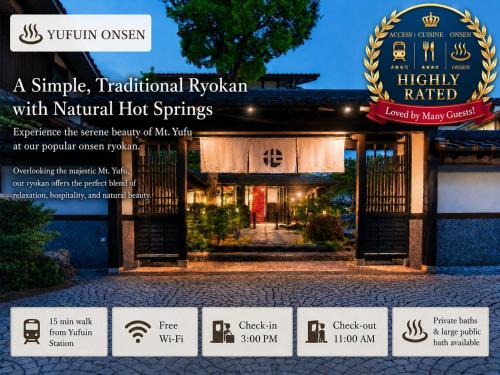
A night at a hot spring inn can occupy surprisingly little of a trip to Japan. By the time you take an afternoon train, wheel your bags across town and sit down to dinner, there may be little left of the day. The evening and the following morning have to justify the stop. That is where Beppu and Yufuin make different promises, and where the address and booking plan matter more than the name of the town.
Both are in Oita Prefecture. Yufuin gives you a trip you can largely draw as a line between the railway station, your inn and Lake Kinrin. Beppu requires a choice of neighbourhood. The station and coast make a useful base for visitors spreading the baths across town. Kannawa makes it easier to spend the evening where you were sightseeing in the afternoon. Choose the evening first, then find the train that leaves enough time to enjoy it.
Which part of each town should you book?
| Base | Good fit | Plan the first afternoon around | Confirm with the property |
|---|---|---|---|
| Yufuin between the station and Lake Kinrin | One night, mainly on foot, with a lake walk and dinner at the inn | Dropping your bags and getting to the inn before its meal cutoff | Distance from the station with luggage and the actual dinner time |
| Yufuin outside the central walking route | A room and bath you intend to spend time in, with the town as an optional outing | Station pickup and check-in | Pickup hours, reservation requirements and the next morning's ride |
| Beppu near the station or toward the coast | A flexible arrival, meals out and a choice of baths | The first bath you want to use and a walk to dinner | Whether the hotel's bathing facilities are open at your arrival time |
| Beppu in Kannawa | A night in a hot spring neighbourhood, with geothermal sights and steam cooking in the same outing | A local bus or taxi from Beppu Station, then sightseeing on foot | How far the stop is from reception and whether there are slopes or steps with bags |
Give a property the same test regardless of which row it falls into. Open the map pin for the entrance, then picture the arrival you will actually make. A walk that looks pleasant in the morning may be a nuisance with suitcases in the rain. An inn that meets you at the station may be easier to reach than a property halfway up a hill within the nominal town centre. Ask for the pickup window before paying for a train you cannot change.
How long the scenic train actually takes
The Yufuin no Mori is a good reason to take the inland route, especially if the journey is part of your holiday. It is also easy to mistake the train's Beppu service for the quickest way to get there. JR Kyushu's January 2026 timetable shows how much time the through service adds after calling at Yufuin. We subtracted Hakata departure from arrival for each outbound run. Train No. 3 appears twice because it calls at both destinations.
- Scheduled minutes from Hakata
Source: JR Kyushu Yufuin no Mori timetable as of January 2026, checked 2026-11-16. Journey times calculated from published departure and arrival rows.
For Yufuin, the running time varies by only nine minutes across these examples. The departure you choose matters much more. The afternoon run in the sample reaches Yufuin at 16:50. That can work for a room-only stay near the station. For a dinner package beyond the centre, first send the inn that arrival time and ask whether its pickup and meal schedule can accommodate it. The late morning arrival gives you room to drop luggage and walk before check-in.
For Beppu, start by looking up the Sonic from Hakata. The Japan National Tourism Organization gives roughly two hours from Hakata to Beppu by rail, which makes a different shape of day from the scenic service via Yufuin. Check JR Kyushu's calendar if the Yufuin no Mori train itself is part of the plan. The railway says it uses a Yufu service on the same timings when the scenic train is unavailable. A timetable entry alone is a poor way to tell which train you will ride.
How to spend the night in Yufuin
Get the timing of dinner right
If this is the one ryokan stay on a longer trip, give it the afternoon. Take an earlier train, drop your bags if the property agrees and use the station-to-lake walk for a first look around. JNTO puts the walk from Yufuin Station to Lake Kinrin at about 25 minutes. Treat that as walking time for a direct outing. Stops at shops or cafés, a diversion to your accommodation and time around the water all belong outside that estimate.
Make sure you understand the dinner plan before deciding where to eat lunch. If dinner is included, send any dietary requests before booking and ask the inn what it can serve. Ask what time you need to be at reception and when dinner actually starts. If breakfast is included and you want to see the lake early, find out whether the dining time leaves room for an outing beforehand. These answers help you plan an evening even if you arrive without mobile service or the train runs late.
A room-only plan sets up a different trip. You can arrive with less time pressure and choose dinner yourself. Check the hours of a place you would actually eat, especially if the inn is outside the centre, then ask whether you can get back without relying on a last-minute car. A pleasant photograph of a lane between town and the inn tells you very little about walking it after dinner with no umbrella.
Save a lake walk for the morning
The lake's appeal changes with the hour. The national tourism office highlights the mist on autumn and winter mornings, when water from warm and cold sources can give the surface a different look from the afternoon. Take that as a reason to try an early walk if you are staying nearby. On a cloudy morning, the time can still be well spent around the shore and at the small shrine at the southern end. Pair the walk with breakfast at the inn if the timing is easy.
If you have a room farther out, decide whether the bath or the lake gets the morning. You have paid to be at the property, and an uninterrupted soak and breakfast may be what you remember. Consider visiting the lake on arrival day and leaving the following morning for the inn. Plan this by looking at the actual checkout time, your means of getting back to the station and whether you need to arrive early to collect a ticket.

How to spend the night in Beppu
Stay near the station for an easy arrival
Central Beppu fits well between longer rail legs. Drop your bags near the station or coast, choose a bath with hours that work, then decide on dinner after you know roughly when you will finish. This is also the better base if one person wants to bathe and another wants to walk around or spend the evening at the hotel. If you book by the coast for a particular view, confirm the room category. A hotel can advertise a view from its bath or dining room while selling bedrooms that face elsewhere.
Use the next morning for Kannawa if you have enough time before your train. Visit Oita and JNTO both put the ride from the station area in the order of tens of minutes. Waits and the final walk depend on your stop and service. Leave bags at the hotel by arrangement if you are returning through the station. If you have reserved a seat onward, work back from your train and decide how many sights you can enjoy without hurrying.
Stay in Kannawa if the neighbourhood is the point
Visit Oita describes Kannawa as a district where the hot spring landscape and steam cooking belong in the same outing. Let that shape the day. Visit one or two of the geothermal sites in the afternoon, try food cooked with the steam if it suits your meal plans, then go to the bath you have chosen. The coloured pools and geothermal features at the Hells are for viewing. Arrange your bathing separately, either at the inn or a facility that accepts visitors.
JNTO groups five of the seven Hells around Kannawa and the other two in Shibaseki. That suggests two sensible outings. Stay within the Kannawa cluster for a compact visit, or check the next bus connection and continue to the other pair if seeing all seven matters to you. Start with a smaller plan when you also have a dinner reservation. If the bus connection does not fit, you still have a walk, a bath and supper in the neighbourhood you chose to stay in.
What to check before booking an onsen room
Start with the bath description. A private bath attached to the room, a communal bath and a private bath reserved by the session are three different experiences. If an in-room bath is the reason for the booking, ask whether the exact room you are selecting has one and whether it uses hot spring water. For a private session, ask when you can request a slot, how long it lasts and whether it costs extra. A shared bath can be an excellent choice if its hours work and everyone in the party can use it.
Ask about tattoos directly if anybody in your group has one. JNTO explains that facilities set their own policies and that some accept small tattoos with covers. Ask whether the rule differs between shared and private baths. The same habit helps with accessibility. Check the route from the room to the bathing area and what you will encounter at the wash station and bath entrance. Someone working from the property can answer those questions more precisely than a site-wide accessibility icon.
In a typical shared onsen, wash and rinse before entering the water and keep your towel out of the bath. JNTO notes that most shared baths expect nudity and are separated by sex. If bathing together matters to your party, book a suitable private option and confirm who can use it. Ask whether the property provides towels, too, especially when you plan to go to a separate neighbourhood bath before reaching the inn.
Can you fit both towns into a single night?
You can, if you give one of them the night and make the other a distinct outing. Leave Hakata early for Yufuin with a booking close to your route. Take the afternoon and evening for the inn, then head to Beppu the following morning using a dated rail or bus schedule. JNTO's Oita itinerary includes a Kamenoi Bus link between Yufuin and Beppu. Pick a specific trip, check the stop and confirm what the operator can take if you have large bags. In Beppu, choose either the station-and-coast outing or Kannawa before moving on.
Going the other way works when the Beppu sightseeing matters more and Yufuin is a quieter second day. Reach Beppu on the Sonic, sleep in the neighbourhood you want to explore and use the next day for the station-to-lake walk. Pick a departure from Yufuin that leaves time to collect your bags. If you are still choosing which town should get the overnight, ask which evening you would be more disappointed to lose. Give the night to that town and simplify the other visit accordingly.

