About Sainte-Marie Island
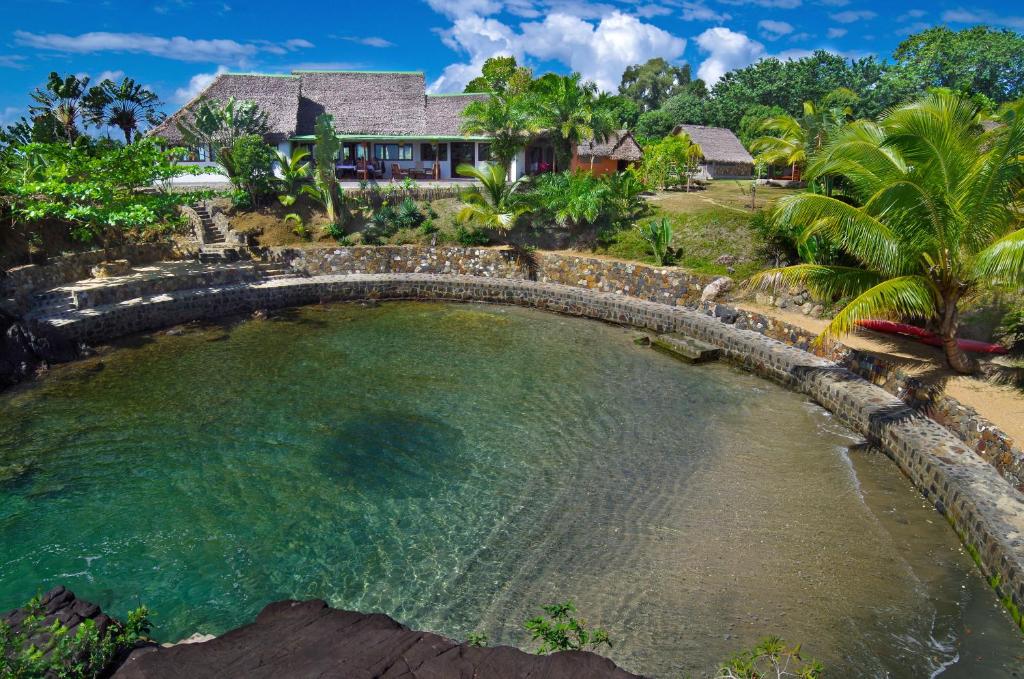
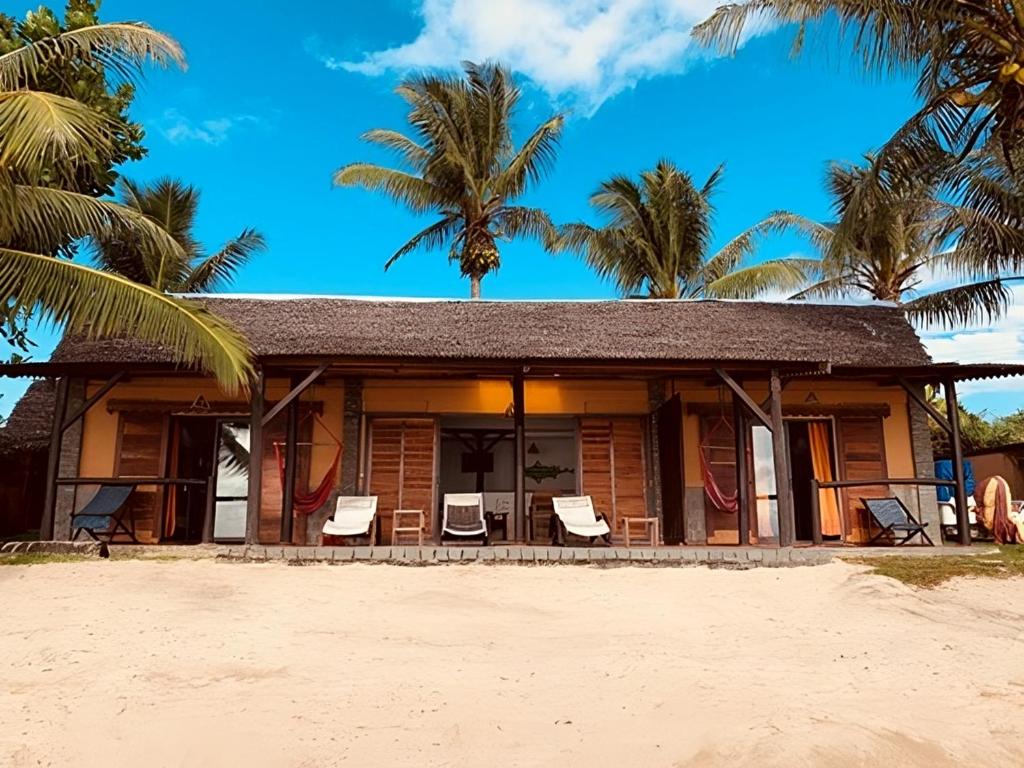
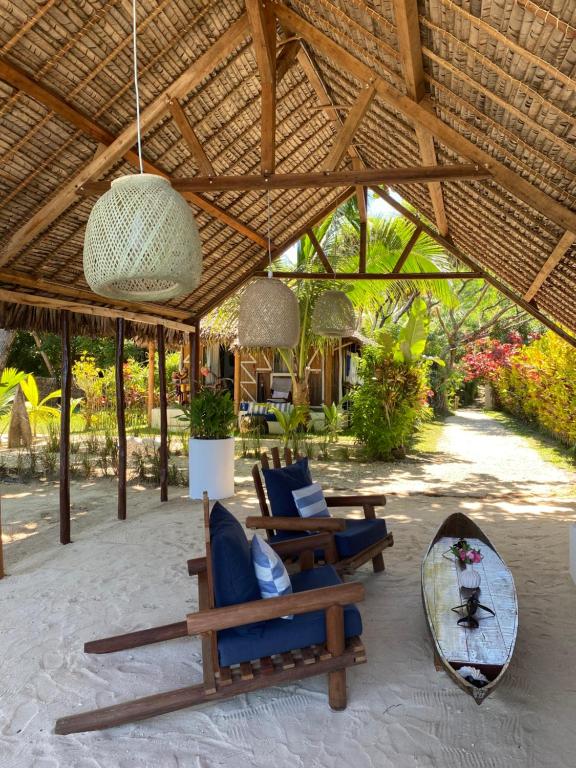
Sainte-Marie, also called Nosy Boraha, is an island off Madagascar’s east coast where the address shapes the holiday. The southern lagoon coast puts you nearer the airport, with rooms, villas and overwater options; the shore near Ambodifotatra makes town errands and port access easier.
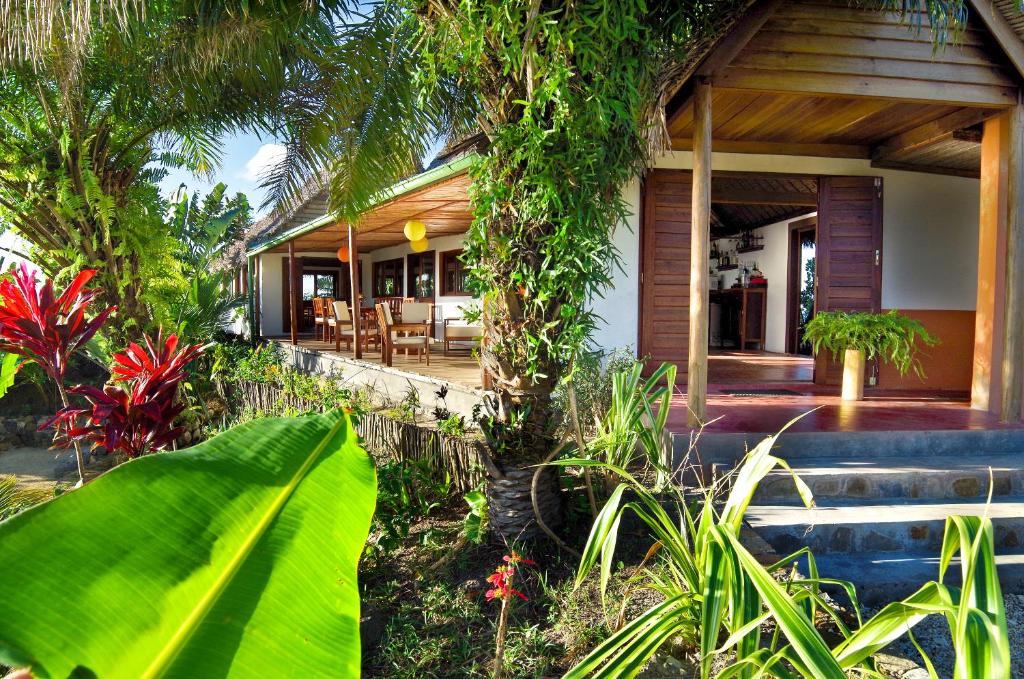
Further north, garden lodges and coves suit days spent around the property, while the eastern coast brings different lagoon and beach settings. Humpback-whale trips are seasonal, rain can arrive throughout the year, and sea access changes with the tides. This guide covers the main island; the smaller Île aux Nattes is a separate excursion.
Common questions
How many nights should I spend here, and do I need two bases?
Allow four or five nights for a coastal stay with time for a town visit, an island outing and a weather-dependent boat trip. One well-chosen base works if you arrange transport and accept that northern or eastern excursions can take a substantial part of the day. Split the stay when you specifically want both southern convenience and several quieter days at a distant lodge, allowing for the transfer between them.
How do I reach Sainte-Marie by air or sea?
Check the current Antananarivo–Sainte-Marie Airport (SMS) flight for your date and send the confirmed arrival details to your accommodation. By sea, El Condor describes about four hours from Mahambo, with a separate passenger shuttle of about three and a half hours from Tamatave to Mahambo; the tourism office’s roughly two-hour crossing from Soanierana-Ivongo is a different route. Confirm your port, operating day, weather and tide-dependent boarding, and leave a buffer before an onward flight.
Can I explore without hiring a car?
The tourism office lists tuk-tuk, taxi, car-tour and boat providers, so you can arrange individual journeys and excursions without self-driving. Ask for the road journey from your actual lodge, the condition of the final approach and a return pickup, especially for northern coves or the northeastern coast. A short distance on a map does not provide a reliable travel time, and a remote evening return needs arranging in advance.
When are the whales here, and how should I choose a trip?
The national tourism office places the humpback-whale season generally between June and September, with variation between years. Choose an operator following Cétamada’s observation charter and ask about its guide, approach practices and the conditions for your intended departure. Treat an encounter as wildlife watching: neither a sighting nor a particular distance from an animal can be promised.
Which months are cooler or less rainy?
May to October is generally the cooler part of the year, but Madagascar’s meteorological service says the eastern coast has no clearly defined dry season, with a relative reduction in rainfall in September and October. Rain remains possible during the June–September whale season, so pack for wet outings as well as beach time. November to April is normally cyclone season; keep transfers flexible and follow current local forecasts and operator decisions.
Can I swim from every beach or natural pool?
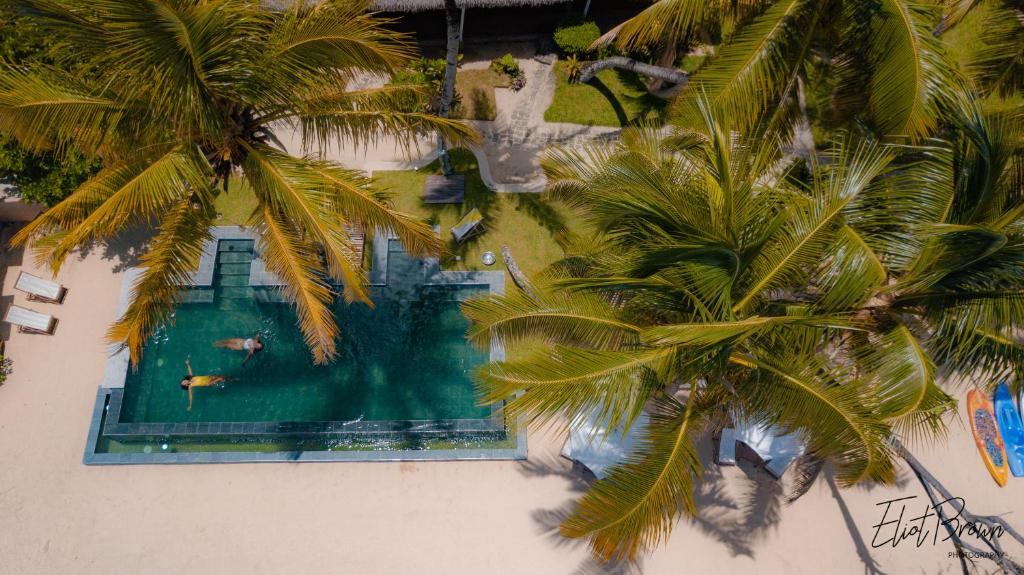
Ask the host about the current swimming entrance, tide, depth and sea conditions at the specific property. A tidal lagoon, an ocean beach, a natural rock basin and a built swimming pool offer different conditions, and none should be assumed supervised from a photograph or room description. Northern natural pools also include sacred sites with local customs, so arrange local guidance and ask where visiting or bathing is appropriate.
What else can I do beyond beaches and whale trips?
Around Ambodifotatra, combine the Saint-Pierre cemetery and Saint-Joseph church with a locally arranged heritage visit, checking access on the day. Ampanihy Bay on the eastern coast offers mangrove outings by pirogue, while waterfalls and northern natural sites can form separate excursions. Plan the location and transport with a guide; an eastern-lagoon hotel is not automatically at Ampanihy, and a northern outing takes more planning than a town walk.
Can I visit Île aux Nattes while staying on the main island?
Arrange a pirogue outing to Île aux Nattes, also called Nosy Nato, as a separate day visit south of Sainte-Marie. Once there, walking and a visit towards the Blévec lighthouse can be discussed with a local guide or boat provider. Agree both directions and the latest suitable return for the conditions; a main-island hotel booking does not include this crossing automatically.
What should families check about bedrooms, bathrooms and kitchens?
Request the exact category and floor plan, including enclosed bedrooms, mezzanines, fixed bunks or sofa beds, and confirm the children’s ages and any requested cot or extra bed. Some family units share one bathroom within the party, while certain overwater huts have a private bathroom on land rather than inside the hut. A villa kitchen is different from a kettle or minibar, so confirm cooking equipment, stair access and supervision around the sea or pool.
How should I plan meals, payments, Wi-Fi and arrival?
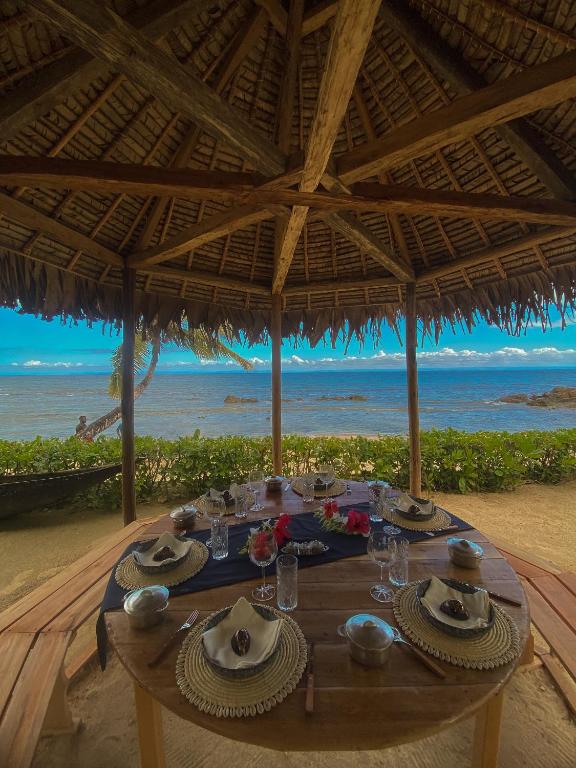
Confirm whether the selected offer includes breakfast or half-board, and arrange groceries or a late meal before a remote arrival. The tourism office lists bank ATMs in central Ambodifotatra, while accommodation terms vary between cash, cards and advance transfer, so agree the actual method before leaving town. Send your flight or boat details, confirm pickup and check-in, and ask specifically about room Wi-Fi, charging and hot water rather than assuming every facility is available in every category.
Prices are set by the booking site. We may earn a small fee, at no cost to you.