About Barranquilla
Barranquilla brings Carnival culture, generous Caribbean cooking and a long riverfront into a city stay. El Prado offers leafy streets and heritage houses, while Alto Prado puts cafés, restaurants and fuller hotel facilities close together.
Farther north, Buenavista, Riomar and Villa Santos combine shopping with a range of full-service hotels; Portal del Genovés is a separate inland setting that needs more deliberate transport. Plan the Gran Malecón as an outing on the Magdalena, and reserve time for Barrio Abajo's murals and the Carnival museum.
Your choice is mainly about architecture, daily dining and journeys across a hot, spread-out city.
Common questions
Which area is best for a first visit?
Choose El Prado when the house, garden and architectural surroundings are part of the trip. Alto Prado gives a convenient mix of dining and hotel facilities, while Buenavista, Riomar and Villa Santos favour shopping and larger northern hotels. Portal del Genovés needs a more deliberate transport plan and suits travellers who value a particular modern room or loft layout. Put your intended cultural visits, dinner addresses and event venues on the map before choosing.
How many nights should I plan?
Three nights give you two full days for El Prado and Barrio Abajo, the riverfront and a selected nature outing, with room to arrive and settle in. Two can work if you focus on the city and one main cultural visit. Carnival deserves a schedule built around the actual events you want, with an arrival buffer before the first one. Avoid filling every afternoon: the heat makes a pause at the hotel useful.
How do I reach the hotel from the airport?
Ernesto Cortissoz Airport, BAQ, is in Soledad, on the southern side of the metropolitan area. An authorised taxi or arranged transfer gives a direct arrival at the hotel's address. The city's current transport guidance lists feeder A3-31 between the airport and Portal de Soledad, where you can connect into Transmetro. Confirm the current stop, service hours and onward connection before travelling with luggage; a northern hotel and an El Prado address do not have the same final journey.
Can I explore without renting a car?
Yes, with a mixture of local walks and transport between districts. Transmetro combines its main routes with feeder services, while other city buses cover additional corridors. Plan the specific route rather than assuming a station is beside your hotel. For an evening return, a venue with a fixed start time or Portal del Genovés, arranging the ride is often simpler. The riverfront is long, so choose the section you want to visit and agree the pickup point.
When is the weather most comfortable for sightseeing?
Barranquilla is hot throughout the year. Historical IDEAM climate descriptions identify December–April as relatively dry and May–November as wetter, with particularly frequent rain around September–October. These are seasonal patterns, not a guarantee for a particular day. Plan architectural walks and mangrove visits early or later in the day, and leave the hottest hours for a museum, lunch or the hotel. Check the current forecast before an outdoor event or water activity.
What changes when I visit for Carnival?
The official main Carnival dates for 2027 are 6–9 February, with other events scheduled before the four main days. Choose the specific parade or performance, then verify its venue, admission arrangements and actual access route. A hotel in a Carnival city does not automatically have a parade view or include event tickets. Allow extra time for arrivals, meeting points and the return after a crowded event, and check the latest programme rather than reusing another year's timetable.
Where can I experience the city's culture outside Carnival?
The Museo del Carnaval in Barrio Abajo explains the celebration through its history, costumes and traditions. Its current visitor page normally lists Tuesday–Sunday visits with timed entries and a midday break, so check your chosen slot. Nearby neighbourhood murals add a street-level perspective, while El Prado's heritage route is useful for understanding the city's residential architecture. Arrange these as distinct stops, and confirm access to any house or cultural venue rather than assuming an exterior landmark is an open museum.
How should I plan the riverfront and Mallorquín?
Choose a section of the Gran Malecón for walking, views of the Magdalena and a meal around Caimán del Río. The Ciénaga de Mallorquín ecopark is a separate mangrove outing with the Manglar and Estuario walkways and opportunities to watch birds. The ecopark currently closes on Mondays and gives the two trails different hours on some days, so check both. Kayaks and other non-motorised water activities depend on the weather and the operator at the dock; arrange the return journey as well.
What local food should I try?
Arroz de lisa is a local fish-and-rice dish; arepa de huevo combines fried corn dough with an egg, and butifarra is a regional sausage. Bollos made with maize or cassava and Caribbean soups add other choices. The city also has a long tradition of cooking influenced by immigrant communities, including Arab food. Compare neighbourhood restaurants with the riverfront food markets, ask about ingredients and portions, and leave a meal open for something beyond the hotel's standard menu.
What room details matter for families or a longer stay?
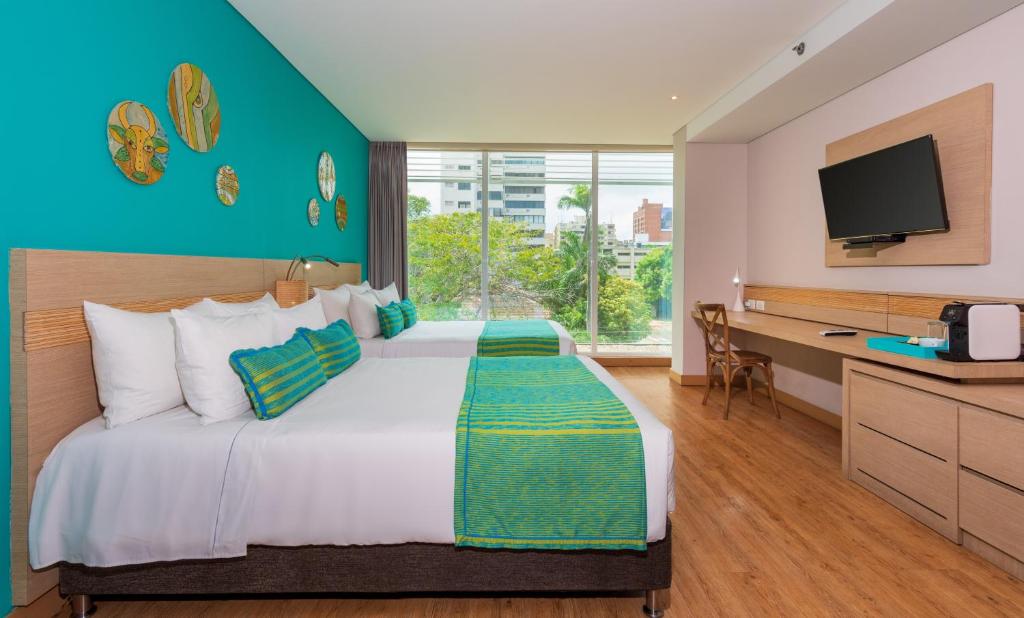
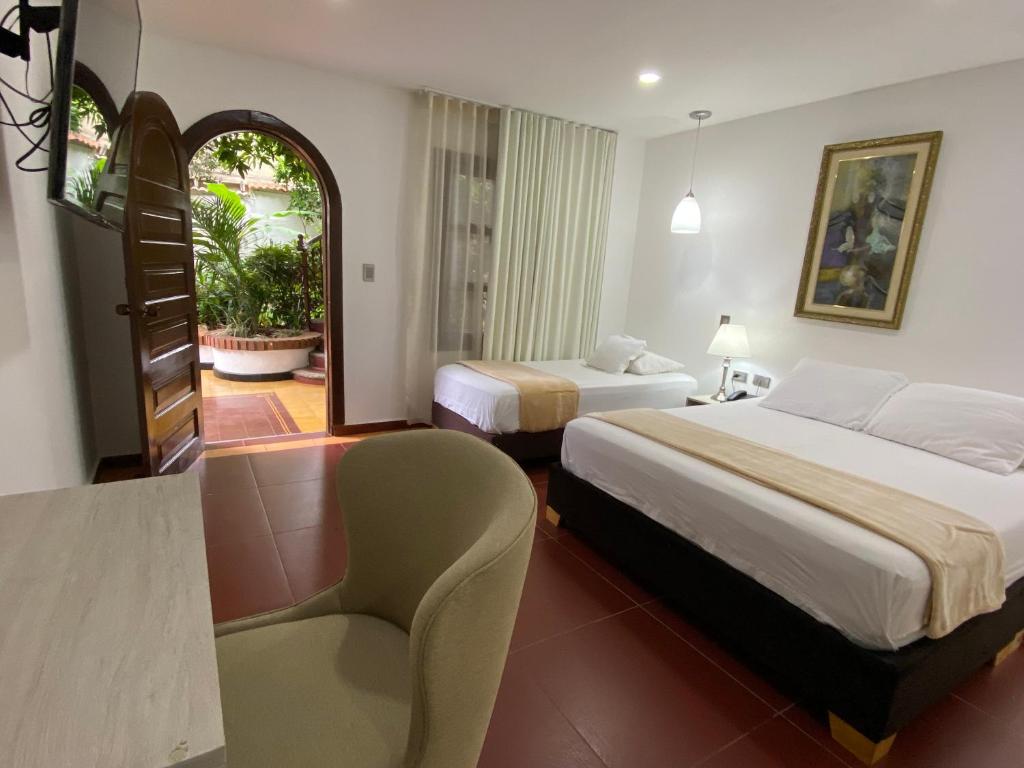
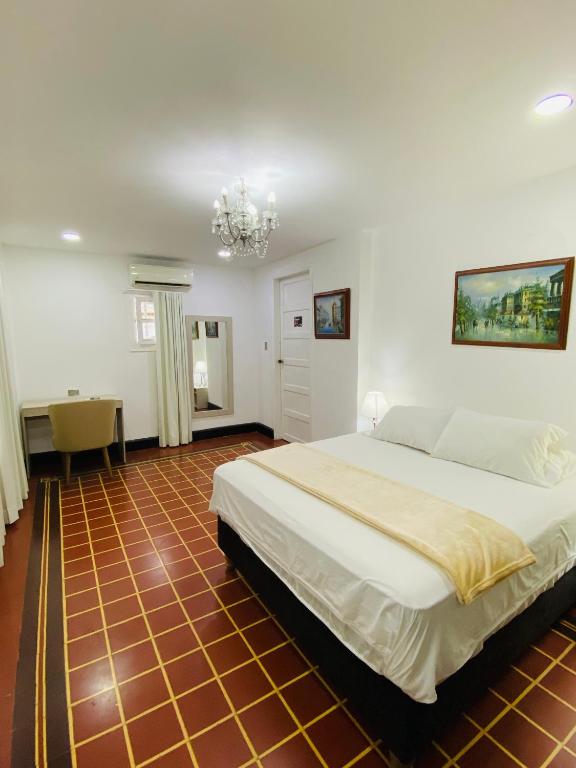
Check the permitted ages, actual occupancy and bed arrangement for the named category. Two double beds do not always mean four admitted guests, and a Junior Suite may simply add a sitting area for two. A duplex can have internal stairs; a loft does not necessarily include cooking equipment. Confirm private bathrooms, cooling, breakfast inclusion and whether the water facility is a swimming pool or a shared Jacuzzi. Choose the layout that works for your party rather than relying on the room's marketing name.
Prices are set by the booking site. We may earn a small fee, at no cost to you.