About Barú
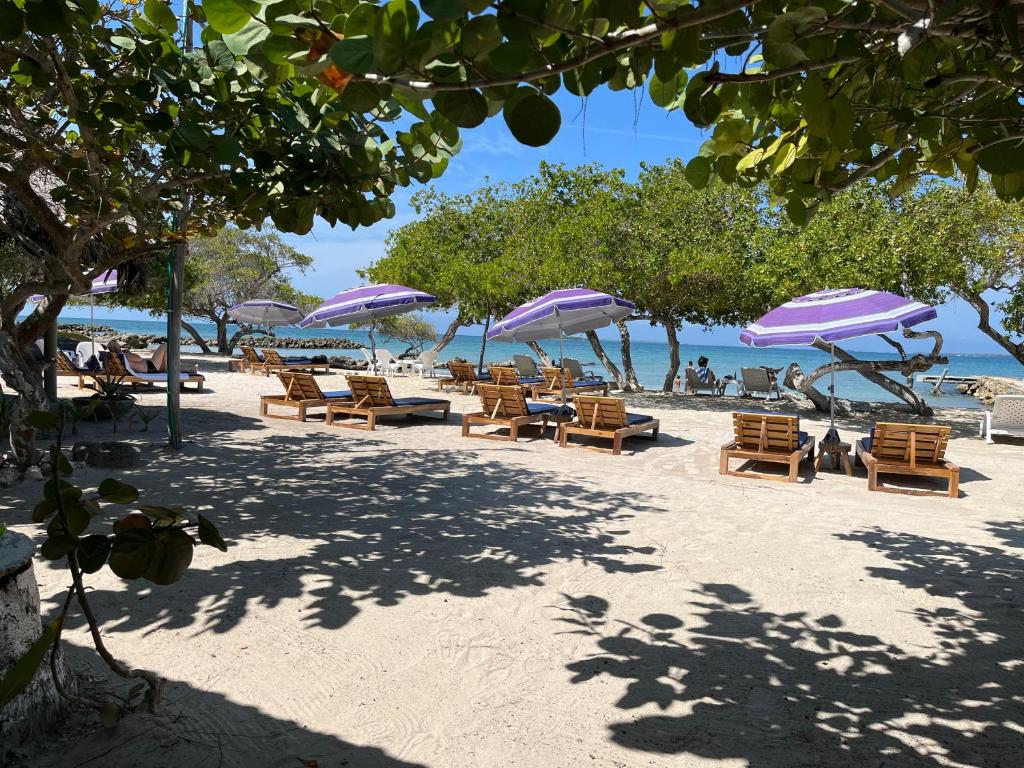
Barú is a peninsula south of Cartagena, with beach hotels, wooded resort grounds and small coastal stays around its southern bays. Staying overnight gives you time for the shore, a boat outing and the national aviary without fitting everything into a day trip.
The main choice is between the northern Porto Nao resort approach, the Playa Blanca–Tranquila beach strip and the dispersed Cholón–Barú village shore. Road access across the bridge does not mean every reception is reachable by car: some final lanes are rough, and one shore stay near the village requires a short final boat. Choose the arrival route and room type together.
Common questions
Which part of Barú is best for a first overnight stay?
Start with the kind of stay you want: the northern Porto Nao approach for full resort facilities, Playa Blanca–Tranquila for smaller beach accommodation, or the southern bays for bungalow and shore-hotel choices. If an easy room arrival matters, ask for the exact sequence from vehicle or boat to reception and then to the room. A northern resort, a sandy beach lane and a southern landing involve different decisions even though all appear under Barú in booking searches.
How many nights should I spend in Barú?
Three or four nights leave useful time for the beach, a land outing and an optional boat day, with space for arrival and weather changes. If Cartagena's museums, old town and evening restaurants are also important, allocate separate city nights rather than relying on repeated journeys from the peninsula. Choose one Barú base for a short stay; moving between a resort gate and a boat-served southern shore can consume part of a day.
How do I get to Barú from Cartagena airport?
Arrive through Cartagena's Rafael Núñez airport and arrange the transfer to the exact property, not simply to a place called Barú. The road crosses the Campo Elías Terán Dix bridge near Pasacaballos; one northern operator estimates roughly an hour and a half from the airport, but southern routes and unpaved final lanes can take longer. Sea transfers may start at different authorised city piers, and some southern stays instead use a road journey to Barú village followed by a short boat, so allow time for the complete sequence.
Do I need a car to stay in Barú?
A car can help with a land visit to the aviary or peninsula communities, but an arranged transfer is often more practical for a stay mainly on hotel grounds. Check parking and the final road before renting: some southern operators discourage ordinary-car access in rain, and a shore stay near the village still requires a boat after parking. Book the return and any evening movements in advance rather than assuming transport will be waiting outside a beach room.
What is the best season for a Barú stay?
The park's current climate guidance describes December–April as relatively drier and May–November as wetter; Barú stays warm throughout the year. Rain affects unpaved approaches, while sea conditions need their own check even during a dry spell. Keep an outing flexible, carry sun and rain protection, and consult the current maritime forecast before a boat departure.
What should I know before visiting Playa Blanca?
For visits in the protected area, the current national-park guidance requires registration and an induction, and its June 2026 notice confirms mandatory visitor accident insurance at Playa Blanca. Check the applicable admission and activity arrangements with the operator; a hotel reservation does not automatically include park services or a boat excursion. The live park page also says Playa Blanca cannot be used to board boats for other park sectors, so confirm the authorised departure point for any onward marine trip.
How should I plan snorkeling or a Cholón boat outing?
Use an authorised operator, confirm the actual pier, return arrangement and lifejackets, and ask whether the proposed snorkeling or diving site is authorised. Cholón is associated with day boats and music, while a reef visit has different conditions; ask which experience is actually included and avoid touching or standing on coral. DIMAR forecasts distinguish sheltered bay conditions from open water: consult the latest bulletin before departure, since neither clear skies nor a hotel beach guarantees a calm crossing or sailing.
What can I do in Barú besides the beach?
The Aviario Nacional de Colombia is on the peninsula road at kilometre 14.5, and its operator suggests about one and a half to two hours for the marked walking route. The aviary currently opens daily except 1 January; download the ticket QR before travelling because reception can be weak, and check any weather-dependent bird presentation on the day. For local culture, ask about a community-led visit in Santa Ana or Ararca and organise the return transport as part of the outing.
What food should I try, and how should I plan meals?
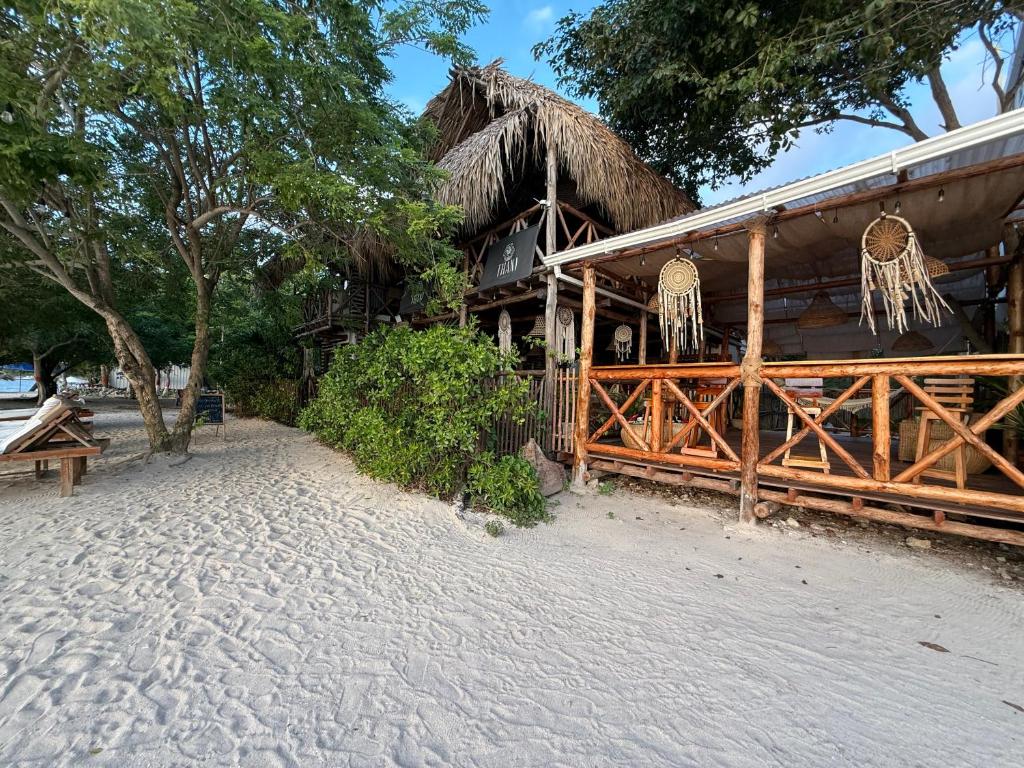
Regional dishes include fried fish with coconut rice and patacones, seafood casserole and ceviche; patacones are flattened fried plantain. Playa Blanca has shore restaurants, while secluded resorts and southern hotels may make their own dining service central to the day, so confirm meal times and which meals your rate includes. Tell the kitchen about dietary needs in advance, and do not assume a minibar, a bungalow or a room in a house gives you a private cooking kitchen.
What room details matter for families or a comfortable stay?
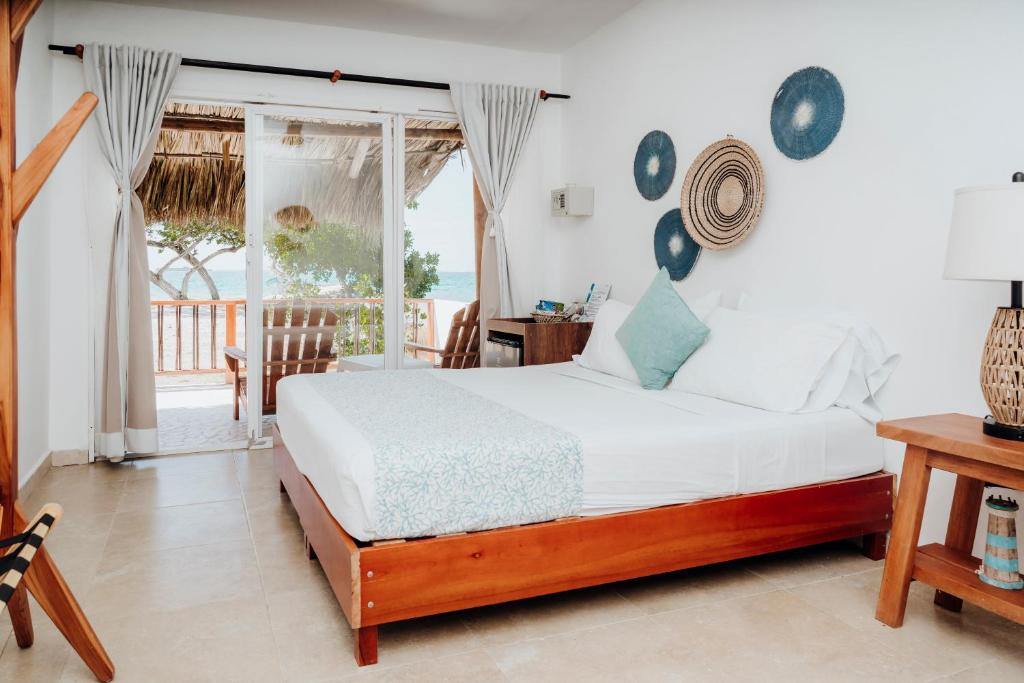
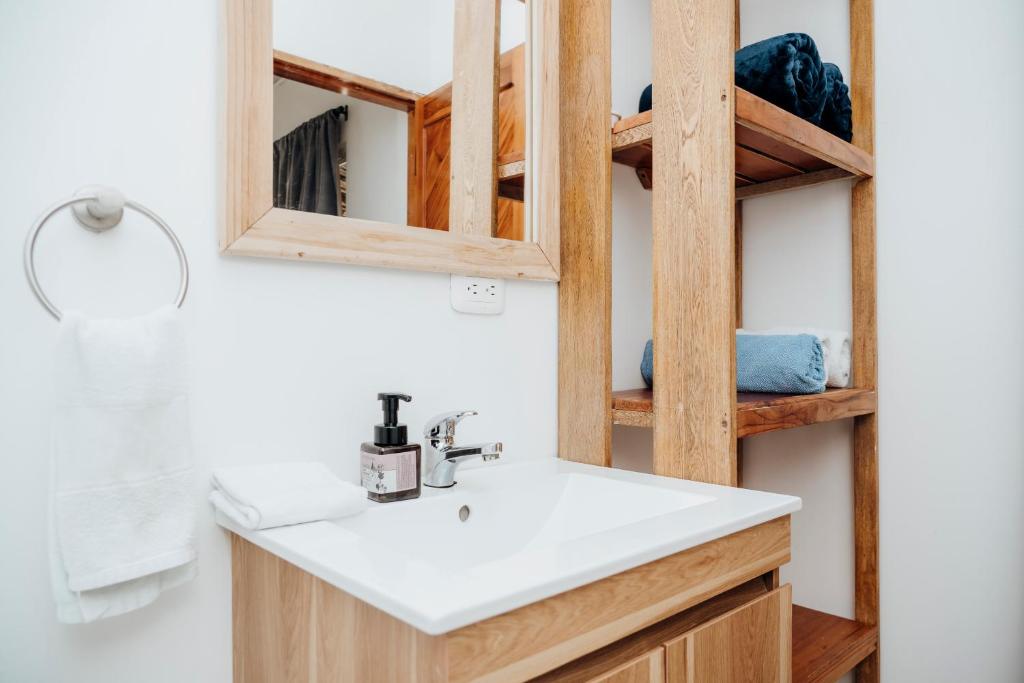
Check the exact room's private bathroom, fan or air conditioning, shower-water arrangements, stairs and permitted ages before choosing a view. A family room may put all beds in one sleeping space, an upper room may be separately booked from the floor below, and a treetop Jacuzzi is different from a sea-level bungalow's private pool. Confirm the actual bedding, cot or extra-bed availability, and any beach, road or boat access that a member of your party may find difficult.
Prices are set by the booking site. We may earn a small fee, at no cost to you.