About San Marcos Sierras
San Marcos Sierras suits a trip built around riverbanks, short hill walks, local crafts and time in a garden. Plaza Cacique Tulián gives the village a useful centre for meals and everyday walking, while the San Marcos river adds a nearby path and a different outlook from the surrounding lanes.
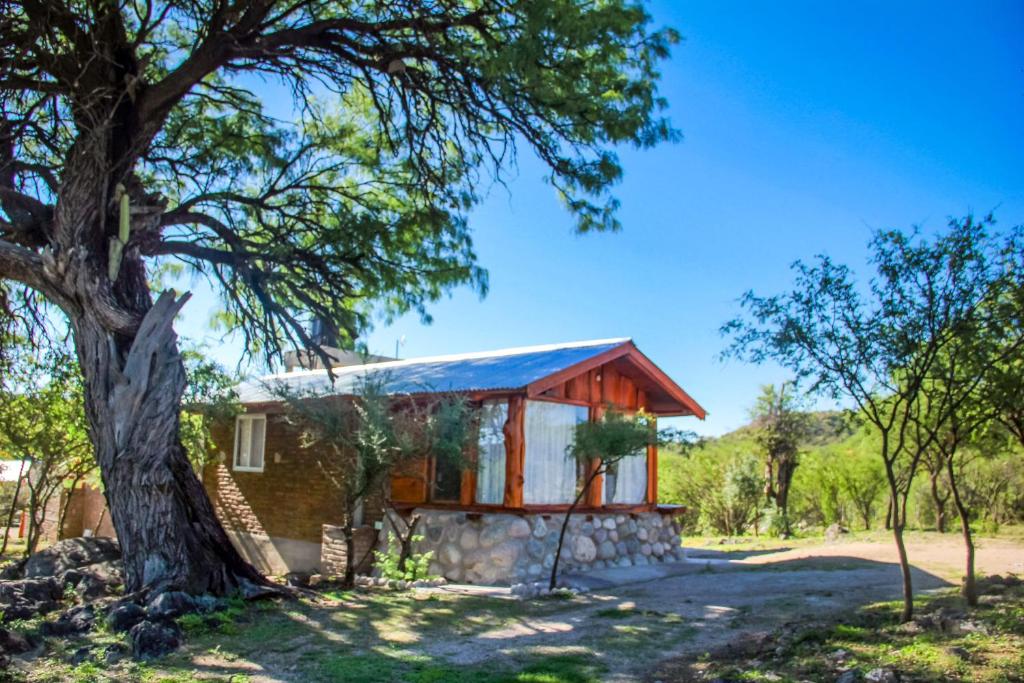
The accommodation choice matters as much as the address: a private room with a shared kitchen, an apartment and a cabin with its own cooking facilities serve different routines. Central and northern addresses are close to one another; the southwestern cabins call for more planning around arrival, shopping and evening meals.
Choose the actual unit and its access before relying on a general promise of peace, a pool or mountain views.
Common questions
Which setting should I choose for a first visit?
The centre around Sarmiento and Vélez Sarsfield is the simplest starting point for meals, the plaza and daily errands on foot. San Martín and Las Rosas are nearby alternatives for a garden stay, with different room formats and child policies. Choose Los Garabatos if an individual cabin and the town river are central to the trip, or the southwestern cabins if you prefer more time at the property and have transport arranged. These are practical groups of addresses within one village, not sharply separated neighbourhoods.
How do I reach San Marcos Sierras from Córdoba or its airport?
Córdoba’s Taravella airport is a practical air gateway; arrange the full onward road transfer or travel separately to the city bus terminal. Grupo Sarmiento serves the area and lists a Cruz del Eje–San Marcos Sierras service, so confirm whether your chosen ticket reaches the village directly or requires a connection. A documented driving approach uses E53, Camino del Cuadrado, RN38 and the E92 village approach. Check the actual boarding and arrival points, particularly the distinction between the village and the RN38 junction, before booking the final transfer.
Can I stay without a car?
A central or nearby northern address can work for walking to meals, shopping and the town river. For the southwestern cabins, arrange the final journey with luggage and decide how you will buy food or return after dinner. Treat Quilpo as a separate outing and book the return as carefully as the outward trip. Ask about the actual road and walking access after rain, rather than assuming that a short map distance will suit everyone.
How do the San Marcos river and Quilpo differ?
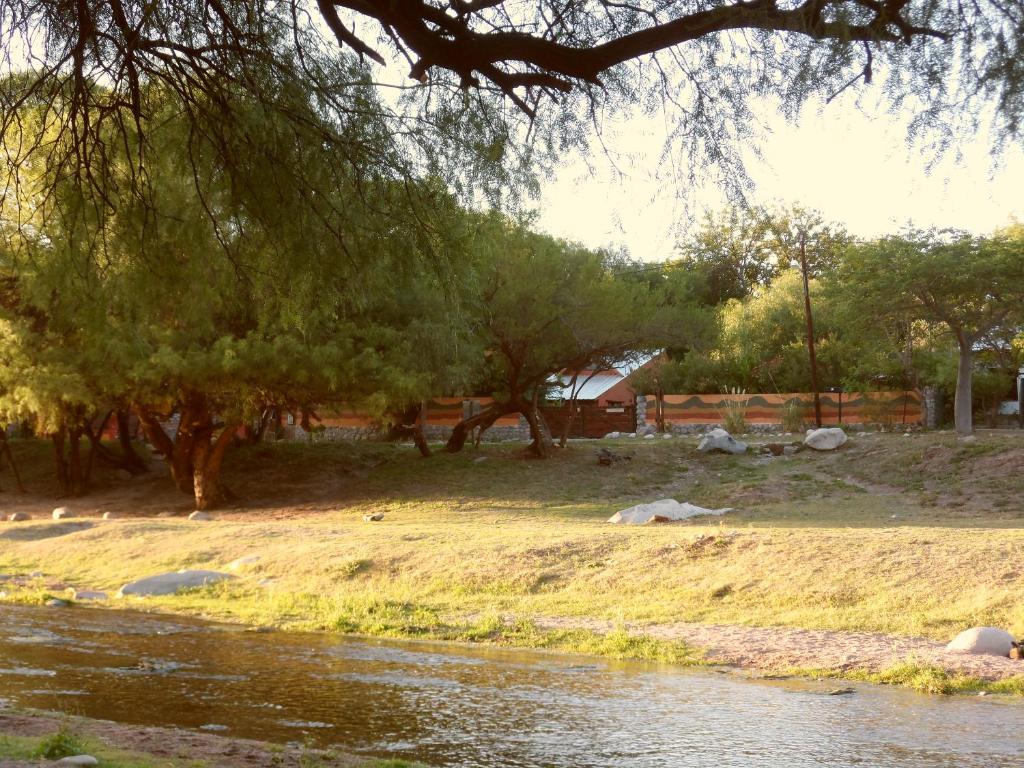
The San Marcos river is close to the plaza, with a gorge-side walk, old mortars and an irrigation channel along its surroundings. Quilpo is a separate excursion about four kilometres from the village, with access points among rocks and small beaches. Ask locally about the day’s access, water conditions and weather before choosing a spot, and keep children closely supervised. Avoid entering the water or lingering on low banks during upstream storms or rising flow; clear-looking or shallow water alone is not a safety assessment.
Which walk works for a shorter outing?
Cerro de la Cruz is the useful first option: the provincial route starts near Plaza Cacique Tulián and is about 1.63 kilometres return, with roughly an hour allowed for the whole walk. Take water and suitable shoes, choose cooler hours in hot weather and leave enough daylight for the return. Cerro Alfa, with the La Espina monument at the top, is a different outing with a less clearly defined final stretch among rocks and shrubs. Ask the tourism office about the current route or a guide before treating it as an equivalent easy walk.
When is a good time to visit?
Summer is hotter and wetter, with most rain concentrated from November to March; June to August are generally the driest months. Winter brings cooler conditions and marked differences between daytime and night, so room heating and extra layers matter. Spring or autumn can be attractive for a walking-focused stay, while summer calls for shade, water and flexibility around storms. Confirm cooling and pool operation for the actual accommodation, and use the current forecast rather than seasonal averages to plan a river day.
What should I check for children, cooking and pool time?
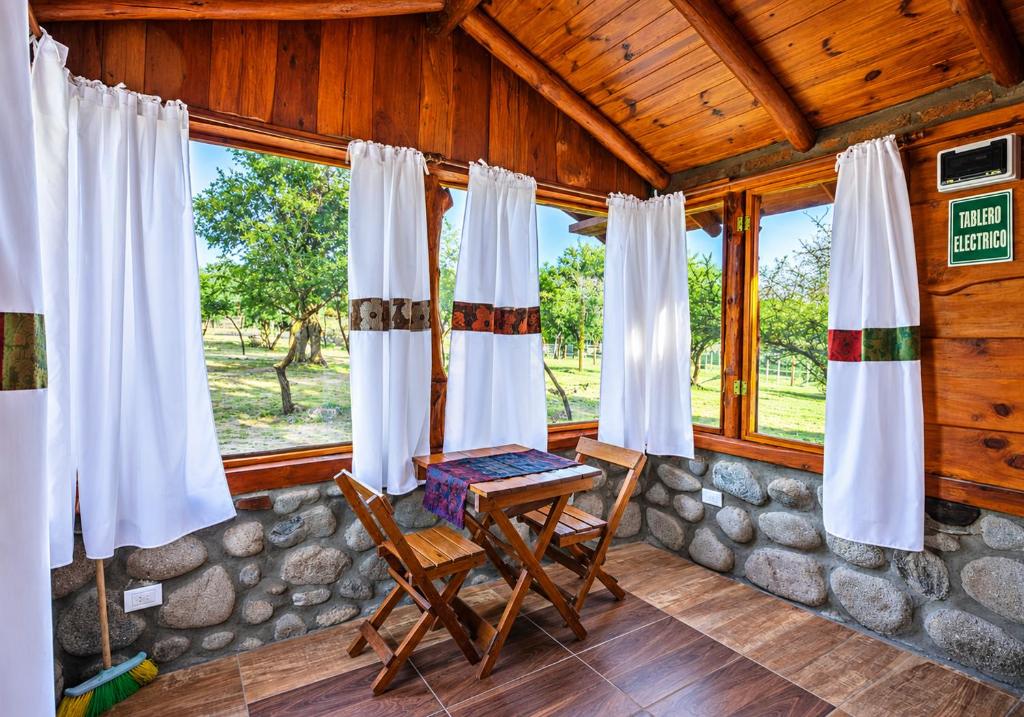
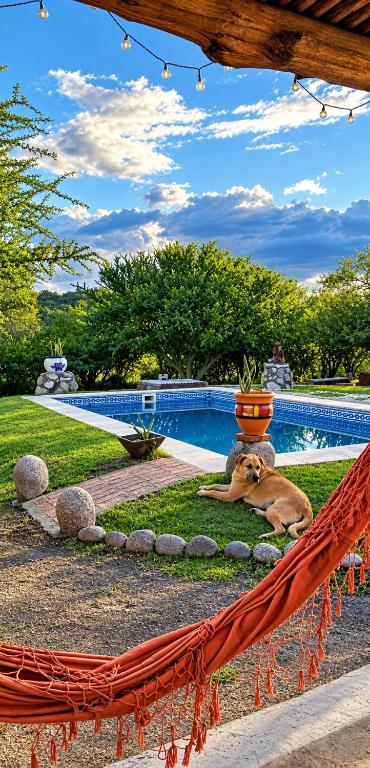
Confirm the age policy and exact beds before choosing a room or cabin, because some stays set a minimum age for children and cot or extra-bed arrangements vary. Ask about steps, mezzanines and whether cooling reaches every sleeping space. A shared kitchen, a private kitchenette and a fully equipped cabin kitchen are different options, and breakfast or regular housekeeping may be separate. Pools are shared unless the exact category says otherwise; check their operating dates and whether air conditioning is included in the selected unit.
What is there to do beyond the rivers and hills?
Spend time around Plaza Cacique Tulián and the stone-and-adobe chapel dating from 1734, then look for the artisan and producer fair or the community fair near the river. Local honey, regional food and small workshops give the village more to offer than a single nature excursion. The Museo Hippie explores the counterculture associated with the village, while the tourism office can point you towards current art walks, maps and activities. Check opening days and the current programme before making a particular visit the focus of your day.
How many nights should I plan, and what does this guide cover?
Two or three nights allow time for the plaza and crafts, a short hill walk and a separate Quilpo outing without compressing everything into one day. An extra night is useful for slower cabin time or flexibility around weather and transport. This guide covers San Marcos Sierras village and the selected immediate municipal approaches. Capilla del Monte, Charbonier, Cruz del Eje and the outer Quilpo settlements are separate destinations or excursion areas, so check the actual address before treating them as the same overnight base.
Prices are set by the booking site. We may earn a small fee, at no cost to you.