About Cardwell
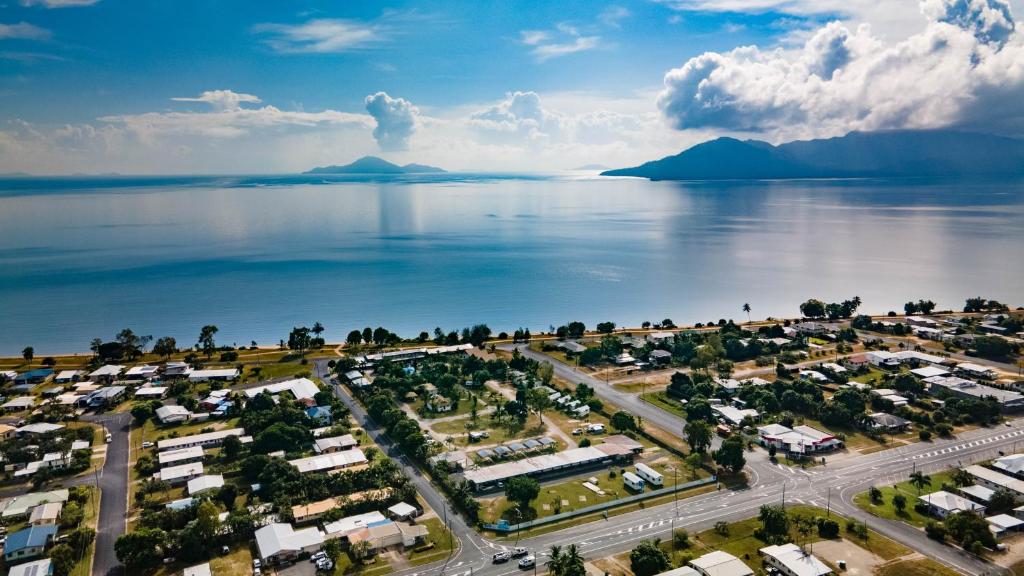
Cardwell is a narrow seaside town on Queensland's Cassowary Coast, roughly 171 kilometres north of Townsville and 203 kilometres south of Cairns. The waterfront looks across Hinchinbrook Channel to mountainous Hinchinbrook Island, making the long jetty and the restored seaside footpath an excellent place to end a driving day.
The town centre near Victoria Street is small enough for a relaxed stroll between shops, a bakery and a pub meal. However the water is not a casual swimming lagoon: Queensland Parks warns of saltwater crocodiles and marine stingers along this coast.
Behind the highway, the landscape rises into the Cardwell State Forest, whose nine-kilometre signed Forest Drive starts from the Brasenose Street side. Four recommended stops include the Cardwell Lookout, Attie Creek, Dead Horse Creek and Spa Pool. Allow two to three hours for a careful return outing and stay on marked roads because logging trucks use the forest.
The walk from the Attie Creek car park to view the falls is 1.4 kilometres return and has steep portions; waterfall flow depends on rainfall. The brilliant blue water at Cardwell Spa Pool is often photographed, but it should not be sold as a guaranteed swimming stop.
An official alert applies from 10 July through 30 November 2026 and expressly says not to enter: dry-season stagnant water can be hazardous to health. Always read the latest alert before visiting. Hinchinbrook Island, known traditionally as Munamudanamy by Bandjin and Girramay people, is around eight kilometres offshore.
Access requires a booked vessel operator or private boat from Cardwell or Lucinda, depending on tide, weather and the chosen activity. There is no regular walk-up ferry on which a hotel guest can depend.
Experienced hikers come for the Thorsborne Trail, a difficult 32-kilometre walk on the east coast that generally needs three to five days with camping permits and arranged boat transfers. The trail closes every January and February and other wet-season months can be dangerously hot with swollen creeks.
Waterfalls may be stronger in the rainy months from December to April, but April to September is cooler for walking. For a short visit, two nights give you a waterfront evening, a proper forest-drive morning and room to arrange a marine outing without forcing every activity into one day.
Common questions
Do I need a car in Cardwell?
Not for an evening by the Cardwell Jetty and the nearby cafés if you sleep on Victoria Street. The town is on the main railway and highway, and some hotels can assist with station transfers. A car or arranged tour is strongly recommended for Forest Drive, lookout stops and properties south of town.
Is it currently safe to swim at Cardwell Spa Pool?
No entry is advised under Queensland Parks' 10 July–30 November 2026 alert, because dry-season stagnation makes the pool unsafe for health. This is a dated warning that may change, so check the most recent park notice. Do not use the famous blue-water photographs as proof it is safe.
How can I visit Hinchinbrook Island?
Book a commercial vessel or arrange a suitable private boat from Cardwell or Lucinda. Weather and tides determine access, and boat companies do not provide a constant commuter ferry. Check the exact pickup, return, wildlife restrictions and any camping permits before arranging hotel nights.
Can I hike the Thorsborne Trail in one day?
No. This demanding, remote 32-kilometre island route takes about three to five days. It requires self-sufficiency, designated camping and marine transfers. Queensland Parks closes it each January and February and warns about dangerous heat and high creek levels between October and March.
What is there to do on Cardwell Forest Drive?
Take the nine-kilometre route from the Brasenose Street side and allow two to three hours to stop at the Cardwell Lookout, Attie Creek, Dead Horse Creek and Spa Pool. The falls are reached by a 1.4-kilometre return walk, which includes steep sections. Keep to signed roads and watch for working forestry vehicles.
When is the best time to stay?
April to September is generally cooler and more comfortable for forest walks. Most rainfall occurs from December to April, which can bring fuller waterfalls but also flooding and difficult roads. For water-based activities, check crocodile, jellyfish, tide and severe-weather alerts regardless of season.
Prices are set by the booking site. We may earn a small fee, at no cost to you.