About Nazaré Paulista
Nazaré Paulista pairs a small historic hill town with the wooded shores of the Atibainha reservoir. A stay here can revolve around a family resort, a country chalet or a marina, with a short outing to the church square between slower days.
Choose the centre for meals and local streets, the Dom Pedro I approach for organised leisure, Quatro Cantos for a rural setting, or Cuiabá for time beside the water. The address matters more than a general distance to town: final approaches, slopes, dining arrangements and the exact room category can shape the whole visit.
Common questions
Which base should I choose for a first stay?
Choose according to the part of the day you most want to simplify. The historic centre puts everyday meals and the church square close to a central inn, while the northern town approach and Dom Pedro I corridor offer resort facilities. Quatro Cantos suits a country chalet, and Cuiabá suits a marina setting. Compare the actual entrance and included services, not just a distance labelled Nazaré Paulista; a short straight-line separation can still involve different roads.
How do I arrive from São Paulo or Guarulhos Airport?
From São Paulo, road approaches use Fernão Dias and Dom Pedro I, with the final turn depending on the property. Viação Atibaia lists services linking Nazaré Paulista with São Paulo, Guarulhos and Atibaia, and Tietê departures can be checked for the selected date. Arrange the separate terminal-to-hotel leg. From Guarulhos Airport, a booked road transfer or rental car is practical; follow your terminal's pickup instructions, including the designated app pickup area at Terminal 2. A Guarulhos city bus connection also needs a plan for reaching its boarding point.
Do I need a car?
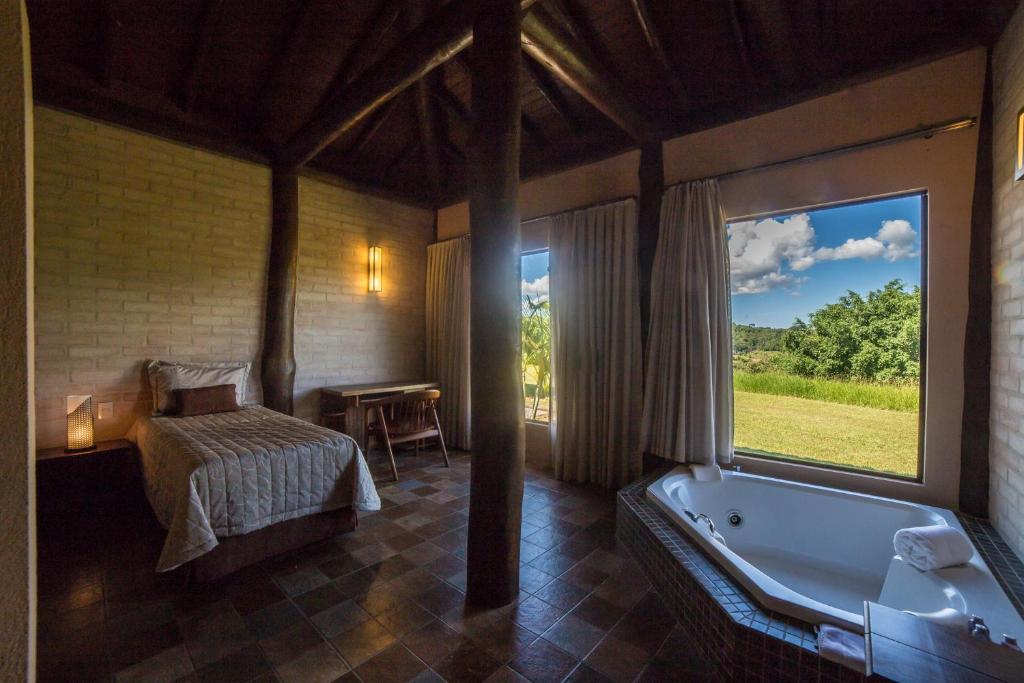
A car helps when combining the historic centre, country restaurants and different reservoir approaches. Without one, a stay focused on the accommodation can work if meals, arrival transfer and any outings are arranged beforehand. Confirm the return pickup as well as the outward trip. Ask the host for the correct entrance and a suitable route after rain, rather than relying on a map shortcut, and distinguish the public road from steep internal paths between a chalet and the shared facilities.
Can I arrange boating or swim in the reservoir?
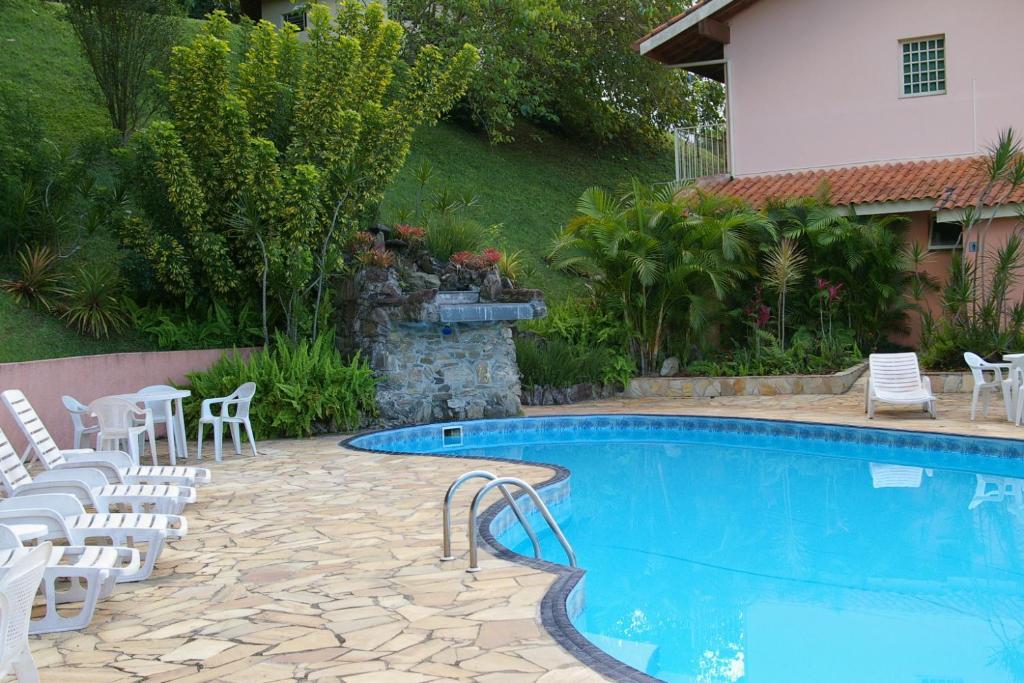
The Atibainha reservoir is part of the Cantareira water-supply system, so water-supply monitoring should not be read as a bathing-water clearance. Arrange a boat outing with an operator that confirms the launch point, weather conditions, equipment, lifejackets and any age restrictions. Ask separately where swimming or other activities are suitable that day and whether the service is included or optional. A room with a water view does not establish direct shore access; compare the accommodation's pool if swimming is your main aim.
What can I see in the historic centre?
Allow time around the church and Praça Álvaro Guião, then check whether the Mirante de Nazaré is open for views across the town and reservoir landscape. Ask about current access and lift availability instead of relying on the original opening announcement. Church visits should fit around services. The Festa do Divino brings religious processions, congadas and local food to the centre; check the municipal calendar for your dates, as a past festival programme is not a schedule for the next year.
Should I choose included meals or a kitchen?
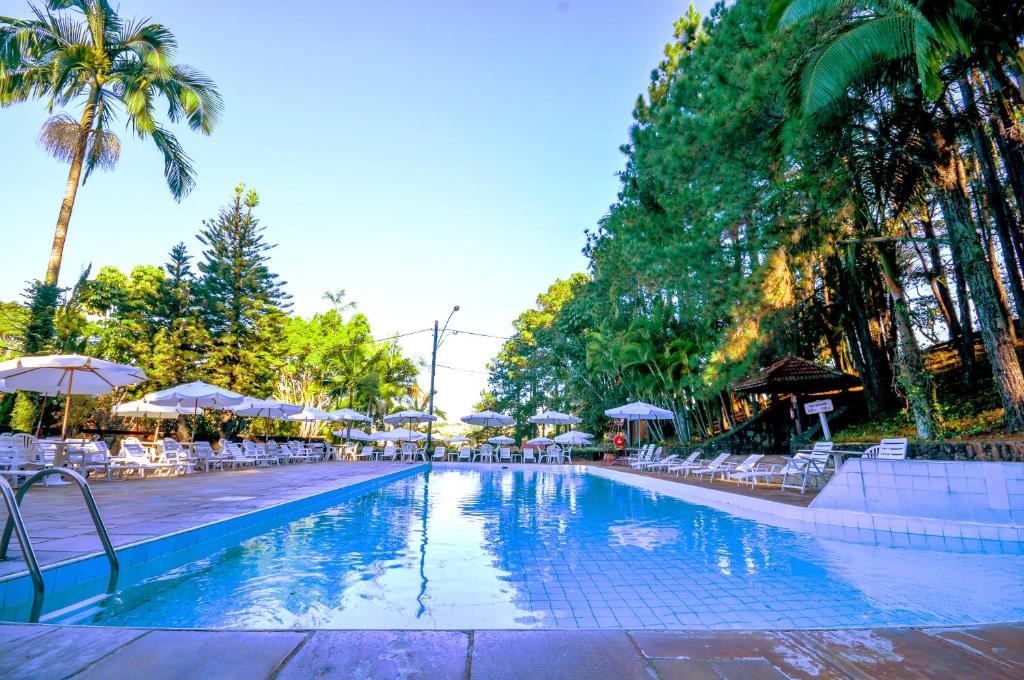
A meal plan is useful when you want to stay on the grounds, especially with children or without a car. Some resort packages include three daily meals, while a smaller inn or marina stay may have a different breakfast and dinner arrangement. Confirm exactly what your reservation includes and whether evening food needs advance notice. For self-catering, check the selected unit's cooking equipment and buy supplies before settling in; a microwave or shared kitchen is not the same as a private equipped kitchen.
What should families and travellers avoiding steps check?
Give every child's age and compare the actual beds, room capacity and cot or extra-bed policy before booking. A minimum age for organised recreation is different from a minimum age for staying at the hotel. Ask whether the programme runs on your dates and who supervises it. If steps are difficult, request details of the entire route from parking to bedroom, meals and pool, including ramps, slopes and internal transport; a ground-floor room alone does not establish an easy route throughout the grounds.
When is the best time to visit?
October to March is generally warmer and wetter, while June to August brings cooler nights and relatively lower rainfall. Rain remains possible, so leave flexibility around boat outings and rural approaches. Pack a layer for evenings and compare a heated pool with an ordinary outdoor one rather than assuming the water will be warm. Before a wet-weather arrival, ask about the final road surface and the path to your room; the forecast matters more than a simple summer-or-winter label.
How many nights should I allow?
Two nights suit a relaxed arrival, one main activity and time at the accommodation. Three nights make it easier to separate a reservoir outing from a visit to the historic centre and still enjoy the pool or country grounds. Keep a weather-dependent boat trip flexible and avoid filling every day with cross-town journeys. On the final morning, allow for the route back to the bus boarding point or airport, particularly when your accommodation is reached by rural lanes.
Prices are set by the booking site. We may earn a small fee, at no cost to you.