On this page
Short answer
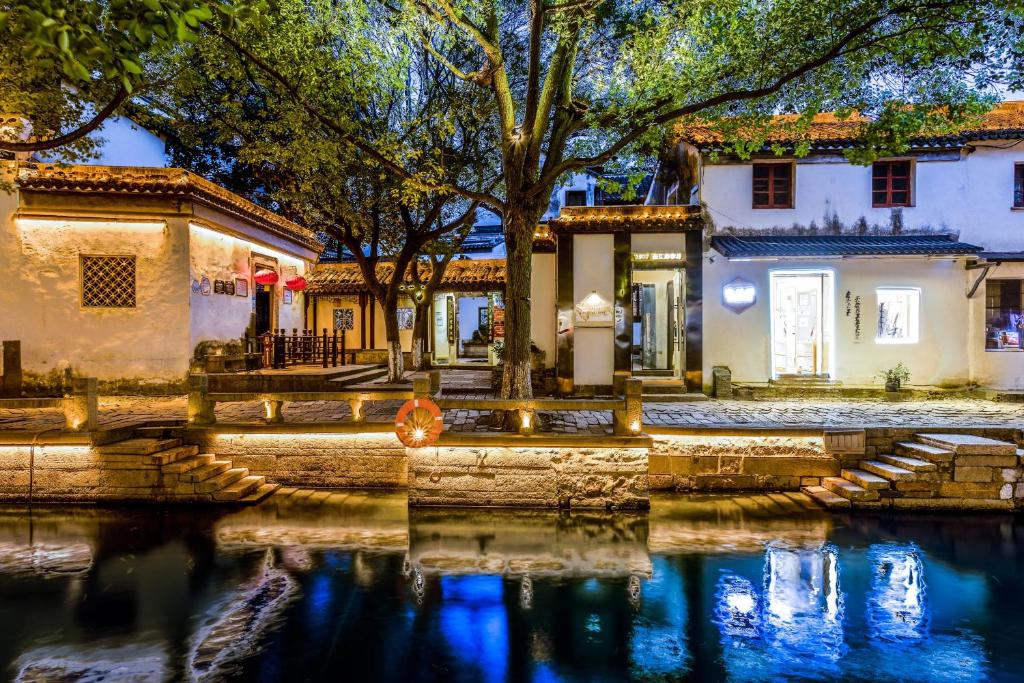
For a half day with no planning, go to Zhujiajiao: it is on Shanghai Metro Line 17 and free to walk in. For one night with lanterns, boats and empty lanes at dawn, pick Wuzhen's West Quarter (Xizha) or Xitang. For a quieter, lived-in town that is now 43 minutes from Hongqiao by fast train, pick Nanxun. If you are based in Suzhou, Tongli, Luzhi and Mudu are the easy, calmer choices. Sleep inside the old town if you can: the day crowds leave in the evening, and that is when these towns are at their best.
There are dozens of "ancient water towns" around Shanghai, and most guides list them as if they were all the same. They are not. Some sit behind a ticket gate and fill with tour groups by mid-morning. Others are open streets where people still live. Some are one metro ride from the city; others need a fast train and then a 30 km taxi. And the biggest difference for a traveller is what happens after 6 pm: some towns empty out and glow, others simply close.
This guide compares ten water towns we cover on this site, using official and recent sources checked in November 2026. It focuses on three questions: how hard is it to get there without a car, do you need a ticket, and is it worth staying the night?
The ten towns at a glance
| Town | Nearest big base | How to get there without a car | Gate or open town? | Stay the night? |
|---|---|---|---|---|
| Zhujiajiao | Shanghai | Metro Line 17 from Hongqiao, then walk or bus 1510 | Open town; only some sights charge | Optional: easy to go back to the city |
| Zhouzhuang | Suzhou / Shanghai | Fast train to Suzhou South, then shuttle bus or taxi | Ticket gate | Yes, to see it before the tour buses |
| Tongli | Suzhou | Suzhou Metro Line 4 to Tongli, then bus, tram or taxi | Ticket gate; open walking in the evening | Yes, a calm night |
| Xitang | Shanghai / Hangzhou | Fast train to Jiashan South, then tourist bus | Ticket gate | Yes, the town is livelier at night |
| Wuzhen (Xizha) | Hangzhou / Shanghai | Fast train to Tongxiang or Nanxun, then bus or taxi; or a direct coach | Ticket gate; rooms inside include entry | Yes, the main reason to go |
| Nanxun | Shanghai | Fast train to Huzhou Nanxun, then a short taxi | Open town since 2023; six houses charge | Good for a slow night |
| Luzhi | Suzhou | City bus from eastern Suzhou | Open town; sights charge | Few places to stay; mostly a day trip |
| Jinxi | Kunshan / Zhouzhuang | Coach to Kunshan, then local bus; easiest as a stop with Zhouzhuang | Open town; small museums | Day trip |
| Mudu | Suzhou | Suzhou Metro Line 1 to Mudu, then a short bus or taxi | Open town; gardens charge | Day trip from Suzhou |
| Fengjing | Shanghai | Fast train to Jinshan North, then local bus | Open town; sights charge | Pair with LEGOLAND, or a day trip |
The "gate" column matters more than it looks. In a gated town, a night inside means you see the place with no day crowd, and in Wuzhen your room even includes entry. In an open town, there is no ticket to worry about, and staying a night costs you nothing extra but the room.
How long does the train take? Our comparison
Most of these towns are now served by fast trains from Shanghai Hongqiao. The rail leg is short. The part that decides your day is the leg from the station to the old town.
- Fastest listed train
Source: Shanghai Municipal Government LEGOLAND transport guide (May 2025); Travel China Guide Shanghai–Tongxiang timetable (2026); China Highlights, Xitang; Meet in Shanghai high-speed rail water town route (Oct 2025). Checked 2026-11-11.
- Station to old town
Source: Zhujiajiao official site; China for Travelers, Suzhou water towns (updated July 2026) and Nanxun (updated Aug 2026) and Wuzhen (updated Aug 2026) guides. Checked 2026-11-11.
Put the two charts together and the picture is clear. Fengjing, Wuzhen and Xitang have very short train legs, but Wuzhen's station is about 29 km from the town. Nanxun's train is the longest of the group, yet the old town is only about 7.7 km from its station, so the door-to-door trip is short. Zhujiajiao needs no train at all.
Town by town: who each one suits
Zhujiajiao: the easy one, inside Shanghai
Zhujiajiao is in Shanghai's western suburbs, and you get there on the city metro. The town's official site says Line 17 runs from Shanghai Hongqiao Railway Station to Zhujiajiao station about every 10 minutes, from about 6:00 to 23:00, for a 6-yuan fare. From Exit 1 you can walk to the old town (up to about 1.3 km, depending on where you enter) or take tourist bus 1510. An express bus also runs from People's Square about once an hour.
The town itself is free to enter. Only a few sights, such as Kezhi Garden, need tickets, and they keep daytime hours (8:30 to 17:00, per China Highlights). That same guide says the main streets get busy by late morning, especially on weekends, and that Fangsheng Bridge is much busier than the back lanes.
Suits: first-timers, families, anyone with half a day. Where to stay: most people sleep in Shanghai and come out for the day. If you want an evening by the canals, our Zhujiajiao page has inns in the quiet lanes near Fangsheng Bridge and modern hotels by the metro station.
Zhouzhuang: the famous one, best at the edges of the day
Zhouzhuang is the best-known water town and the busiest. China for Travelers calls it the most crowded and most commercial of the Suzhou-area towns, and Wikivoyage notes that most visitors arrive after 10 am.
Since the Shanghai–Suzhou–Huzhou fast line opened in December 2024, Suzhou South station is the handy rail stop: Meet in Shanghai lists trips from Hongqiao in as little as 26 minutes, then a Zhouzhuang shuttle bus, local buses (795, then 792) or a taxi. Coaches also run from Suzhou North bus station, about an hour.
The old town has a ticket gate. Sources agree that you can walk in without a ticket outside opening hours, but they differ on the time: China for Travelers says from about 5 to 6 pm, Wikivoyage says after about 9:30 pm. Indoor sights are closed then either way.
Suits: people who want the classic postcard view and are willing to get up early for it. Where to stay: inside the old town near the Double Bridges if you want the canals at first light. The newer town to the north has most of the larger hotels and the bus station.
Tongli: a garden town with free evenings
Tongli is south-east of Suzhou. Its main sight, the Tuisi (Retreat and Reflection) Garden, is on the UNESCO World Heritage list, as Museum of Wander notes. Travel China Guide counts 49 stone bridges in the town.
From Suzhou, take Metro Line 4 to its end at Tongli station. Museum of Wander says the ride from Suzhou station takes about an hour, with tourist buses from outside Exit 10. China for Travelers puts the last stretch to the old town at about 5 km.
Tongli has a ticket gate for its sights in the day. Travel China Guide (updated July 2026) says you can enter the town without a ticket from 17:30 to 7:30 the next morning, although you need a ticket for the scenic spots.
Suits: people based in Suzhou who want a calmer evening than Zhouzhuang. Where to stay: the old lanes near Mingqing Street for lanterns on the water, or a larger hotel near Tongli Lake if you want space.
Xitang: roofed walkways and a lively night
Xitang sits in Jiashan county, Zhejiang, about halfway between Shanghai and Hangzhou. Its long covered walkways along the canal make it pleasant even in rain.
China Highlights lists fast trains from Hongqiao to Jiashan South in 25 to 35 minutes, then a tourist bus line to Xitang in about 30 minutes (another source says the K222 tourist line takes about 40). There are also direct buses from Shanghai South bus station, about 2 hours.
The town has a ticket gate. A travel agency guide notes that ticket checks at the lane entrances in the core may stop after 5 pm and before 7 am, while the main entrance stays staffed. Xitang has a bar street, Tangdong Street, which gets busy on summer nights. If you want a quiet evening, choose an inn in the back lanes instead of on the main water.
Suits: couples and groups who want a lively evening, photographers who like lanterns on the water. Where to stay: canal-side inns for the view, back-lane inns for sleep, or larger hotels just outside the gate (about a 5 to 10 minute walk). Book ahead for weekends: sources warn that rooms are hard to find then.
Wuzhen (Xizha): the one built for an overnight stay
Wuzhen has two fenced quarters. Dongzha (East) is smaller and suits a few hours of museums and workshops. Xizha (West) is larger, has most of the inns, and is lit up in the evening. Wander in China (July 2026) recommends Xizha for first-timers and overnight stays.
The key point for planning: China for Travelers (checked July 2026) says rooms in Xizha's official guesthouses and hotels are sold with Xizha entry for the guests on the booking, your face is registered at check-in, and you can go in and out until noon on the day you leave. It also warns that cheap rooms marketed as "near Xizha" may be outside the gate and include no entry, and that its own FAQ describes the process slightly differently. So confirm with the property before you book. China Highlights lists Xizha as open 9:00 to 22:00, with a free light show in the evening, and says many day groups leave after about 6 pm.
Getting there takes more thought. Wuzhen has no station of its own. Tongxiang station is about 29 km away, with bus K281/K282 or a taxi. The newer option is Huzhou Nanxun station: Meet in Shanghai says it is about 25 minutes from Wuzhen by taxi. Direct coaches from Shanghai South, Hongqiao West, and Hangzhou take about 1.5 to 2 hours, and some go to the Xizha gate.
Suits: anyone who can give the trip one night. A day trip to Wuzhen means a long return in the dark. Where to stay: an official room inside Xizha, or the modern town between the quarters if you want a lower price and plan to buy a ticket.
Nanxun: quiet, lived-in and newly close
Nanxun was a rich silk-trading town, and its merchants left large houses and gardens, such as Little Lotus Villa and the Jiaye Library. It has changed most in recent years for two reasons.
First, China for Travelers says the old town has been free to enter since 18 January 2023, with no gate or turnstile. Only six heritage houses charge, and the combined ticket for them is valid for 48 hours.
Second, Huzhou Nanxun station opened on 26 December 2024, on the new Shanghai–Suzhou–Huzhou line. The fastest train from Hongqiao takes about 43 minutes, and the station is about 7.7 km from the south gate (about 17 minutes by taxi). The same guide says a scenic shuttle runs only on weekends and holidays, so use a taxi on weekdays.
The same source describes Nanxun as "far quieter" than Wuzhen and still lived-in, and says about nine in ten visitors enter at the south gate. Start from the north or east for a calmer walk.
Suits: slow travellers, people who dislike crowds, anyone who wants to combine two towns (Wuzhen is a short taxi away). Where to stay: guesthouses by the canal near Baijianlou in the north, or plain hotels near the south and east gates if you have heavy bags. Staying inside costs no second ticket.
Luzhi, Mudu and the quiet Suzhou day trips
If Suzhou is your base, three smaller towns are easy to reach on city transport and are free to walk in:
- Luzhi, east of Suzhou. Travel China Guide says the town is free and lists buses 521, 523, 525, 527 and 563 from the city. Its Baosheng Temple dates to the year 503 and holds Tang-era clay figures, and 41 of the town's old bridges survive. China for Travelers calls it quiet, with far fewer tour groups than Zhouzhuang.
- Mudu, south-west, under Lingyan Hill. Mudu station is the western end of Suzhou Metro Line 1 (Wikipedia). China for Travelers puts the old town about 3 km from the station, by bus or taxi. The town is free; its gardens, such as Yanjia Garden, charge.
- Jinxi, near Zhouzhuang (about 8 km, per China Highlights), with small private museums, including one of old bricks and tiles. Easiest as a stop on the way to or from Zhouzhuang.
These are good half-day trips. China for Travelers notes that their night lighting is limited, so they are not the towns to pick for an evening stay.
Fengjing: Shanghai's other canal town, next to LEGOLAND
Fengjing is in Jinshan, in Shanghai's far south-west. It is known for its peasant painters, and China Travel describes it as quieter than the famous towns. It is free to enter, with some sights charging.
Since LEGOLAND Shanghai opened nearby, Jinshan North railway station has become the useful stop. The Shanghai government's transport guide lists fast trains from Hongqiao in 18 minutes or more and a local bus, Fengjing Route 7, between the Fengjing transport hub and the station (about 30 minutes).
Suits: families combining a park day with a canal walk. Where to stay: the family resorts near the park and station, or a small guesthouse in the old town.
Which town for which trip?
| Your trip | Pick | Why |
|---|---|---|
| Half a day, no planning | Zhujiajiao | One metro line, no gate |
| One night, lanterns and boats | Wuzhen (Xizha) | Room includes entry; lit at night |
| One night, livelier evening | Xitang | Bar street, covered canal walks |
| A quiet, lived-in town | Nanxun | No gate, fewer groups, fast train since 2024 |
| Based in Suzhou | Tongli (evening) or Luzhi / Mudu (half day) | Metro or city bus, calmer |
| The classic view | Zhouzhuang at dawn | Sleep inside the old town |
| With kids and LEGOLAND | Fengjing | Same rail station |
| Two towns, one night | Nanxun + Wuzhen | About 25 min apart by taxi |
Where to stay: inside the old town or outside?
Inside the old town. You get the canals at night and at dawn, when the day groups are gone. The costs: small rooms, stone lanes for your suitcase, and sometimes thin walls. Sources on Xitang mention poor soundproofing and damp in some old buildings, and rooms near the bars can be noisy.
Just outside the gate. Larger hotels with parking and lifts, usually a 5 to 15 minute walk away. In a gated town you may need a ticket to go back in the next morning, so check before you book.
In the big city. For Zhujiajiao, Mudu, Luzhi and Fengjing, you can easily sleep in Shanghai or Suzhou and go for the day. For Wuzhen and Xitang, a Hangzhou base also works, with direct coaches from the city.
One check before you book. Not every small guesthouse in China is set up to register foreign guests. Our guide to hotels in China that accept foreigners explains how to check before you pay.
Practical tips for a water-town trip
- Avoid public holidays. May Day (around 1 to 5 May) and the National Day week in early October are the busiest times. China Highlights names both as Wuzhen's busiest times, and China for Travelers says Xizha moves to capped, real-name online booking at holiday peaks and during the October theatre festival.
- Go on a weekday if you can. Our sources for Zhujiajiao, Zhouzhuang and Wuzhen all say weekends are much busier.
- Plan the last leg, not the train. Buses from stations to towns often stop in the late afternoon. Our guide to getting around China's small towns without Chinese covers DiDi, Amap and local buses step by step.
- Carry your passport. You need it for fast-train tickets, and China for Travelers mentions a staffed passport lane at Wuzhen's entrance.
- Set up payments first. Boat rides, snacks and small inns often prefer mobile payment. See our guide to paying in China as a foreigner.
- Boat rides cost extra. Sources for Zhouzhuang, Tongli, Xitang, Wuzhen, Luzhi and Mudu all list them separately from entry.