About Meishan
Meishan rewards a stop for literature as much as for scenery. The San Su Shrine commemorates Su Xun and his sons Su Shi and Su Zhe at the family's former home, with surviving buildings rebuilt after earlier destruction. Bamboo, water and garden pavilions give the visit a quieter rhythm than a quick circuit of exhibition labels.
Continue that cultural thread through Dongpo's food and public spaces. Dongpo pork knuckle and locally made paocai are two established traditions, while the urban wetland park brings walks beside the water into an otherwise ordinary city day. Dongpo Impression Water Street adds restaurants, lights and recreated Song-style scenery; enjoy its contemporary leisure setting without mistaking it for an untouched ancient quarter.
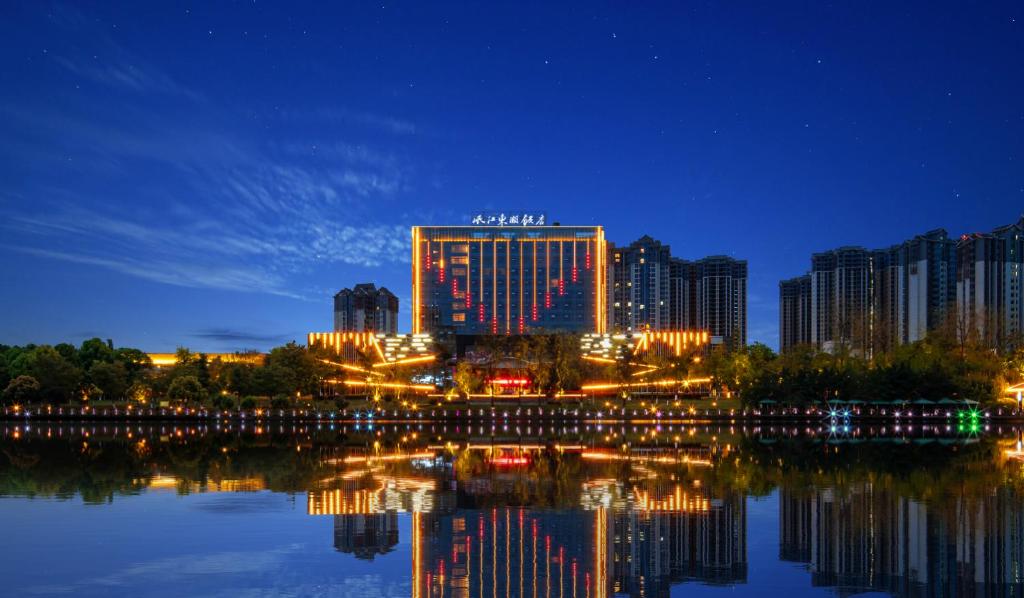
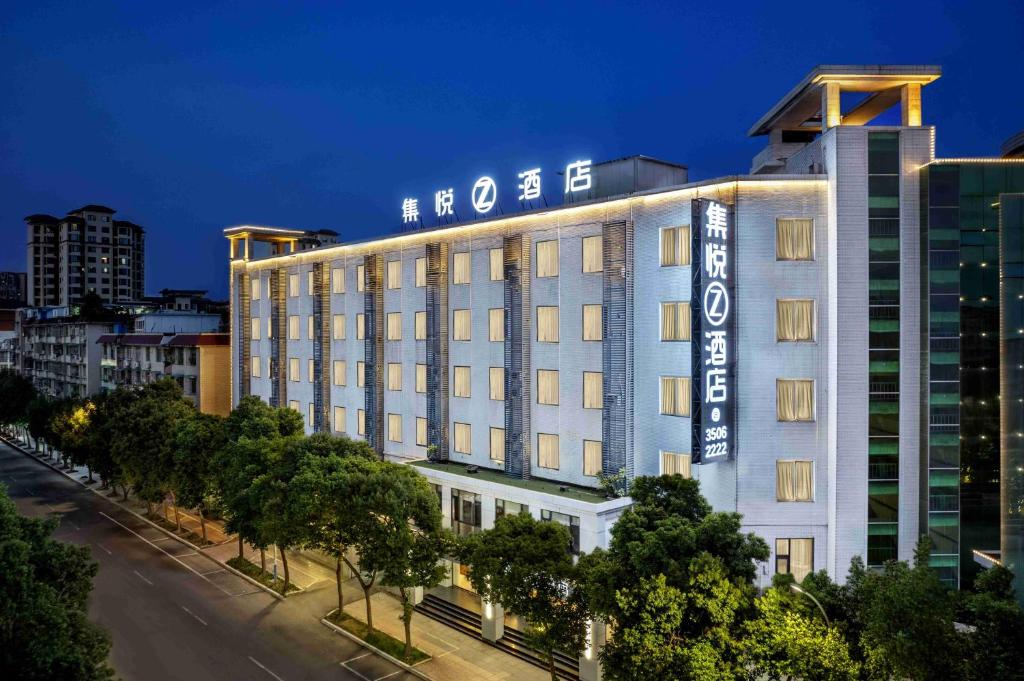
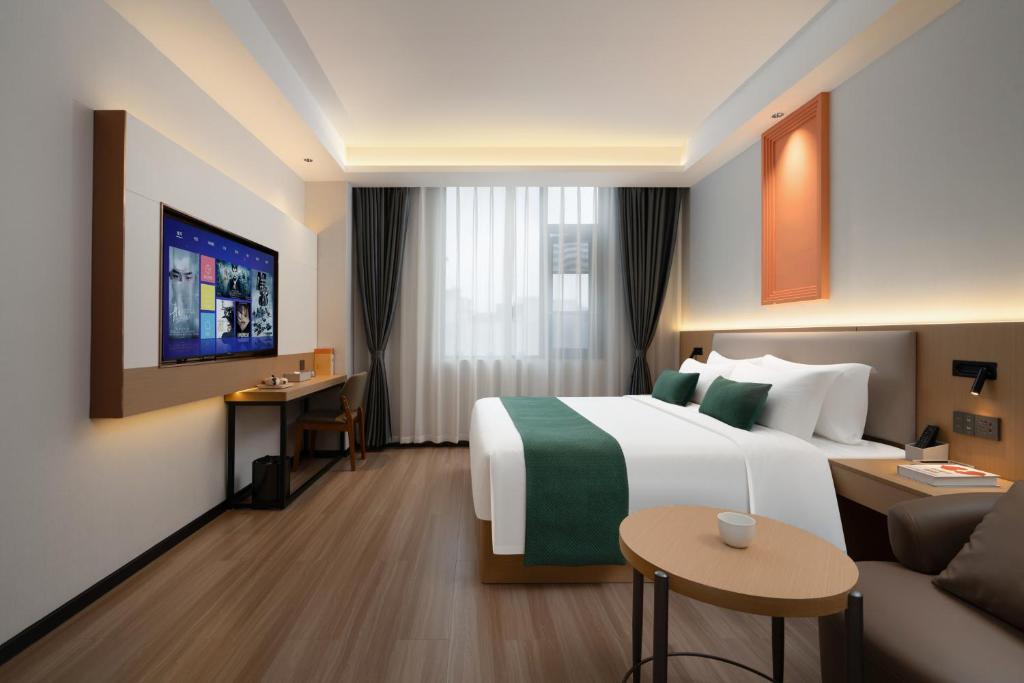
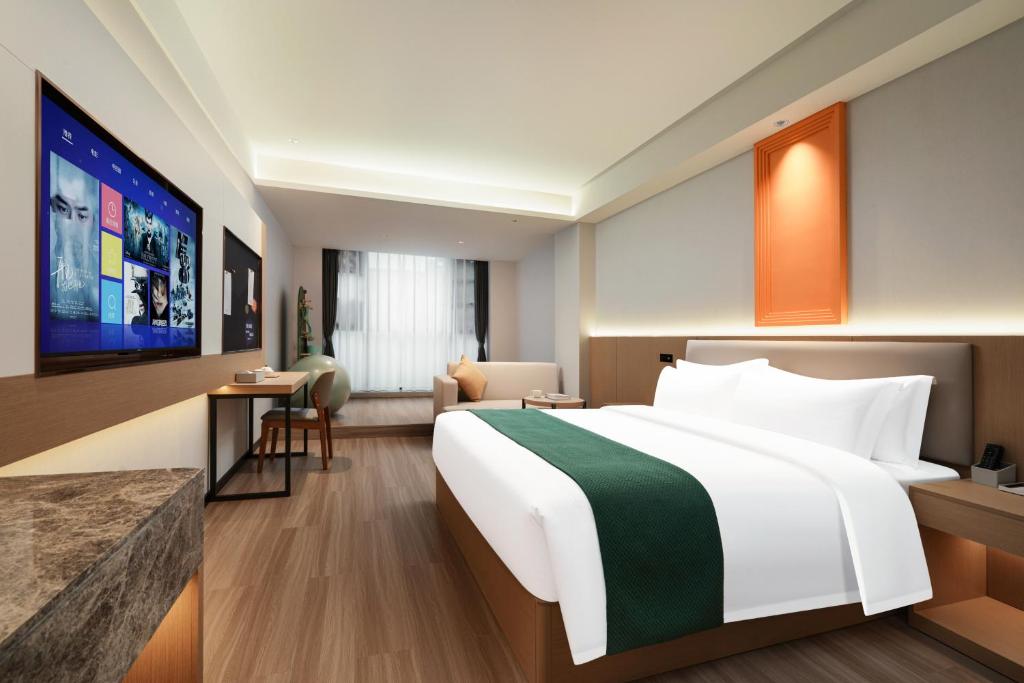
These five hotels sit within the urban Dongpo district. The Sansu Avenue–Yihuan North area provides a practical city base, Suyuan Road and Tongyun Street offer newer commercial surroundings, and Minjiang Donghu shifts the emphasis towards gardens and the eastern waterfront. The wider Meishan prefecture includes distant counties, so an attractive resort with a Meishan address may serve a quite different trip.
Common questions
Which area is best for a first stay in Meishan?
Start around Sansu Avenue and Yihuan North if you want an urban base with two contrasting hotels and straightforward road transfers to the shrine and station. Suyuan Road–Tongyun is another practical choice when breakfast, work space and familiar hotel services are priorities. For a slower stay with a pool and hotel gardens, look east to Minjiang Donghu. Decide around the activities you will repeat, since no one area puts every attraction at the door.
Which railway station should I use, and do I need a car?
Look for Meishan East, written 眉山东, when checking high-speed connections from Chengdu East. Read the ticket carefully: Meishan station and Emeishan station are different names and destinations, and a hotel's mention of a high-speed station does not place it inside the terminal. For an urban visit, arrange taxis or suitable local buses between the hotel, shrine and waterfront. Save the full Chinese hotel address and confirm any station pickup directly; do not assume it comes with the room.
How many nights should I allow for the city and San Su Shrine?
Two nights give you a full day for the shrine and gardens, plus an evening beside the water without squeezing the visit between trains. One night can work for a focused cultural stop if arrival and departure leave enough daylight. Check the museum's current visitor arrangements before choosing your day: its notice distinguishes the shrine from the memorial hall and exhibition room, which close on ordinary Mondays. Bring the identification needed for entry and allow time to read beyond the main courtyard.
Is Dongpo Water Street an ancient town, and is there a nightly show?
It is a modern leisure and dining development using Song-inspired architecture and waterways. Go for an evening meal, illuminated scenery and a stroll, while keeping the historical visit centred on the San Su Shrine. The nearby urban wetland park is a separate place for an open-air walk. Fountain performances and special programmes follow announced schedules and can change with weather, so verify that day's notice instead of arranging the whole evening around an assumed daily show.
What local food should I look for?
Dongpo pork knuckle and Dongpo paocai are useful starting points for understanding Meishan's food traditions. The former is a pork dish, while paocai refers to locally prepared pickled vegetables; ask the restaurant about the preparation and accompaniments rather than assuming every version tastes alike. If you avoid pork, meat stock or strong chilli, explain each requirement clearly in Chinese. A vegetarian-looking vegetable plate is not enough information about its broth, seasoning or cooking fat.
Which hotels suit children or a stay with swimming?
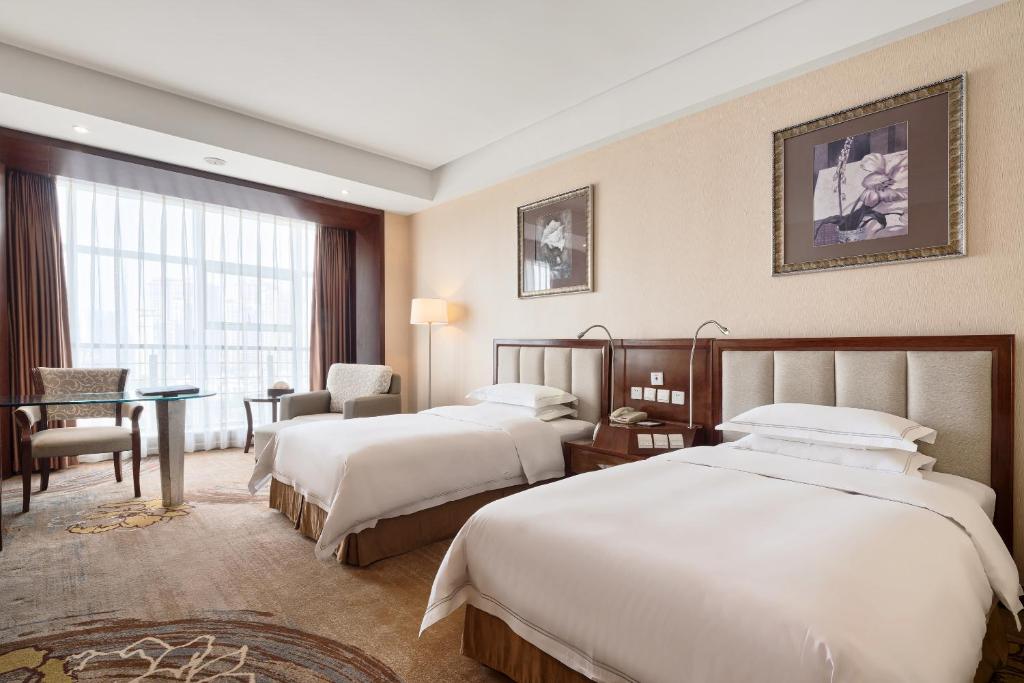
Minjiang Donghu lists an indoor pool and several family room categories; check current access, the exact bed arrangement and any child requirements. Home2 offers specific studio layouts with sofa beds, but it and Joyinn list no cots or extra beds, and Atour's Booking page likewise rules them out. Holiday Inn Express has no pool; its matching Trip page allows cots subject to arrangements and makes extra beds room-dependent. Enter every child's age when selecting the actual room rather than relying on a family label.
Can these hotels cover all the attractions in the wider Meishan region?
They are chosen for urban Dongpo, not for sleeping beside every sight in the prefecture. Hongya, Liujiang and Heilong Lake require separate route planning, while Leshan and Emeishan are further destinations with their own accommodation decisions. Check the specific attraction and return transport before adding an excursion. A dedicated stay closer to a mountain or rural itinerary can make more sense than repeated long returns to a city hotel, especially when you want an early start.
Prices are set by the booking site. We may earn a small fee, at no cost to you.