About Puerto Villamil
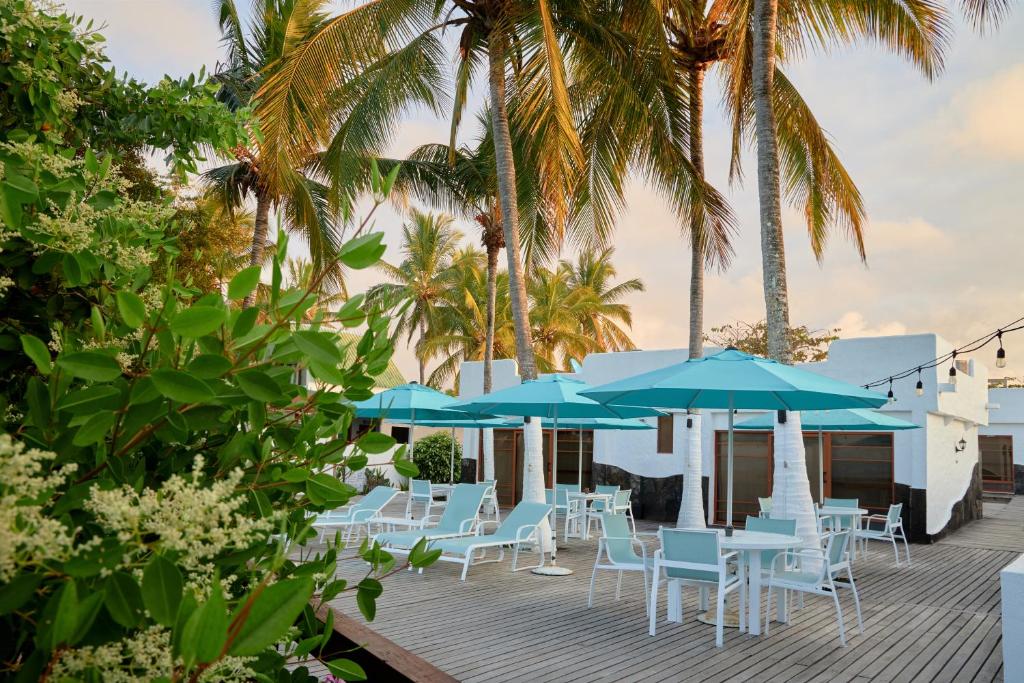
Puerto Villamil is Isabela's small coastal base, where a long sandy beach meets a town of restaurants, guesthouses and departures for island excursions. The central and eastern beachfront puts the ocean beside everyday meals; the western end leads toward lagoons and the tortoise-centre approach; inland lanes offer practical rooms without needing a sea view.
These are connected parts of one town, not distant resort zones. Sierra Negra needs a road transfer and a substantial walk, while marine outings depend on boats and conditions. Choose your room and excursion rhythm together, allowing time for arrival, changing access notices and an unhurried beach afternoon.
Common questions
Where should I stay for a first visit to Isabela?
The central beachfront is the easiest starting point for combining restaurants, beach time and excursion arrangements. Choose the western beach if a garden beside the sand and the wetland approach appeal more; choose inland lanes if a private room and practical common spaces matter most. The town is compact, so the room itself can make a bigger difference than a small change of street. Confirm cooling, view and stairs before comparing names.
How many nights should I allow?
Three nights give you two full days for a substantial excursion and a more relaxed coastal day. Four nights leave more room for a second outing or weather changes without filling every arrival and departure hour. A volcano hike and a marine trip need different arrangements; do not assume one can replace the other at short notice. Keep some time for the town beach and meals rather than treating Villamil only as a transfer stop.
How do I reach Puerto Villamil from mainland Ecuador?
Plan the mainland flight to Baltra or San Cristóbal, then a separate inter-island connection. Baltra serves the Santa Cruz side of the journey; it is not Isabela's airport. From Santa Cruz, passenger boats leave Puerto Ayora for Puerto Villamil. Emetebe also advertises small-aircraft flights to Isabela from Baltra and San Cristóbal. Compare the actual connection, baggage conditions and hotel pickup before choosing your mainland ticket.
Can I connect by boat directly before a flight home?
Allow a generous margin. Passenger crossings commonly take about two to three hours, depending on the sea, and operate as small boats rather than large car ferries. Regular boat travel between San Cristóbal and Isabela normally connects through Santa Cruz. For an important onward flight, spending the previous night on the departure island is often the calmer plan. Confirm check-in, luggage handling and the local transfer between the pier and hotel.
What entry arrangements should I prepare?
Use the current Galápagos Government Council portal for the digital Transit Control Card, or TCT, with your identity and flight details. Follow its current airport validation instructions and the separate biosecurity checks. Park-entry formalities are another step; an accommodation reservation does not replace them. Keep your travel and lodging confirmations available, and check the official process before leaving the mainland rather than relying on an old paper-form checklist.
When is a comfortable time to visit?
Roughly December to May is warmer and generally wetter, while June to November is cooler and can bring garúa in the highlands. The sea is often rougher in the second half of the year, but daily conditions matter more than a seasonal label for a particular boat trip. Pack sun protection, a light rain layer and shoes suitable for uneven paths. A sunny beach morning does not guarantee clear conditions on Sierra Negra.
Do the tortoise centre and volcano visits need advance arrangements?
Yes. Park rules published in September 2026 require advance reservations through a Galápagos-registered tourism agency for Arnaldo Tupiza, Volcán Chico and Minas de Azufre, with the naturalist guide presenting the reservation. Protected-area visits require an accredited guide unless the park expressly exempts the site. Ask the operator which route, transport and walking distance your booking includes. Staying near the tortoise-centre path does not replace its reservation or guide requirements.
How should I plan excursions and check current access?
Sierra Negra is a highland road-and-walking day; Tintoreras is a boat outing, and Concha de Perla is a different coastal lagoon. Choose according to walking ability, swimming confidence and the actual conditions. A 4 November 2026 notice restricted Los Humedales after heavy rain. Confirm the current opening of each protected route with the park and your operator before committing; that dated notice does not establish that the western hotel road is closed. Leave alternatives in the itinerary.
Is the beach suitable for easy swimming and wildlife encounters?
Treat each beach, lagoon and boat stop separately: tides, waves and access conditions change. Ask locally where swimming is appropriate that day, supervise children and follow the guide's instructions on marine outings. Keep at least two metres from wildlife while walking or snorkelling, and never touch or feed animals. Move around an animal blocking a path only when you can preserve the required space. Wildlife sightings are a possibility, not a hotel service.
What should families and travellers with mobility needs check?
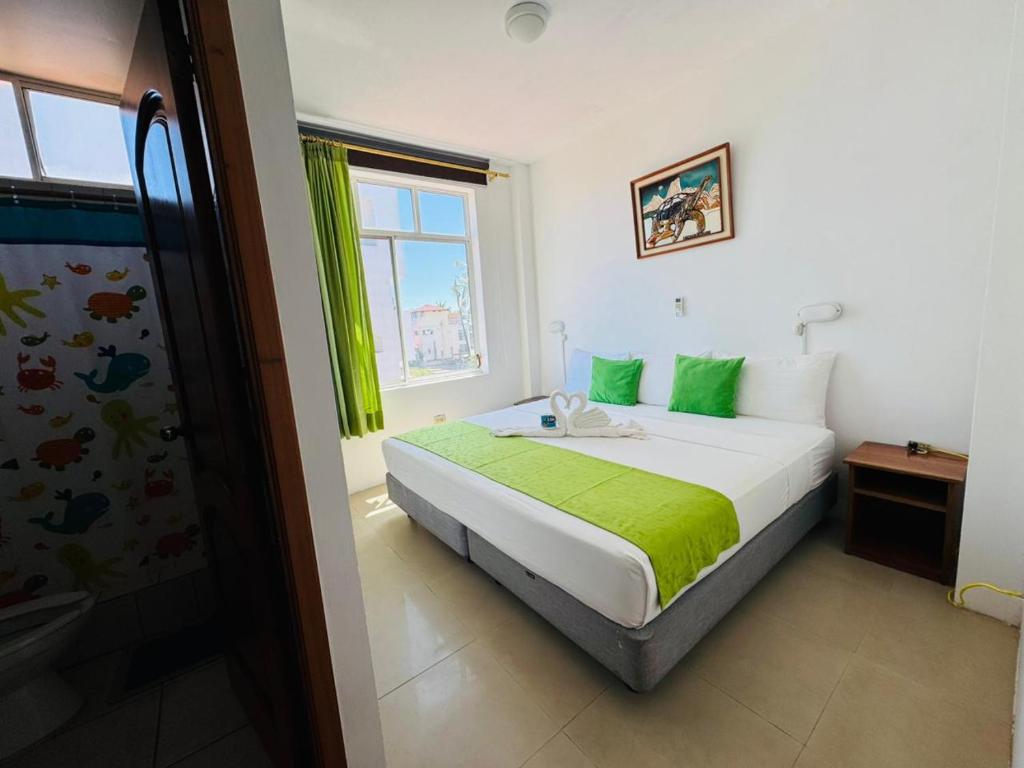
Confirm the actual bed layout, bathroom, air conditioning and access to the room. A family room may still be one bedroom, and an ocean-view balcony may require stairs. If breakfast is served on a rooftop, ask about ground-floor arrangements and an alternative service when needed. A common kitchen is not a private kitchenette in every room. Confirm meal inclusions and early-breakfast options around excursions, especially when your group has different needs.
Prices are set by the booking site. We may earn a small fee, at no cost to you.