About Tena
Tena makes the upper Amazon a place to stay, with rivers, forest walks and cacao-growing communities within reach of the Andean road. The town at the Pano and Tena rivers gives you independent meals and tour pickups. Archidona’s side roads lead to forest lodges, while the route through Puerto Napo reaches Misahuallí and its riverside stays.
Further along, the Ahuano area includes both lodges reached by road and an island reached by canoe. Choose the final transfer as carefully as the room: it determines your freedom for dinner, excursions and an early departure.
Common questions
Which base is most useful for a first visit?
Tena is the flexible choice for independent dinners, buses and several day excursions. Archidona’s forest approaches suit travellers who want to spend more time at a lodge while keeping road access. Misahuallí works well for the river-village atmosphere and nearby forest accommodation. Choose Ahuano and an island stay when you want a planned programme and are comfortable arranging meals and transfers together. Compare the actual last stage of the journey, not only the district name.
How many nights should I allow?
Three nights give you two full days for a forest walk or cacao visit and a separate river activity, with room for weather changes and rest. Two nights work for a focused lodge programme if arrival and departure fit its schedule. Four or five nights can justify a town stay followed by a more remote lodge, but moving every night usually adds more packing than discovery. Keep a spare afternoon instead of treating every daylight hour as a fixed excursion.
How do I get here from Quito or Baños?
The usual road from Quito goes through Pifo, Papallacta and Baeza before Archidona and Tena. The municipal guide describes roughly four hours under normal conditions; buses, stops, weather and the final lodge road can add time. Confirm the departure terminal and current route with your operator. From Baños, the road approach runs through Puyo. A flight into Quito still leaves a substantial road journey, so avoid attaching a fixed canoe pickup or afternoon tour to a tight airport arrival.
Can I travel without a car, including to river lodges?
Yes, using intercity buses, local taxis and transfers arranged with the actual accommodation. A Tena or Archidona hotel may simply need a taxi to its entrance. For an island stay, the road journey ends at a particular landing such as Punta Ahuano and continues by a prearranged canoe. Confirm the meeting point, luggage, waiting arrangements and the return together. Do not assume every hotel sold under Tena uses the same pier or includes transport in the room booking.
When is the weather most suitable?
This is warm, humid country with substantial rain throughout the year. Historical local records show heavier rainfall often from April to July and relatively lower totals around January and February, without a reliably dry season. Bring light clothing, rain protection and footwear suited to muddy paths. Current rainfall and river levels matter more than a seasonal label for rafting, canoe transfers and waterfalls. A covered terrace and a flexible programme make a rainy afternoon easier to enjoy.
Is rafting suitable for beginners or children?
Some operators offer introductory trips on the Jatunyacu, but the route, water level, age rules and participant requirements need checking for the specific outing. Ask about the briefing, equipment, pickup and the alternative if conditions change. Family admission at a lodge does not establish eligibility for a river trip. You can build a rewarding stay around shorter guided walks, cacao activities, a pool where available and time on a terrace instead of choosing an intense activity every day.
What should I expect from forest and wildlife outings?
A local guide can make a short walk interesting through plants, tracks, insects and bird calls, even when larger animals do not appear. Discuss the trail’s length, mud, slopes and darkness before booking a night walk. Choose the forest experience that fits your pace and leave room for the conditions on the day. Wild animals are not scheduled attractions; around Misahuallí’s monkeys, avoid feeding or handling them. A lodge photograph should not be read as a promise of a sighting.
How can I include local culture and food?
Arrange a visit hosted by a local community or producer to learn about cacao and the Amazonian chakra, where crops and forest species form a living agricultural system. Ask who hosts the visit, what happens and whether photography is welcome. Kichwa knowledge is part of everyday work and family life. For food, look for maito, often fish cooked in leaves, and the local guayusa drink. Confirm dietary needs with the lodge before arrival, particularly when meals are part of a remote stay.
What should I confirm before booking a lodge?
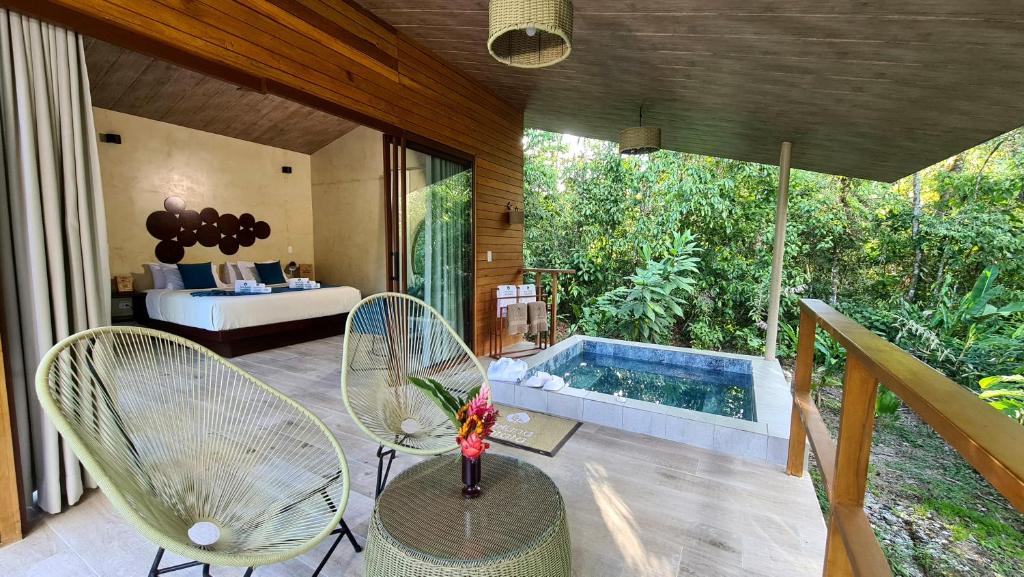
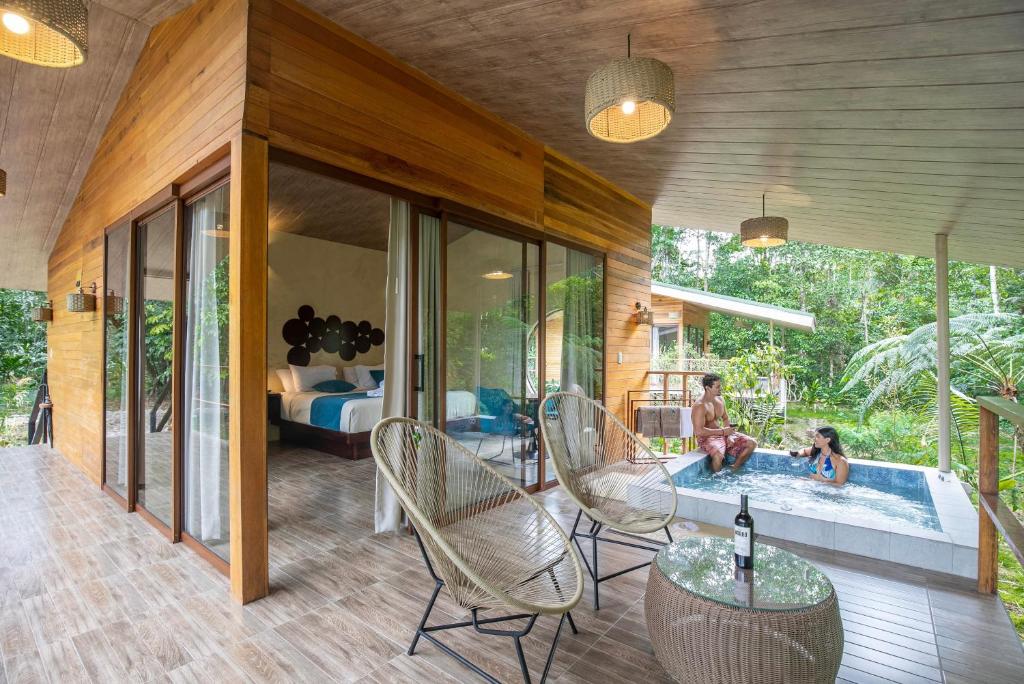
Check the private-bath room category, fan or air conditioning, stairs, children’s policy and the actual arrival route. Then compare meals, guiding and transfers: a room-only reservation and a multi-day programme can cover very different things at the same property. Ask about the last daytime pickup, early departure and how plans change after heavy rain. Take rain protection for luggage on a canoe and keep the first evening simple, with dinner and arrival arrangements agreed in advance.
Prices are set by the booking site. We may earn a small fee, at no cost to you.