About L’Isle-sur-la-Sorgue
L’Isle-sur-la-Sorgue makes a satisfying base for days built around markets, antique shops and slow walks beside the water. Where you sleep changes the balance: the historic centre puts dinner and the canals outside your door, while the outer riverbanks trade some convenience for gardens and pool time.
Fontaine-de-Vaucluse offers a smaller village beside the spring, and the lower Saumane approaches suit drivers who want space between outings. These are connected destinations, but they are not one continuous pedestrian neighbourhood; check the actual address before choosing a room for a holiday without a car.
Common questions
Can I arrive by train and stay without a car?
The station called L’Isle-sur-la-Sorgue–Fontaine-de-Vaucluse is in L’Isle, a short walk from its centre; it is not in Fontaine village. TER connections through Avignon Centre and Cavaillon are useful, but consult the journey planner for your date because some services may involve replacement coaches. A central L’Isle address is the simplest choice for meals, markets and everyday errands on foot.
How do I reach Fontaine-de-Vaucluse without driving?
ZOU line 914 connects L’Isle with Fontaine, with fewer Saturday departures and no Sunday or public-holiday service in the timetable effective September 2026. Check both journeys before committing to a day out, because a return that works on a weekday may not run on Saturday. The tourism office advises against walking there along the main road, which lacks a protected pedestrian route.
When are the markets and antique fairs?
The traditional markets take place on Thursday and Sunday mornings, while the Sunday brocante occupies Avenue des Quatre Otages. The major antique fairs are associated with Easter and mid-August; confirm each year’s dates before arranging a buying trip. Staying centrally helps on market days, when parking and access with luggage take more planning.
Can I walk all the way to the spring at Fontaine?
The village walk remains possible up to the barrier, but the final section, roughly fifty metres before the gouffre, is currently closed because of falling-rock danger. Respect the barrier and check the tourism office’s current access notice, especially after heavy rain. Water levels vary with rainfall, so the appearance of the spring can differ greatly between visits.
Which season works best for this area?
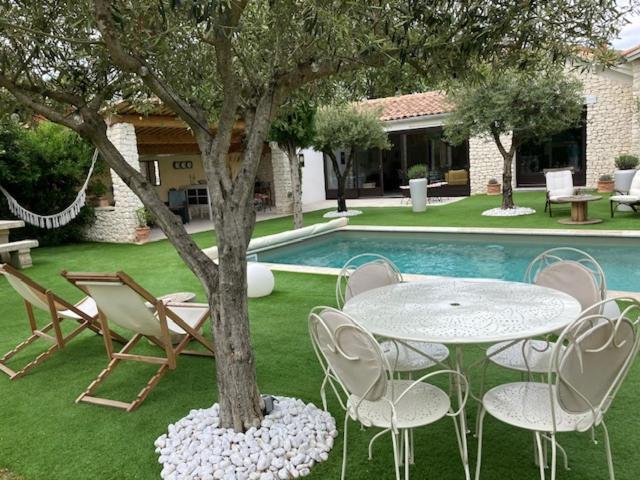
Spring and early autumn suit market visits, village walks and drives between the different settings, while summer makes shade and a working pool more valuable. Outdoor pools have individual seasons even when the accommodation opens all year, so verify dates rather than relying on a pool photograph. A winter stay can work well in L’Isle if you confirm restaurant and guesthouse opening periods first.
How many nights should I allow?
Two or three nights leave room for a market morning, browsing antique shops and a separate outing to Fontaine. Add time if you want countryside drives, golf or visits to the hilltop village of Saumane, rather than changing accommodation for every short outing. Saumane’s château is currently closed for works, so plan a village walk without assuming an interior visit.
Can I swim or go canoeing in the Sorgue?
Do not treat the river beside your accommodation as a swimming pool: many municipalities prohibit bathing, and banks can be private. Book canoeing with an authorised operator and check the season, river conditions, age requirements and swimming ability required for your group. Low flow can stop navigation, so a room booking does not guarantee that a river trip will operate.
What should I check if I bring a car?
Ask whether parking means an allocated hotel space, a reservable shared area or a municipal car park reached on foot. Obtain unloading directions for the historic centre and Fontaine before arrival, especially on market or fair days when access can change. A car is most useful for the lower Saumane approaches and wider countryside, while central L’Isle rewards leaving it parked.
Which details matter for families and reduced mobility?
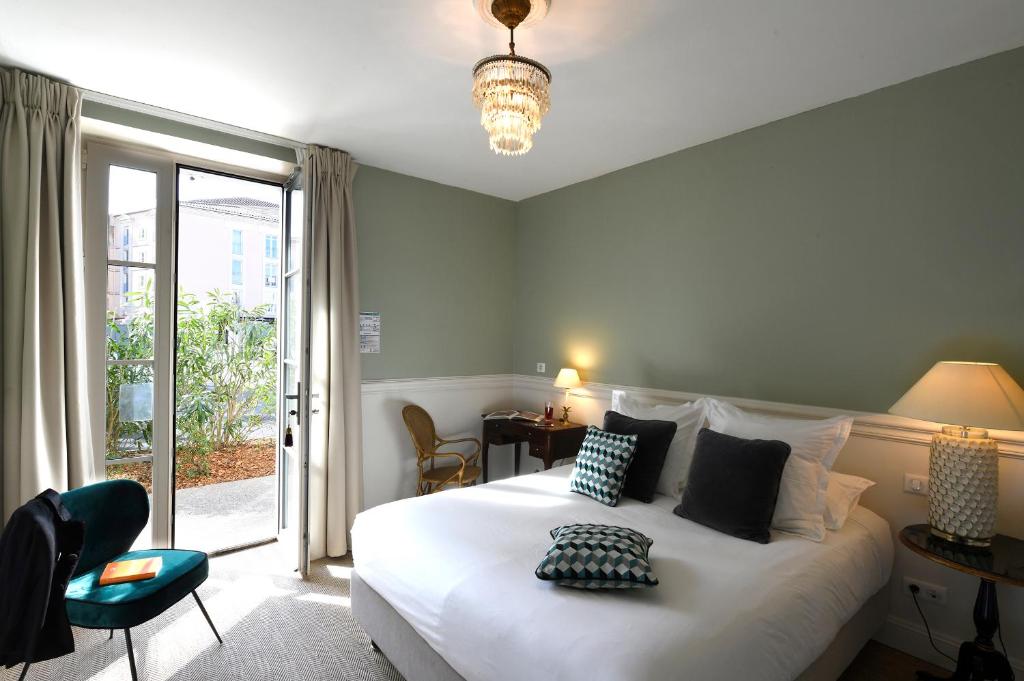
Check the exact beds, guest-age rules and cooking facilities, since a double guestroom, a family suite and an apartment offer different kinds of independence. Older houses may have stairs, and a lift or adapted bedroom does not mean the garden and pool can be reached without steps. For children, confirm pool rules and supervise access to the river; for reduced mobility, ask about the entire route from parking to the room.
Prices are set by the booking site. We may earn a small fee, at no cost to you.