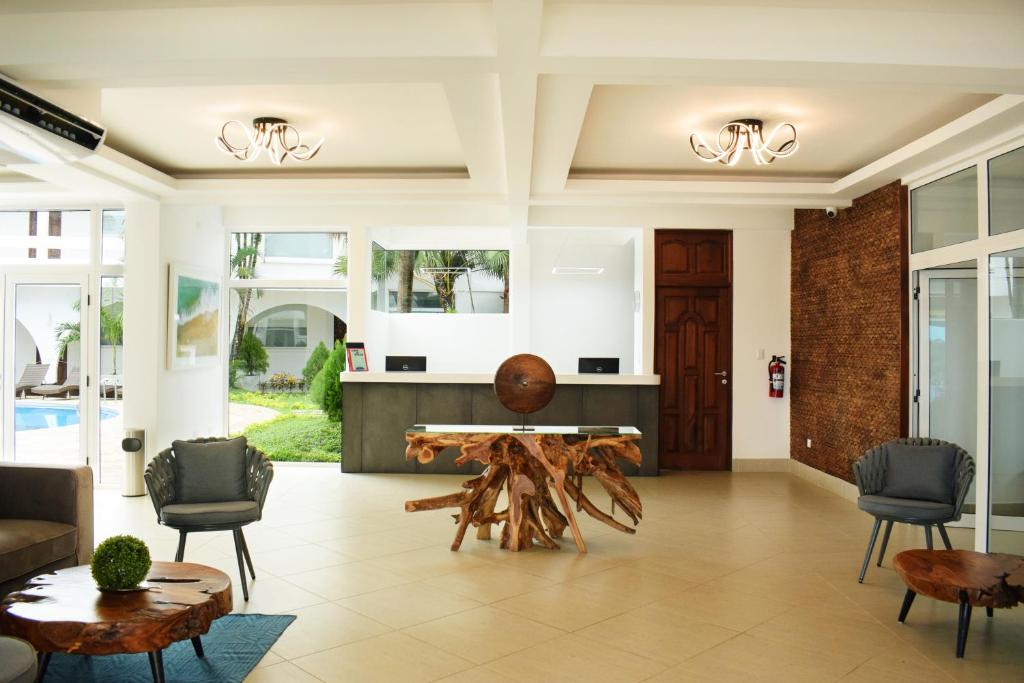
About Puerto Barrios
Puerto Barrios works as a Caribbean stop with more than one rhythm: a walk by the bay, a night before the Livingston boat, or several days combining a pool with forest excursions. The city and neighbouring Santo Tomás de Castilla share a working port setting, but their hotels are spread across different roads.
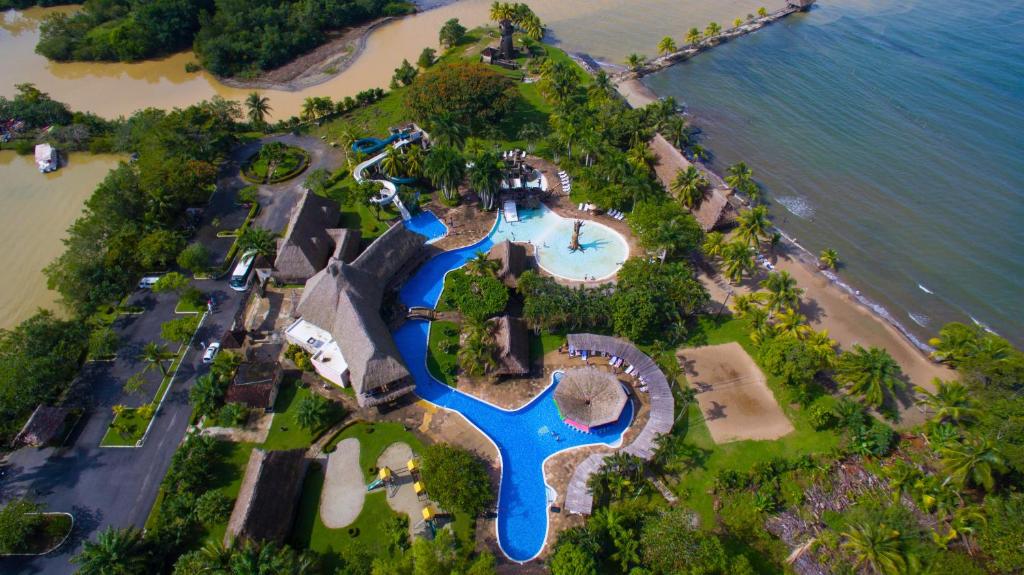
Stay in the central grid for shops and the municipal dock, along the Pichilingo shore for a resort stay, or towards Santo Tomás for road access and Las Escobas. Compare the exact entrance: a broad Puerto Barrios search can also bring up distant Río Dulce accommodation.
Common questions
Where should I stay if I am travelling without a car?
Choose the central grid for ordinary shops, restaurants and connections through the municipal dock. You can also stay at a pool property or in Santo Tomás without renting a car, but arrange the hotel transfer, excursion pickup and return journey before committing to that address. Check the whole route from the bus agency or airport instead of assuming a city label means a short walk.
How many nights should I spend in Puerto Barrios?
One night can break a road journey before continuing by boat, provided the arrival and sailing arrangements fit. Two nights allow a full day for the waterfront and time at the hotel, or a separate forest outing; three nights give more room to combine a boat excursion with Las Escobas. Keep the city stay and the onward Livingston or Río Dulce stay as separate decisions.
How do I get here from Guatemala City by road?
The main approach is the CA-9 route towards the Caribbean coast, and Litegua has agencies in both Guatemala City and Puerto Barrios. Confirm your exact departure terminal, service and luggage arrangements with the operator, since the capital has several listed agency addresses. In Puerto Barrios, the central agency is on 6a Avenida between 9a and 10a Calle; Santo Tomás has a separate agency in Colonia El Pueblito, so tell the hotel where you will actually arrive.
Can I use Puerto Barrios Airport?
The local airport is Puerto Barrios, code PBR, and it requires a separate transfer to your selected hotel or boat landing. Check flights for your actual date and confirm any ground pickup with the property rather than building a plan around an old timetable. Allow room between air, road and boat journeys because these are separate services with different arrival points.
Where do boats to Livingston leave?
Boat transfers use the municipal docks of Puerto Barrios and Livingston; the neighbouring Santo Tomás commercial port is a different destination. Confirm whether you have booked a shared departure or a private transfer, the meeting point, luggage handling and the return arrangement. For a day that also includes Playa Blanca or other coastal stops, agree on the actual route and allow flexibility for sea conditions instead of treating it as the basic town-to-town crossing.
How should I plan a visit to Las Escobas?
CONAP describes the Las Escobas entrance through Santo Tomás, following the road past the market towards Las Escobas and Punta de Palma. The forest trail has streams, waterfalls and pools within the Cerro San Gil protected area, but the separate Carboneras approach to the reserve is a different journey. Arrange transport both ways and ask the reserve or your host about current trail access and conditions after heavy rain.
Is Puerto Barrios a beach holiday base?
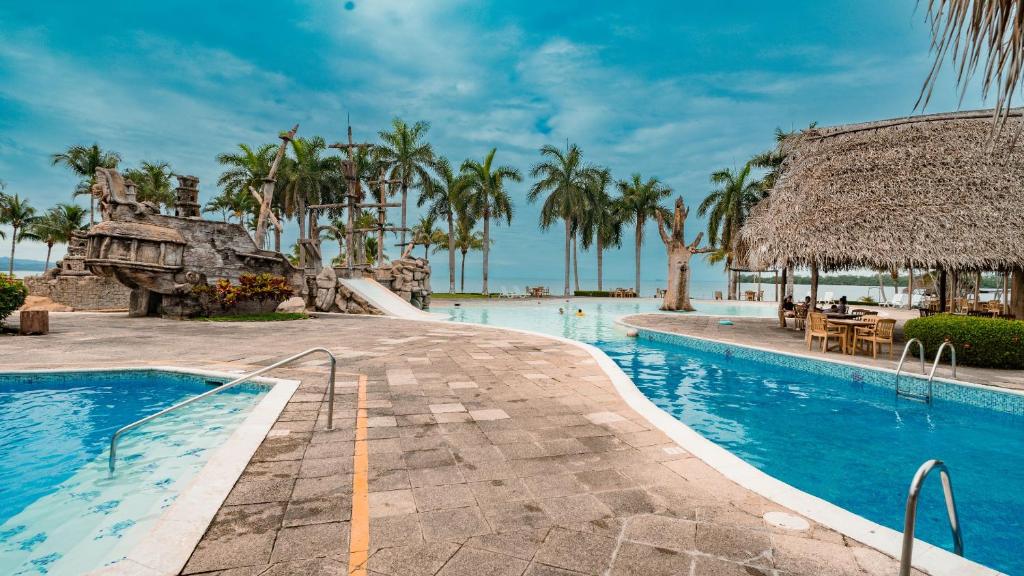
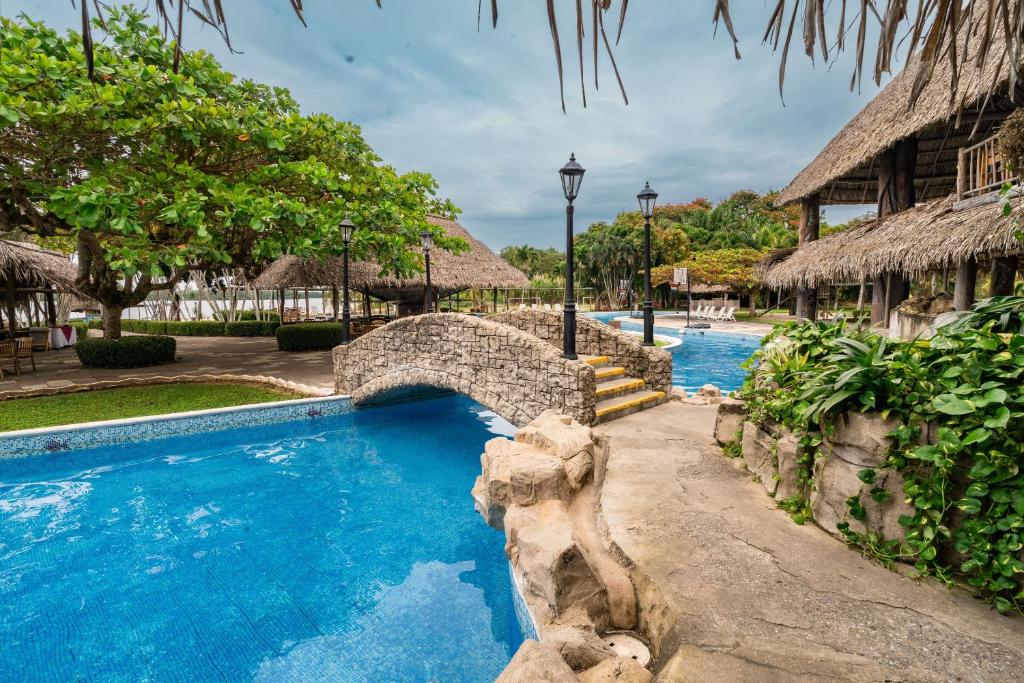
It is a working port city with bayfront accommodation, rather than one continuous beach-resort strip. A stay with pools and a private beach area can work well, while Playa Blanca and other coastal outings need their own transport and itinerary. Check the current shore condition and the actual room view; a hotel near a port or named for the Caribbean does not automatically sit on a good swimming beach.
What is the weather like, and when is it drier?
The Caribbean side is warm and humid, with rain possible throughout the year; March and April are generally among the less rainy months. Later months can bring heavier rain, and cold fronts also influence the end of the year, so the Pacific coast’s simple dry-season pattern is not a reliable guide here. Leave flexibility for boats and forest walks, carry rain protection and confirm air conditioning or ventilation in the room you book.
What should families or travellers with mobility needs check?
Compare the actual beds, bathroom, room size and access route, since a family category may be one room with bunks or several beds rather than separate bedrooms. Kitchenettes are room-specific, and an advertised shared kitchen does not necessarily mean guests can cook or store food there. Ask explicitly about stairs, the condition of pools and the dining available during your dates, rather than assuming that a terrace view or resort label answers those questions.
Prices are set by the booking site. We may earn a small fee, at no cost to you.