About Seyðisfjörður
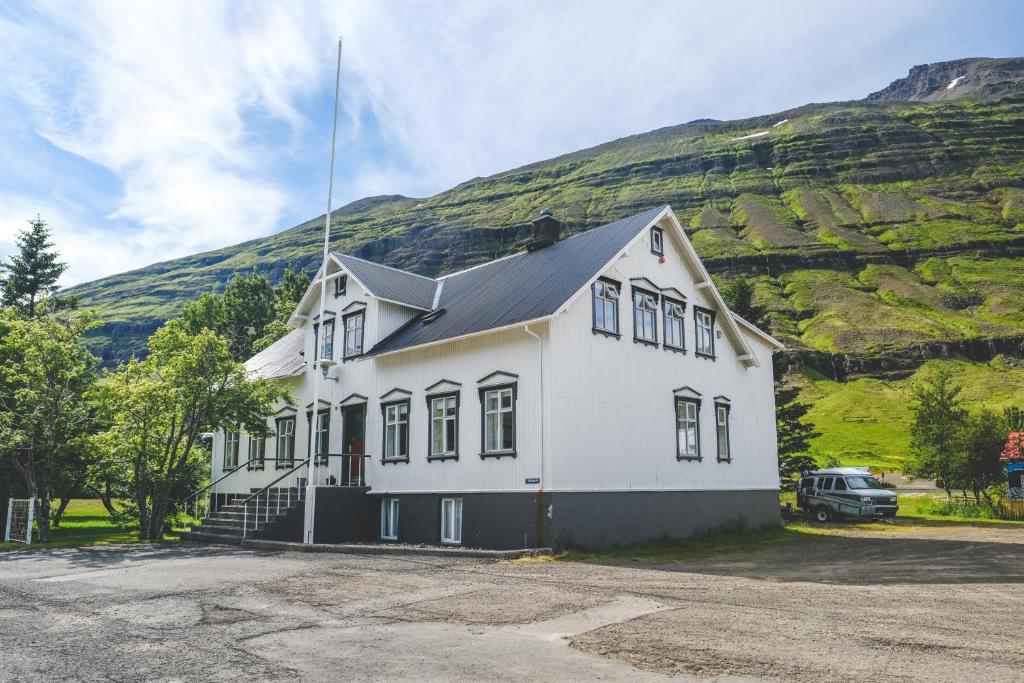
Seyðisfjörður is worth an evening after the photographs of its rainbow street. Wooden houses gather around the lagoon, the blue church anchors the centre, and contemporary art gives the village a life beyond the ferry timetable. Coming over Fjarðarheiði from Egilsstaðir, you descend into a fjord where a short walk, a gallery visit and cooking dinner can fill a satisfying day.
Stay near Norðurgata for the historic setting, along Austurvegur and Hafnargata for village apartments and guest rooms, or a little farther along the northern shore for a cottage terrace. Choose the rhythm you want indoors as carefully as the view outside.
Common questions
How long should I stay, and should I choose Seyðisfjörður or Egilsstaðir?
Two nights allow a full day for the village, contemporary art and a walk without fitting everything around a long drive. Add a third if you want slower mornings or flexibility for outdoor plans. Seyðisfjörður suits evenings beside the fjord and a compact historic setting; Egilsstaðir is a separate inland base for the airport and regional road connections. The mountain crossing is part of the journey between them. Choose where you want to spend your evenings, especially when winter travel conditions may change.
How do I arrive by air or bus?
Icelandair's domestic route to Egilsstaðir uses Reykjavík Airport, RKV. An international arrival at Keflavík, KEF, may therefore require a transfer between airports. Strætó route 93 connects Egilsstaðir, including its airport stop, with Herðubreið in Seyðisfjörður. Check the timetable's day annotations against your flight and allow for the final walk or transfer to your accommodation. The road crosses Fjarðarheiði, so a published journey time should not replace a check of conditions. Arrange another transfer if the scheduled departures do not fit.
What should I check when arriving or leaving by ferry?
Smyril Line's Norröna connects the town with the Faroe Islands and Denmark on a seasonal sailing calendar. Confirm the actual arrival date, departure day and port instructions before fixing overnight stays; do not assume a daily service or an Iceland sailing throughout winter. The operator currently requires general check-in at least one hour before departure, with earlier arrangements for passengers needing assistance. Follow the deadline on your booking. Tell your accommodation about the ferry schedule, and leave room for disembarkation and key collection.
When is the easiest season, and what changes in winter?
Summer gives long daylight for village walks and generally the widest choice of seasonal accommodation and activities. Spring and autumn can work well, but check each business's calendar before building a day around it. Winter brings short days, snow and ice, and severe weather can temporarily close the Fjarðarheiði road. Check current road information on umferdin.is and the weather forecast before crossing. Keep an onward flight or ferry separate from a tightly timed mountain drive, and choose accommodation that actually opens during your dates.
What is there beyond Rainbow Street, especially on a wet day?
Skaftfell at Austurvegur 42 has a changing contemporary art programme and an art bookstore, with a bistro in the same building. Its gallery is not open every day, so check the exhibition and opening calendar. The municipal facility on Suðurgata offers an indoor swimming pool, an outdoor hot tub and an indoor sauna; it also has seasonal hours and closure days. The blue church hosts a summer concert series. Combine one indoor visit with a short walk among the wooden houses rather than expecting every attraction to stay open until evening.
Which nearby walks and waterfalls are practical?
Tvísöngur is an outdoor sound sculpture with five connected concrete domes above the town. The tourism office describes a roughly fifteen-to-twenty-minute uphill gravel walk from opposite Brimberg, so allow for footing and the return journey. Gufufoss is beside route 93 on the approach over Fjarðarheiði and can fit into a road arrival when conditions allow. Use proper stopping places and assess the approach on the day. A short summer path is different from a maintained winter pavement; longer mountain routes need their own planning.
What works best for families or travellers who want to cook?
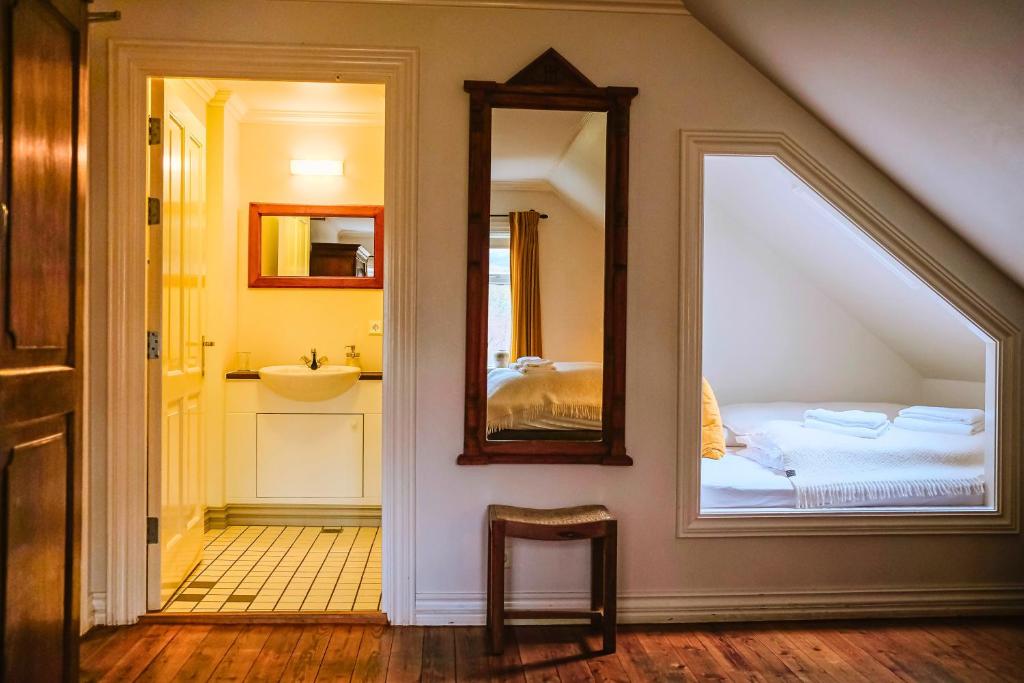
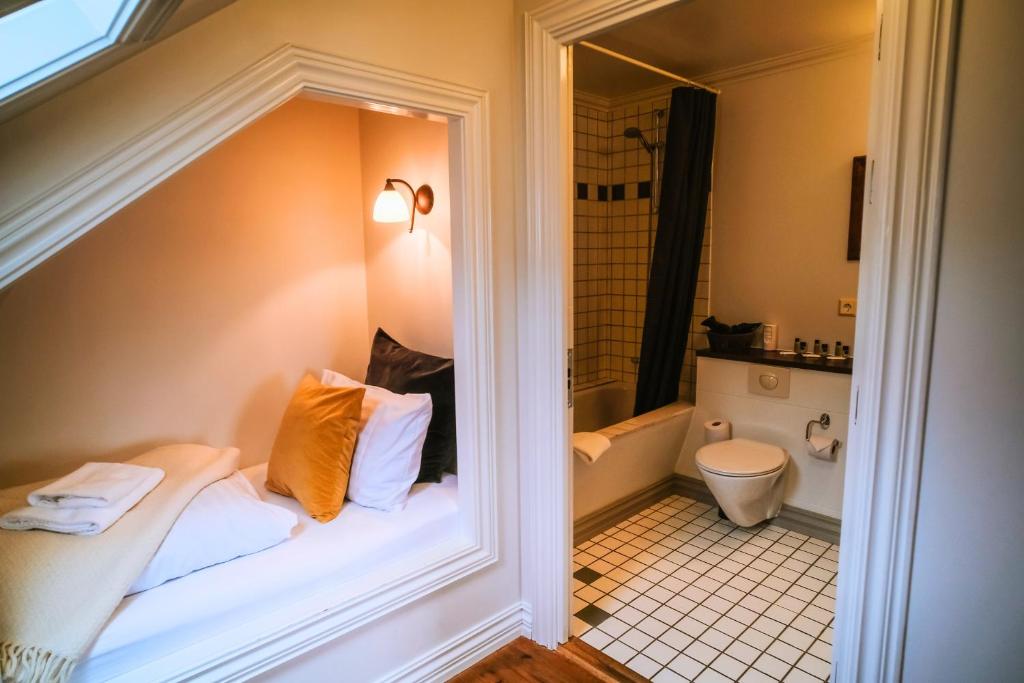
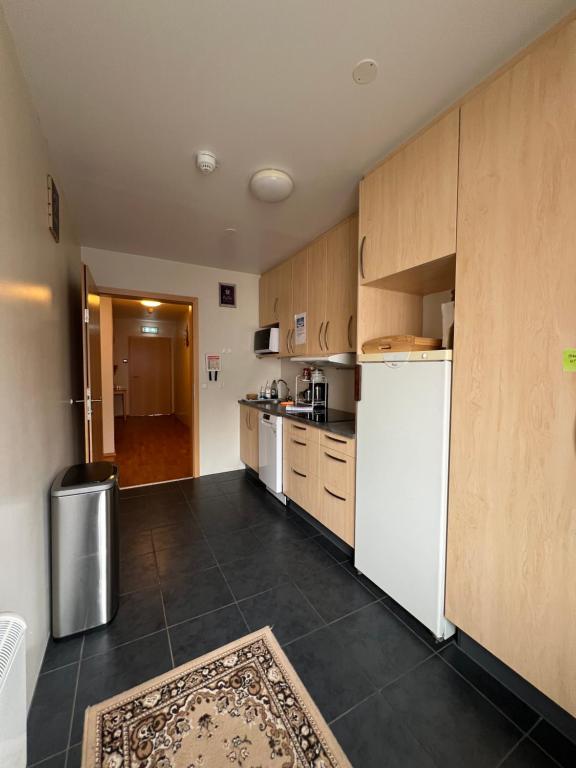
Choose a whole apartment or cottage when separate bedrooms and a private kitchen will shape the stay. Read the actual beds: a three-bedroom cottage can include bunk beds, while the selected apartment offers three double beds. A family guesthouse room may instead place two double beds in one room and share the kitchen with other guests. Confirm the number of bathrooms, laundry arrangements and any cot request. Cooking equipment and a dining table are more useful details than a broad family-friendly label.
How should I organise late arrival and meals?
Save the host's directions, entry instructions and contact number before travelling over the pass or boarding the ferry. Some stays have a separate key-collection address, others use self check-in, and a cottage may have no reception office. Arrange arrival outside the stated hours instead of assuming somebody will be at the door. Ask which restaurants serve dinner during your dates and whether breakfast is included or separately arranged. If cooking, buy what you need before shops close and confirm whether the kitchen is private or shared.
Prices are set by the booking site. We may earn a small fee, at no cost to you.