About Opononi–Ōmāpere
Opononi and Ōmāpere share the southern shore of Hokianga Harbour, facing the great sand dunes on its northern side. They work as one overnight base, with different advantages along the waterfront. Opononi puts the wharf, food stops and Manea’s Māori storytelling close together; Ōmāpere brings you towards the harbour entrance and the road south through Waipoua Forest.
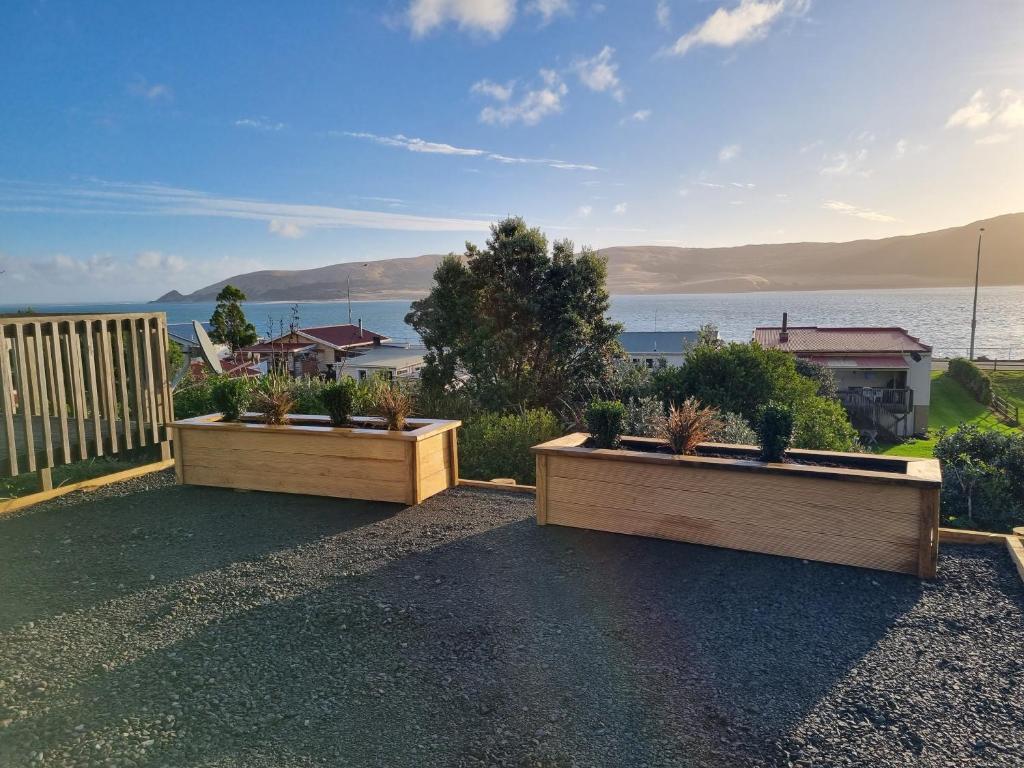
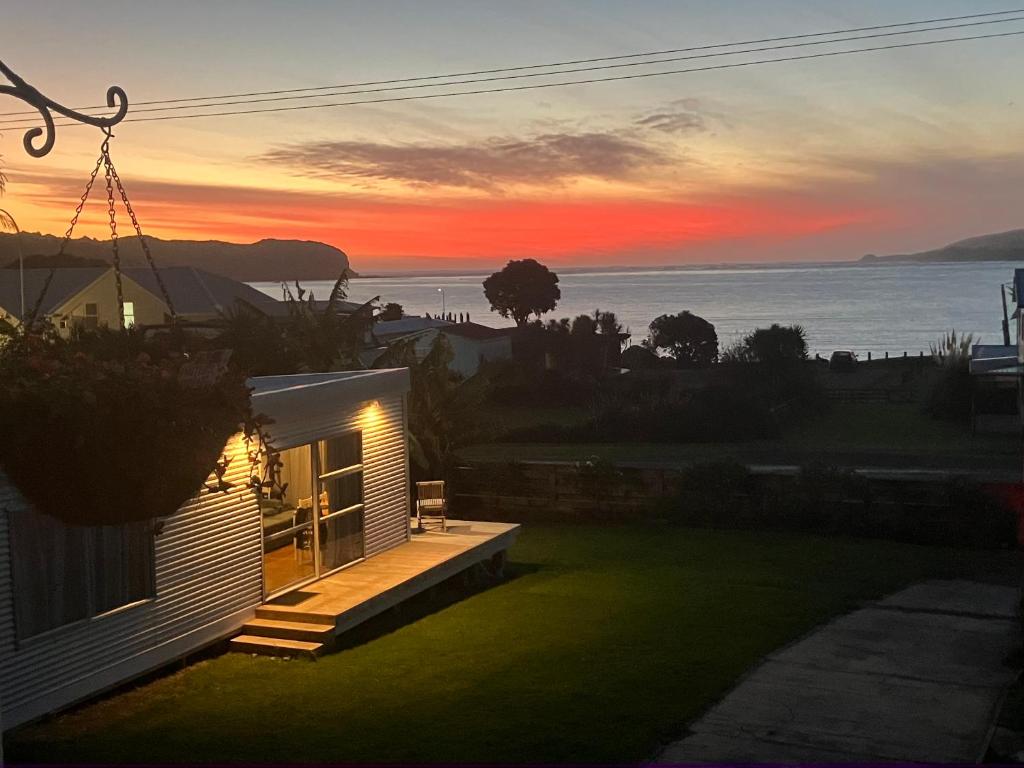
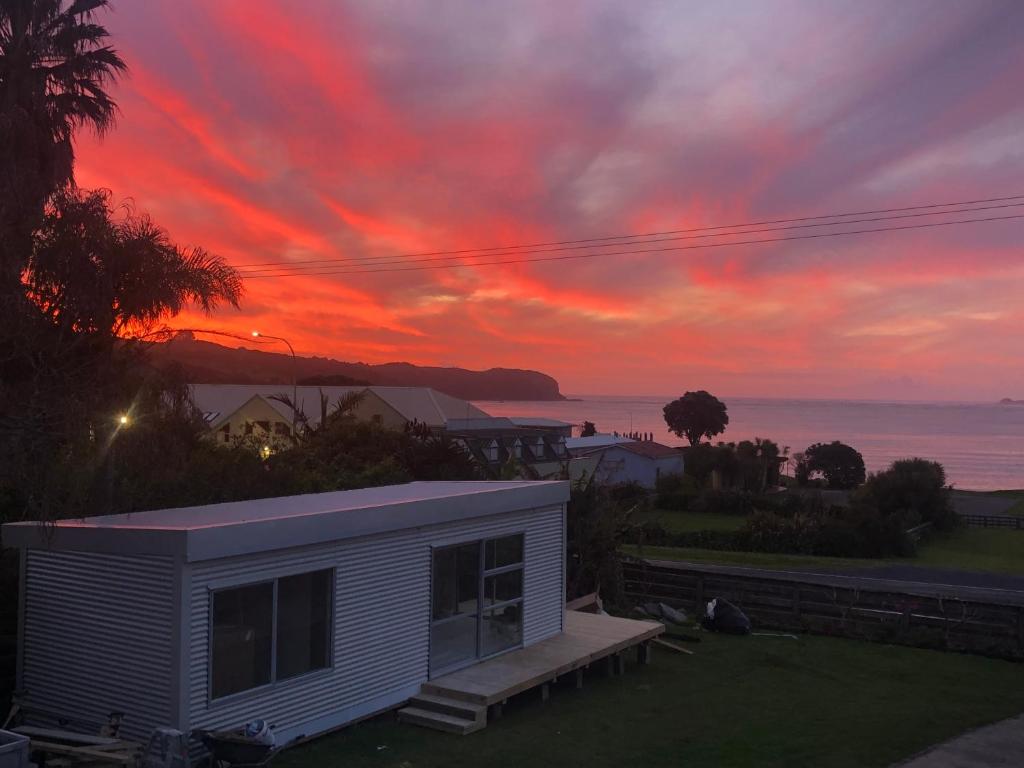
Above the shore, Fairlie Crescent offers a quieter residential setting with elevated views. The useful choice is between stepping onto the beach, walking to the village strip, or keeping a deck and kitchen for a slower stay.
Common questions
How many nights make sense in Opononi and Ōmāpere?
Two nights allow a harbour outing, Manea and a short headland walk without treating the villages as a lunch stop. Three nights give more room for Waipoua Forest and for changing a boat plan when conditions do not cooperate. Keep the two settlements as one base rather than packing up to move a short distance along the same shore.
Do I need a car, and is there a bus?
A car is useful for the headland, forest and scattered Hokianga stops, even if your immediate waterfront is walkable. The Hokianga Link connects Ōmāpere and Opononi with Kaikohe on Tuesdays and Thursdays, with onward Mid North Link connections towards Kerikeri. Confirm the current timetable and the stop nearest your accommodation; this is a limited regional service, not a bus to every attraction throughout the day.
How do I reach the sand dunes opposite Opononi?
The large dunes lie across the harbour on its northern side, rather than behind the southern village beaches. Tourism New Zealand describes water-taxi trips from Opononi Wharf for sandboarding. Arrange the crossing and return with the operator, check conditions before leaving, and allow flexibility instead of assuming a boat will depart whenever you arrive.
What is Manea, and can I visit independently?
Manea: Footprints of Kupe is a guided cultural experience led through Māori stories, carvings, taonga, film and live performance. The visit includes a welcome and a theatre presentation, followed by an interactive gallery, so book a session rather than treating it as an unguided monument beside the road. Hearing the harbour’s connection to Kupe gives the surrounding landscape a different context from a lookout alone.
Which short walk gives a view of the harbour entrance?
Signal Station Track starts at the Arai Te Uru reserve car park at the end of Signal Station Road. DOC lists 813 metres and about fifteen minutes one way, following the clifftops through mānuka to the headland lookout. It is not wheelchair suitable, children need close supervision near steep drops, and the nearest toilets are back in Ōmāpere.
Can I visit Tāne Mahuta and the other kauri walks from here?
The Tāne Mahuta entrance is on State Highway 12 about eighteen kilometres south of Ōmāpere, with a short accessible boardwalk to the tree. DOC’s 2026 work programme keeps this visit separate from the Kauri Walks redevelopment, so check current access before promising yourself Te Matua Ngahere or the Four Sisters as well. Remove soil from footwear, use the cleaning station and stay on the formed track to protect vulnerable kauri roots.
What should I check when booking a family room or self-catering stay?
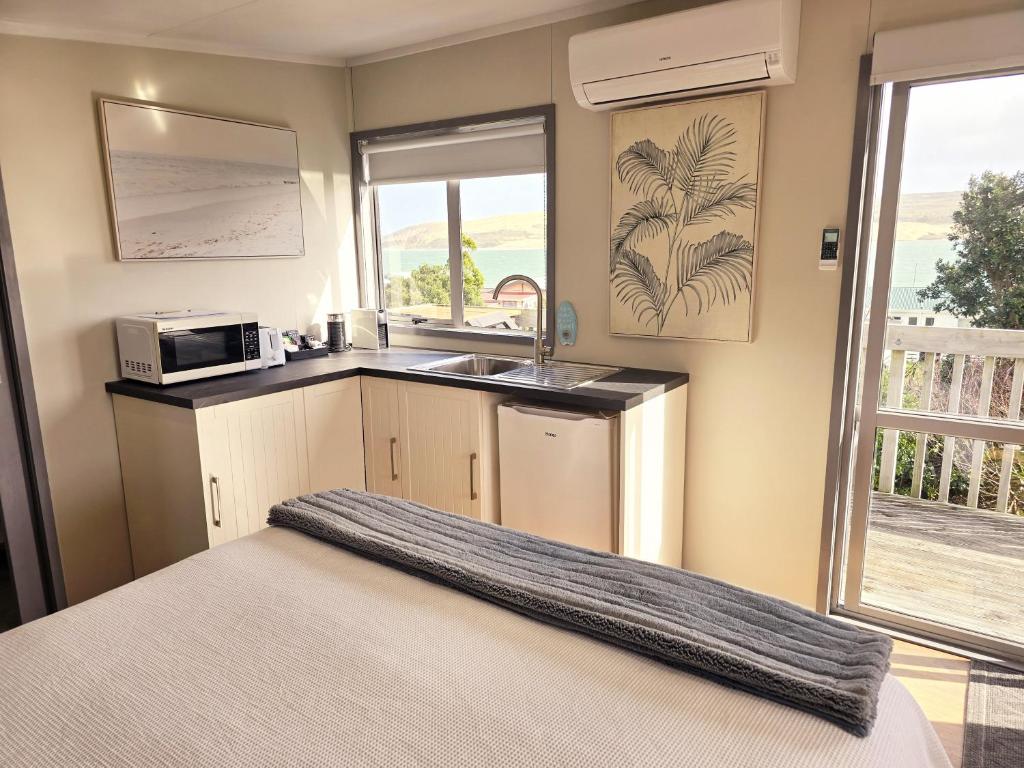
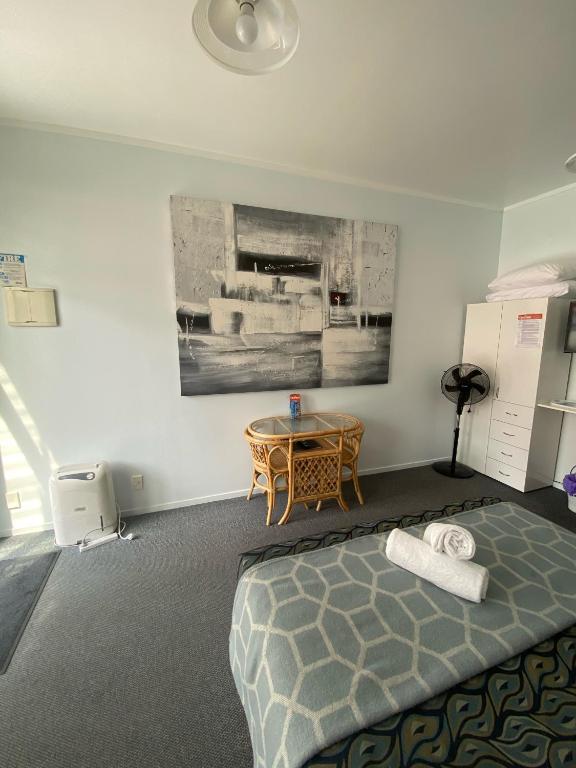
Look at the actual bedroom arrangement: a sofa bed in the living area is not the same as a second bedroom. Kitchen facilities range from tea-making equipment to a kitchenette or a fuller apartment kitchen, and a microwave does not guarantee a hob. If a spa, pool, accessible shower or uninterrupted waterfront access is important, confirm its present availability with the property rather than relying on a general facilities list.
Prices are set by the booking site. We may earn a small fee, at no cost to you.