About Lunahuaná
Lunahuaná follows the Cañete River through a valley of vineyards, fruit gardens and small settlements. Staying near the plaza makes dinner and meeting a tour straightforward; nearby Condoray offers more space without changing the basic town base. Downriver, Paullo and Langla suit a garden or farmhouse stay.
Catapalla puts wineries and honey producers closer to your plans, while Pacarán is a separate upriver estate choice. Rafting can be part of the visit, but the river's condition decides the outing. Pick a hotel you would enjoy for an afternoon, then add archaeology, a cellar visit or a guided river trip.
Common questions
Which area should I choose for a first visit?
Start with central Lunahuaná or adjoining Condoray if you want a choice of restaurants and a straightforward tour meeting point. Paullo–Langla suits a garden stay with planned trips into town. Catapalla is useful for a village, wineries and river scenery, while Pacarán works best when the estate itself is a large part of the holiday. Choose around your evenings, not only the daytime activity.
How many nights make sense?
Two nights let you arrive without rushing, spend a full day on a river or valley outing and still enjoy the hotel. A third night gives room for Incahuasi, a winery visit or a proper afternoon in the garden. For this length of trip, one base is usually simpler than moving between neighbouring settlements. Leave time for the return journey to Lima rather than filling the final afternoon.
How do I get here from Lima?
Travel south on the Panamericana, then through the Cañete and Imperial approach onto the road towards Lunahuaná and Yauyos. Tourism guidance gives around three hours, but the starting point, Lima traffic and stops matter; an airport transfer is not the same journey as leaving southern Lima. By public transport, reach San Vicente de Cañete, connect to Imperial and take a valley-bound combi or shared car. Confirm the final stop for your hotel.
Can I visit without renting a car?
Yes, especially from the town centre, but plan the links between places. Local shared transport follows the valley road, while a taxi or arranged driver is useful for a hotel entrance, a late return or several stops. Ask the accommodation to confirm pickup and return arrangements before setting out. A driver also makes a winery day simpler when you intend to taste pisco or wine; do not assume every remote property can supply a vehicle immediately.
When should I visit?
The inland valley generally has a dry, temperate character, but river conditions depend on rain farther upstream as well as local weather. Flows tend to increase from November to April, so a sunny day is not proof that rafting is suitable. Bring sun protection and a light evening layer, and check the forecast and current activity notices. Around the traditional March grape festival, use the municipality's current programme rather than assuming the same dates every year.
How should I choose a rafting trip?
Use an authorised rafting operator and confirm the current permitted route, guide, equipment and suitability for everyone’s age and experience. A July 2026 official inspection reiterated that children under eight must not take part; older children still need a route and operator willing to accept them. A helmet and properly fitted life jacket belong to the outing. The river can be restricted when flow rises, so ask again close to departure and keep another plan for the day. A riverside room or a hotel advertising adventure activities does not establish that rafting is included or that the river is suitable for casual swimming.
What can I do without rafting?
Spend time around the plaza and Santiago Apóstol church, then arrange the road trip to Incahuasi at Paullo. The archaeological site has Inca courts, buildings and storehouses; the official inventory lists prior coordination for entry, so confirm access rather than treating it as an unrestricted roadside stop. Catapalla adds the bridge, wineries and honey producers. Ask each business about visits and tastings, and leave an afternoon free for the hotel's garden.
What food and local products should I look for?
Sopa seca is a useful local choice: seasoned noodles rather than a bowl of soup. Chupe de camarones is another valley speciality when river shrimp are in the permitted season; check the current closed-season rules rather than expecting it year-round. Grapes, pisco and honey link a meal to the surrounding farms. Confirm restaurant hours at a country hotel, and tell the kitchen about dietary needs before arrival.
What should families check before booking?
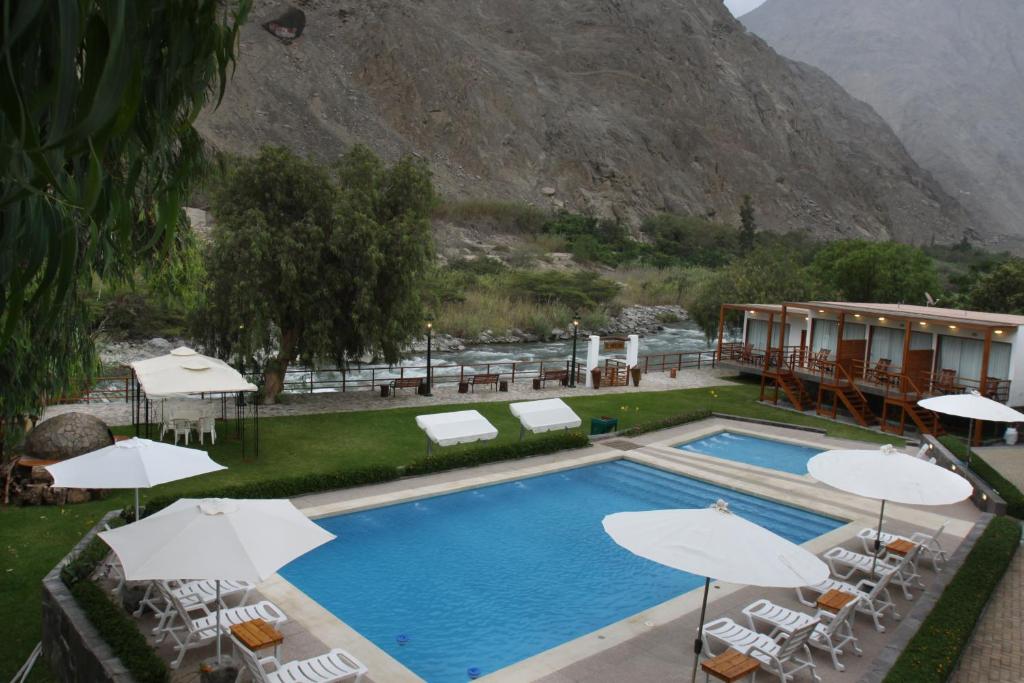
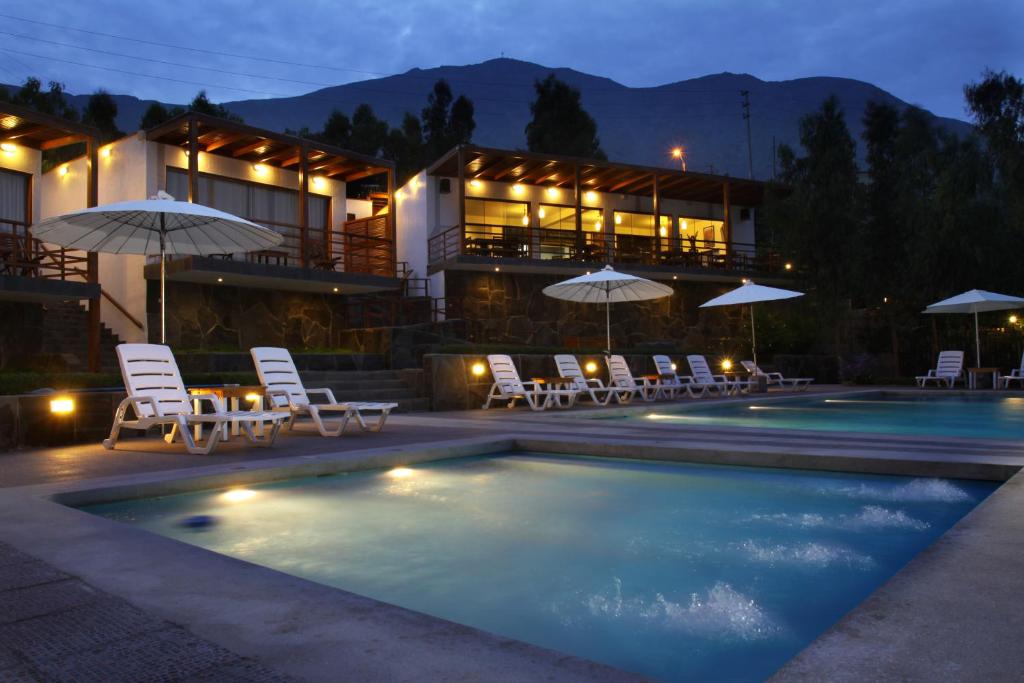
Compare the actual beds, bathrooms and stairs. A quadruple room may contain two queen beds in one space, and a suite does not automatically provide separate children's bedrooms or a kitchen. Ask whether the room uses fans or air conditioning, which view belongs to the category, and whether the pool is shared, heated or open during your stay. Riverfront accommodation needs its own discussion about access to the bank; a hotel pool and the Cañete River are different settings.
Prices are set by the booking site. We may earn a small fee, at no cost to you.