About Nieu-Bethesda
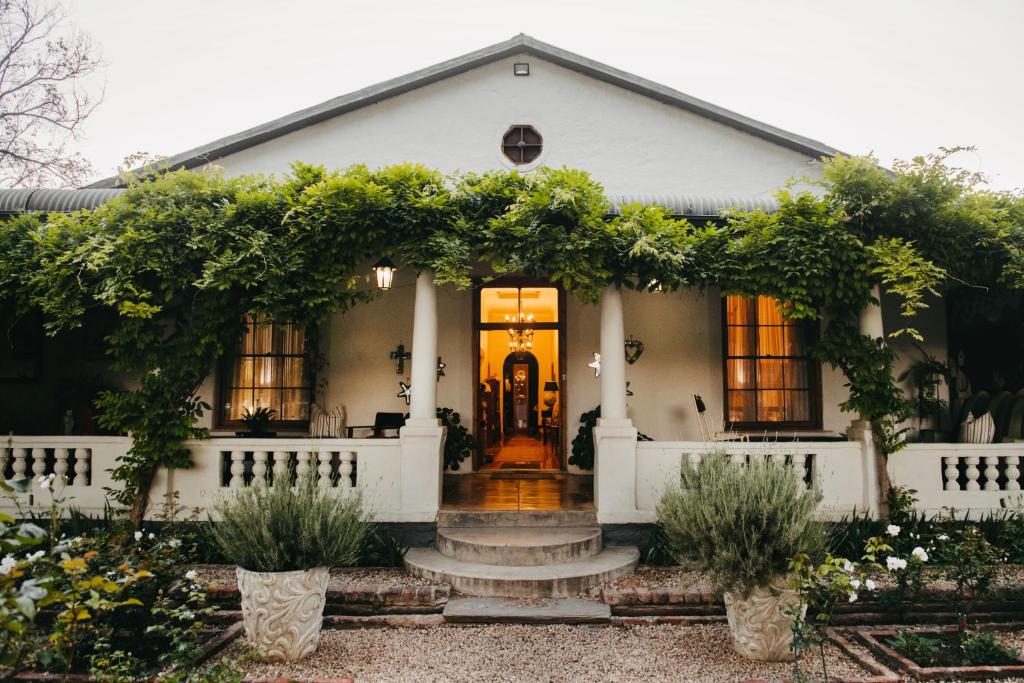
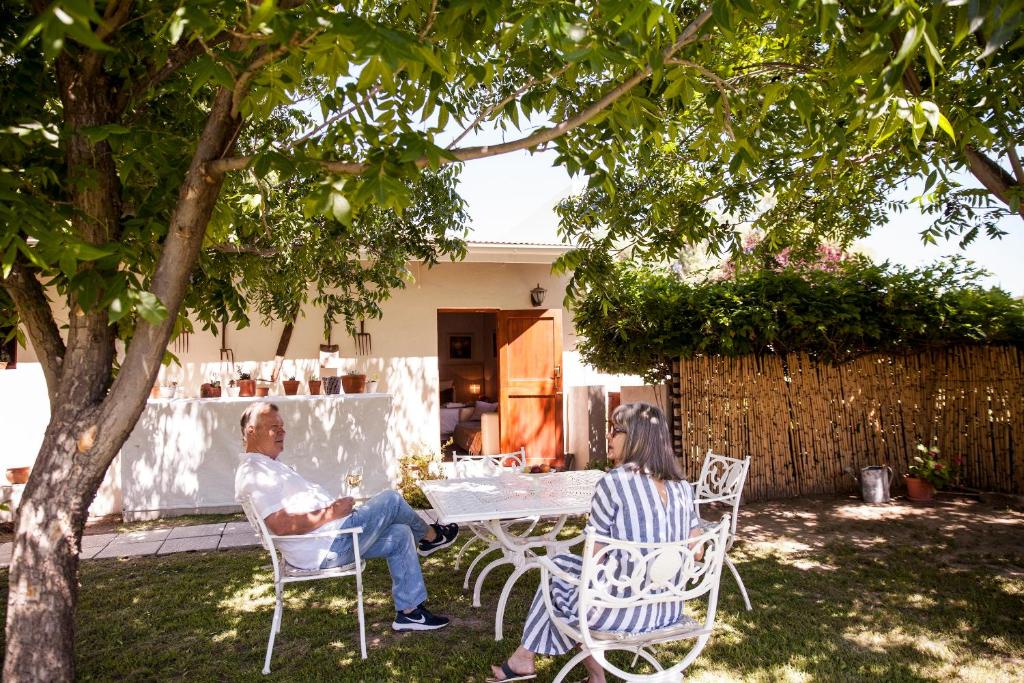
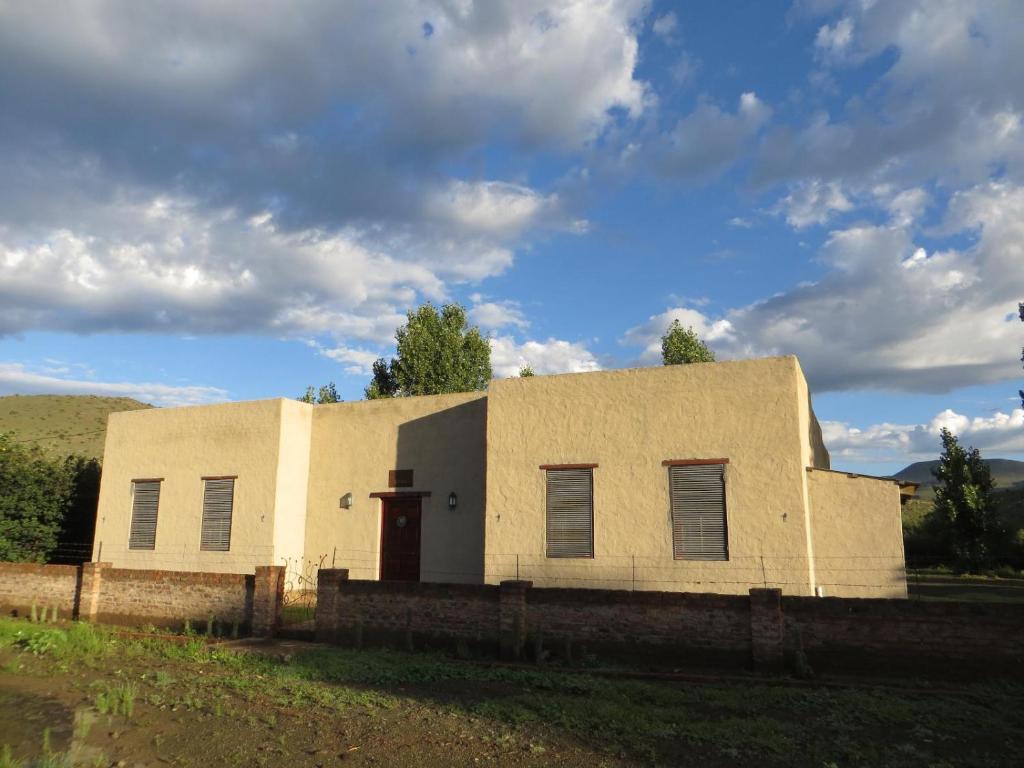
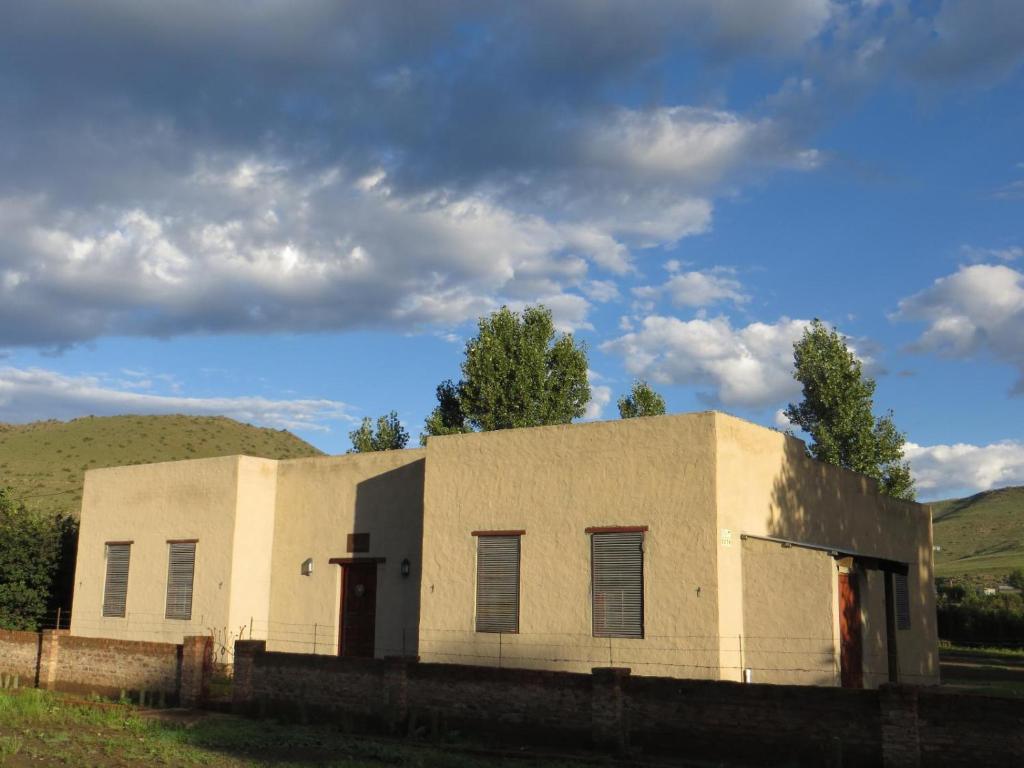
Nieu-Bethesda rewards staying after the museum visitors leave: an unhurried dinner, a garden chair and another morning among the water furrows and dusty streets. This is a compact Karoo village, so the choice is less about competing districts than the kind of room and evening you want. The central streets keep art, fossil displays and meals close together.
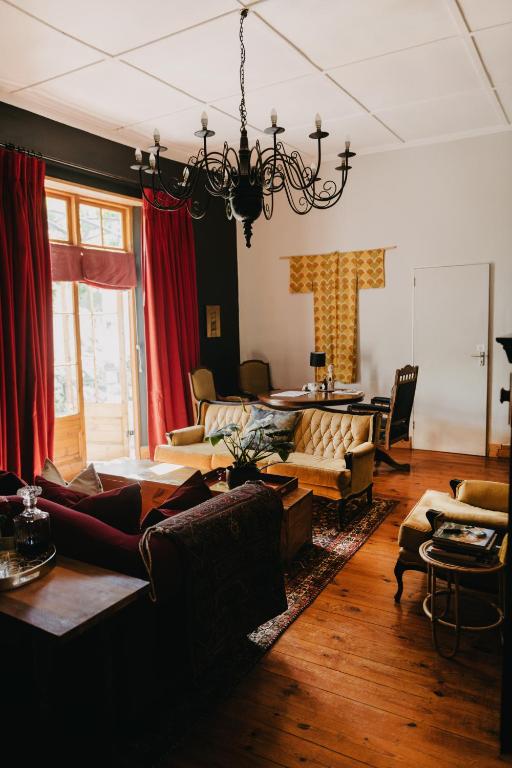
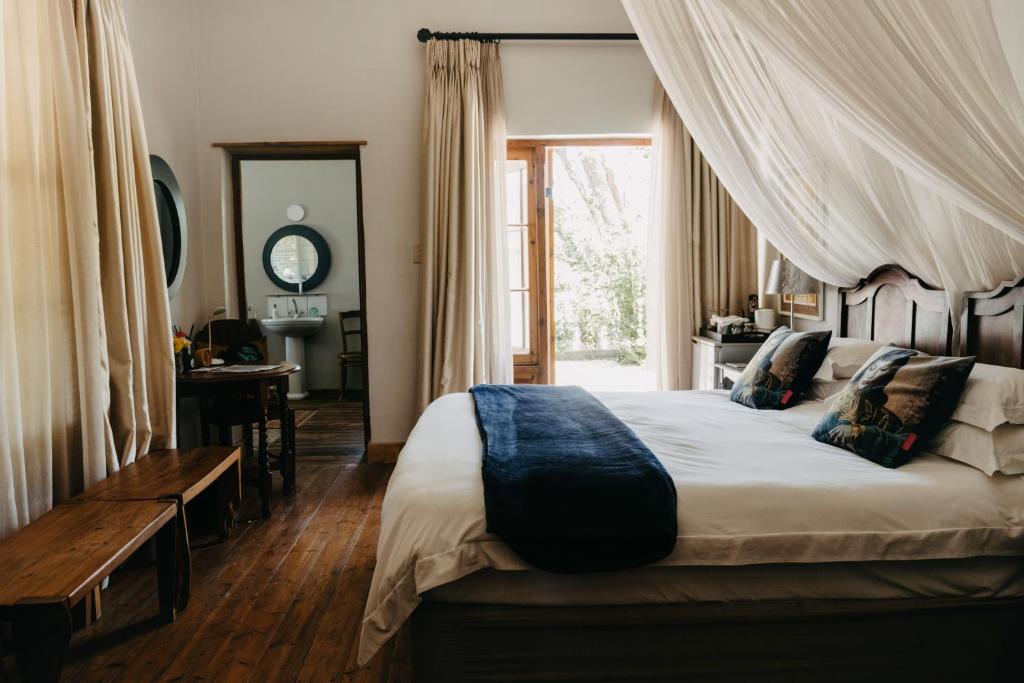
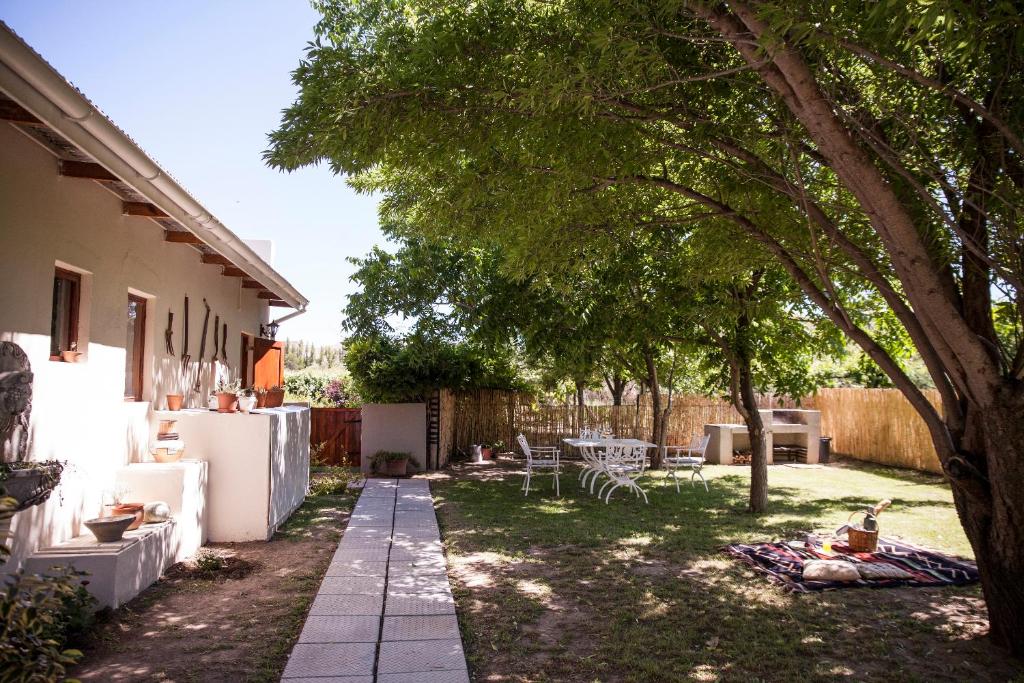
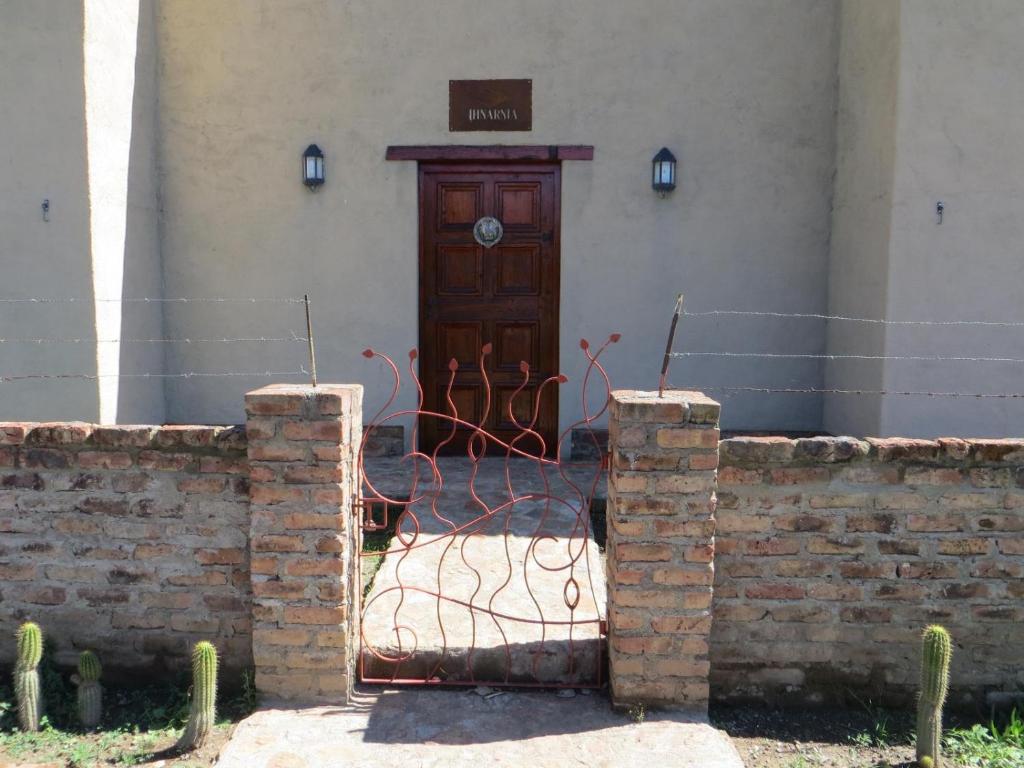
The adjoining garden lanes offer private cooking spaces and more reason to linger outside. Look beyond a mountain photograph to the actual sleeping layout, heating and dinner arrangements; a studio for two and a family cottage can create very different visits at the same address.
Common questions
How many nights should I spend in Nieu-Bethesda?
Two nights give you a full day for the Owl House, another cultural visit and a relaxed village evening. One night can work on a wider Karoo journey if you arrive early enough to enjoy the village before dinner. Choose three nights if you want time for galleries, a guided fossil outing and reading in the garden without packing each day. The value of staying is the slower rhythm, so leave space between visits rather than treating every attraction as a quick stop on the way to the next town.
Which road should I use, and where should I fly in?
Chief Dawid Stuurman International Airport in Gqeberha is a regional arrival point for a road journey. Two approaches leave the N9: local tourism recommends the tarred turn nearest Robert Sobukwe, still widely signed and searched as Graaff-Reinet; the northern alternative includes about 31 kilometres of gravel. Ask your host for current directions and conditions for the final entrance, particularly after rain. Confirm any detour with your host before following a suggested shortcut. Allow a flexible arrival window and aim to finish the approach in daylight.
Can I enjoy the village without a car?
Yes, once your arrival and departure are arranged. The central museums and places to eat are close enough for a walking-based stay, but reaching the village is a separate transport problem. Confirm a transfer and its return collection in advance; do not rely on finding an unverified scheduled bus or rideshare when you arrive. Pick a genuinely central address and ask about the surface and lighting of the route to dinner. A guesthouse further along a garden lane may still suit you, provided its distance and meal arrangements fit your needs.
Should I bring cash, fuel and groceries?
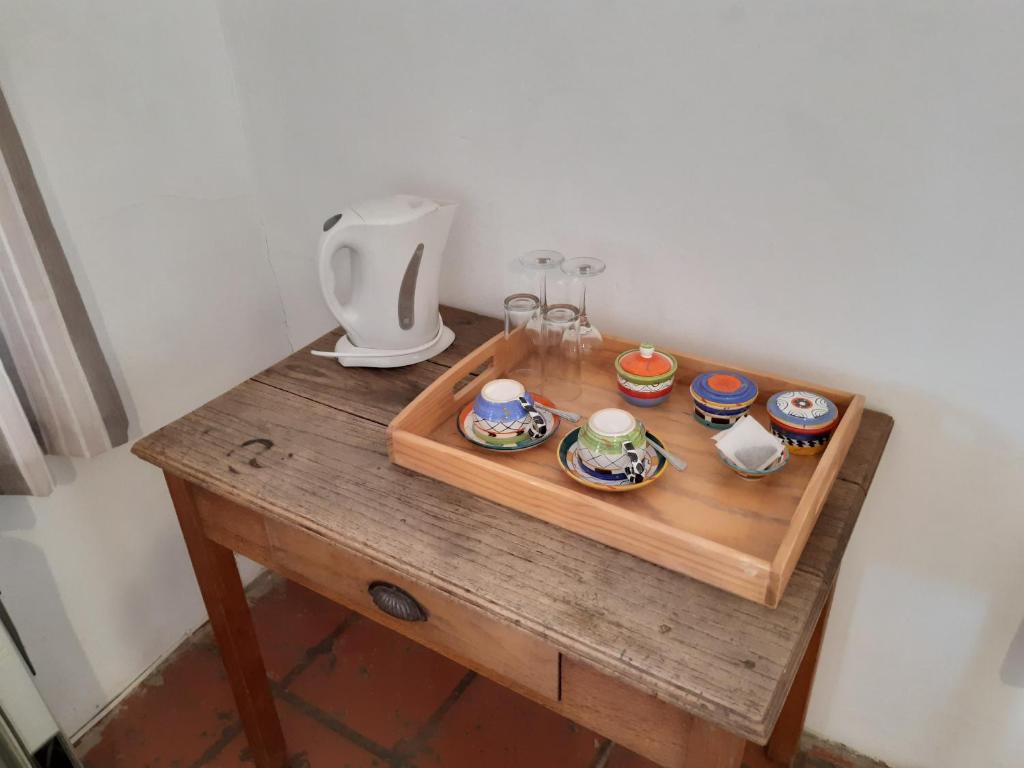
Arrive with fuel and some cash: the village has no petrol station or ATM. Most restaurants accept cards, so there is no reason to treat every payment as cash-only, but a reserve is useful. A village shop carries everyday provisions; buy any specialist food or supplies you need before the final approach. Reserve dinner, especially if you have dietary requirements or are arriving late, and confirm whether breakfast is included. For a cottage stay, check that the kitchen can cook the meal you intend to make rather than assuming a microwave and kettle form a full kitchen.
What should I see besides the Owl House?
Allow time for the Owl House itself, where Helen Martins worked with Koos Malgas to create the glass-and-cement environment around her home. The Kitching Fossil Exploration Centre adds a different perspective through Permian life, before the dinosaurs, and guided visits to the riverbed when conditions allow; book an outing and leave fossils in place. At the Bushman Heritage Museum on Muller Street, local artists explain narrative tapestries drawing on |Xam traditions. Confirm each venue's current opening and tour arrangements, and give these separate visits enough time rather than expecting one museum ticket to cover everything.
When is the best season, and what should I pack?
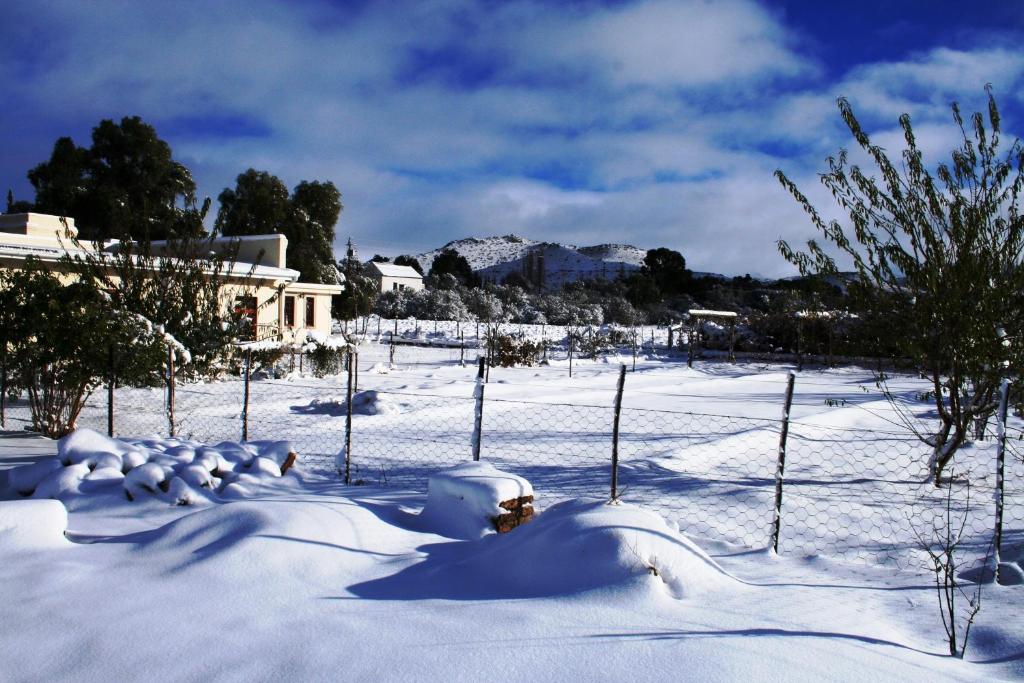
Spring and autumn are useful choices for walking around the village without planning every outing around the strongest heat or cold. Summer can be hot, while winter nights can be very cold; occasional snow may affect regional roads, but it is not something to book around as a certainty. Bring sun protection, a warm layer and shoes for uneven ground, and check the forecast before travelling. Ask how the exact room is heated or cooled. A thick wall, garden photograph or mention of a fireplace elsewhere on the property does not establish the comfort of the unit you reserve.
How should families or travellers with limited mobility choose a stay?
Start with the actual room plan and access route. A cottage advertised for four may have a separate bedroom and two living-room beds. For a studio designed for two, ask whether a young child may stay by prior arrangement and whether you need to bring a cot; some lodges do not accept younger children. Check bathroom privacy and any pool or garden edge before booking. For mobility needs, ask about parking distance, steps, shower access and the surfaces between the room and nearby museums. A compact village is not automatically step-free. Confirm the same details with the attractions, especially if you are considering an outdoor fossil visit.
Can I add a mountain hike or a quiet evening outdoors?
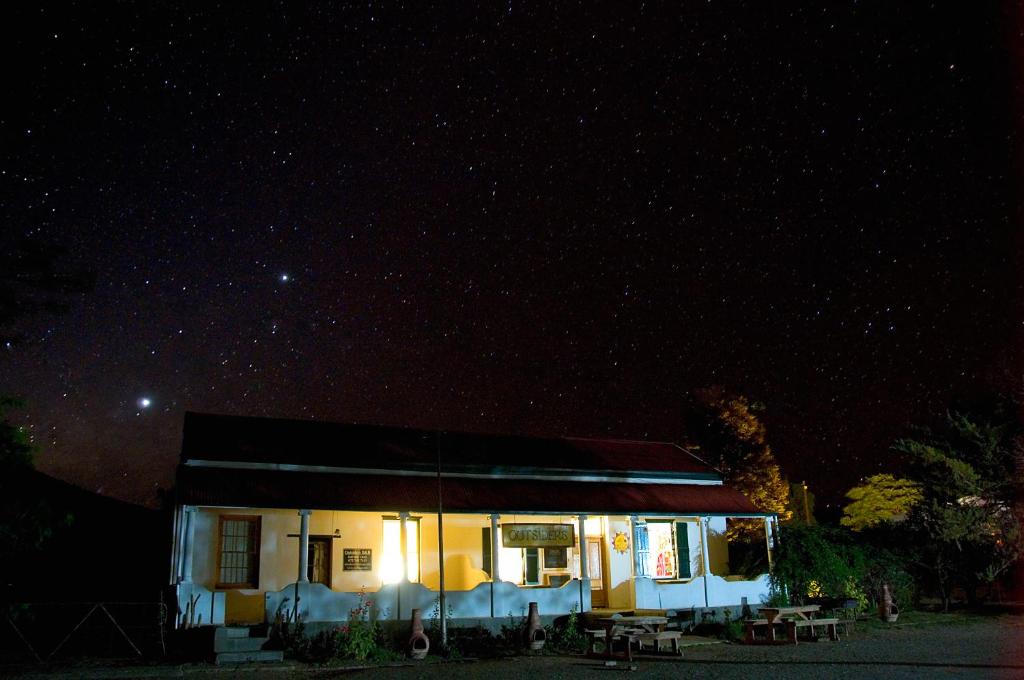
A garden evening under a clear sky needs little organisation beyond warm clothing and suitable seating, although clouds and the moon change what you can see. A Compassberg hike is a different undertaking: access crosses private land, permission is needed and local tourism recommends a guide. Arrange it separately, check weather and daylight, and do not treat the mountain as a casual extension of a village stroll. Keep a museum or garden day available if conditions change. Distant farms and multi-day walking routes also need their own transport and accommodation plans.
Prices are set by the booking site. We may earn a small fee, at no cost to you.