Countryside · Gyeongbuk, South Korea

Where to stay in Bonghwa

Clan-village hanok, a tiger forest and a slow canyon train

We are still adding hotels here. Until then, this guide shows which area suits you.

Checked

In short

  • Hanok night Baraemi village
  • Arboretum day Chunyang, by the gate
  • No car Bonghwa town

Best areas to stay in Bonghwa

01

Baraemi village and Bonghwa town

  • Quiet
  • Near sights
  • No car needed

Baraemi is the Uiseong Kim clan's village at the edge of Bonghwa-eup, where several family houses three to four centuries old take guests in ondol rooms. The town next door has the bus terminal, restaurants and a five-day market on dates ending in 2 and 7, so it is the easiest base without a car and for a loop to Dalsil village.

Keep in mind: Hanok rooms are simple, with floor bedding, thin walls and some shared bathrooms; meals are not served, so eat in town.

02

Chunyang and the Baekdudaegan Arboretum

  • Nature
  • Quiet
  • Family

A pine-forest township in the north of the county around the National Baekdudaegan Arboretum and its Baekdu tiger forest. Staying here lets you be at the gate at opening and walk the large site without rushing; the Chunyang market runs on dates ending in 4 and 9.

Keep in mind: Few stays and few shops; the arboretum is closed on Mondays, and buses from Chunyang (routes 51 and 53) are infrequent.

03

Buncheon and the canyon railway

  • Near sights
  • Family
  • Nature

A railway hamlet in the east with a year-round Santa village and the start of the V-Train canyon line to Cheoram. Best for rail fans and families, especially in the winter Santa festival.

Keep in mind: Almost nothing to stay in on the booking sites; most visitors come by car or tourist train for the day, and the V-Train does not run every day, so check Korail's timetable.
Hotels we have added so far

Tohyang Traditional House (1/3)Tohyang Traditional House (2/3)Tohyang Traditional House (3/3)
1 / 3
018.9177 reviews on Agoda

Baraemi village and Bonghwa town · Bonghwa

1. Tohyang Traditional House

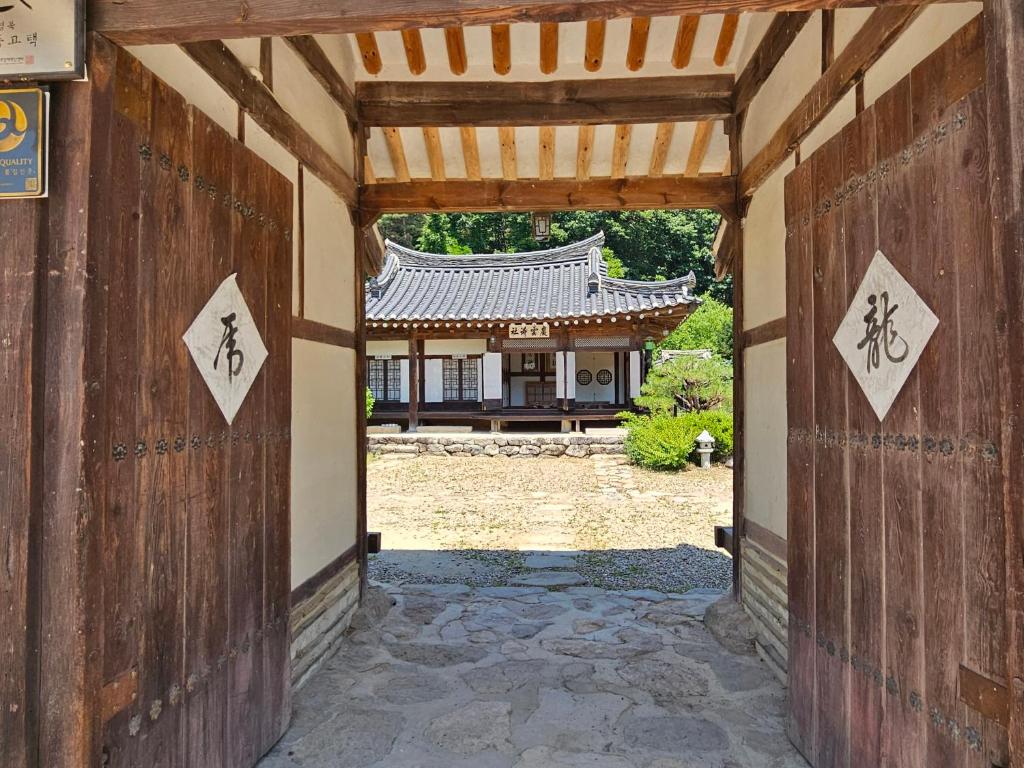
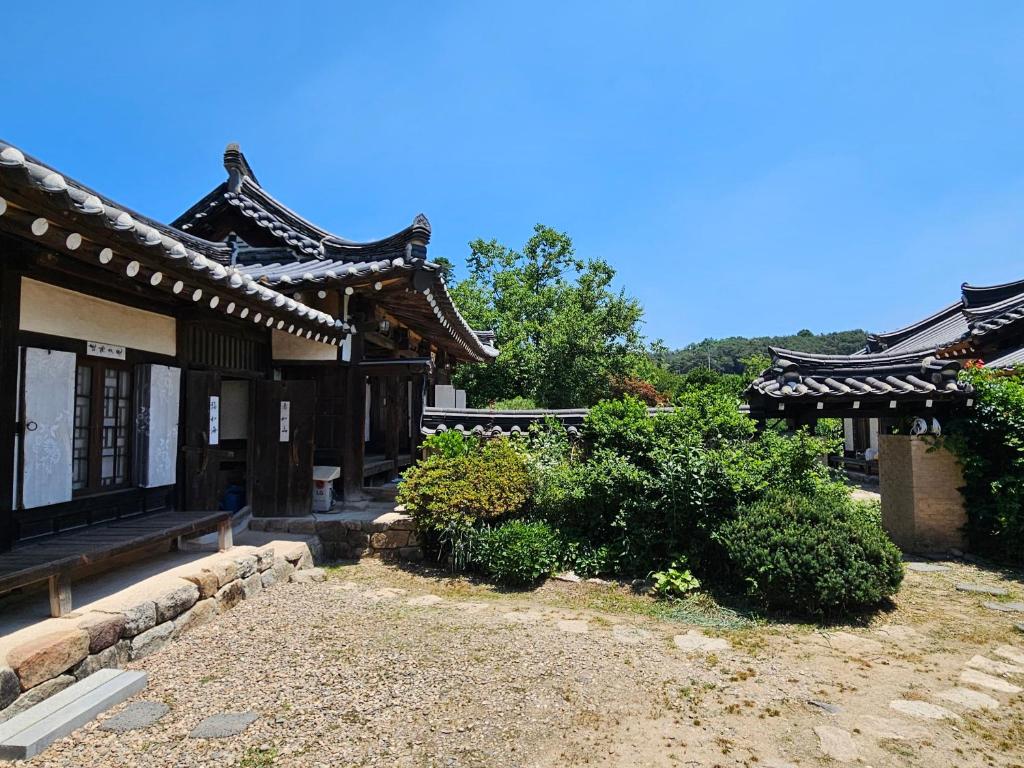
A family house in Baraemi whose main wing is believed to be over 400 years old, still lived in by descendants of the Uiseong Kim clan. Eight ondol rooms sleep up to 32, with a lotus pond, barbecue, a garden of folk games and pottery or calligraphy sessions. Guests like the host and the simple morning dumplings and apples; bedding is firm, the shower room is shared and walls are thin.

  • Family
  • Quiet

Choose your dates on the booking site.

Manhoe Gotaek (1/3)Manhoe Gotaek (2/3)Manhoe Gotaek (3/3)
1 / 3
028.648 reviews on Agoda

Baraemi village and Bonghwa town · Bonghwa

2. Manhoe Gotaek

A Baraemi house whose women's wing is over 320 years old, home to six generations of descendants of a late Joseon official. Local scholars met in its Myeongwolu pavilion in 1919 to draft an independence petition sent to the Paris Peace Conference. Six ondol rooms, some with their own bathroom, a shared kitchen and an organic farm where guests pick vegetables; rooms are small, water pressure is weak and shops are far.

  • Quiet
  • Nature

Choose your dates on the booking site.

About Bonghwa

Bonghwa is a mountain county in the far north of North Gyeongsang, known in Korea for pine mushrooms, sweetfish and old clan villages.

Its sights are spread out: the National Baekdudaegan Arboretum with its tiger forest near Chunyang, the Santa village and canyon tourist train at Buncheon in the east, Cheongnyangsan's rock peaks and sky bridge in the south, and the Kwon clan's Dalsil village with Cheongamjeong pavilion.

The best stays are centuries-old family houses in Baraemi village, on the edge of Bonghwa town, run by descendants of the Uiseong Kim clan. Pick a base by the part of the county you want to see.

Common questions

How do I get to Bonghwa from Seoul?

Direct buses leave Dong Seoul Bus Terminal a few times a day and take about two and a half hours; Seoul's Gyeongbu Express Bus Terminal has some departures too. By rail, the usual route is a train to Yeongju and then a bus or taxi on to Bonghwa or Chunyang.

When is the Baekdudaegan Arboretum open?

Tuesday to Sunday, 09:00 to 18:00 from March to October and 09:00 to 17:00 from November to February, with last entry an hour before closing. It is closed on Mondays and over New Year, Lunar New Year and Chuseok. Tigers live in a 3.8-hectare forest enclosure and are not always in view.

How does the canyon train at Buncheon work?

The V-Train runs slowly along the Nakdong River gorge between Buncheon and Cheoram, about 27.7 km, stopping at small stations on the way. Recent guides say it runs Thursday to Monday with two trips a day; book through Korail and check the current timetable.

Can I stay in a traditional house in Bonghwa?

Yes. In Baraemi village by Bonghwa town, Tohyang Gotaek and Manhoe Gotaek are family houses three to four centuries old with ondol rooms; both are on Booking.com and Agoda. Neither serves full meals, so plan dinner in town.

Do I need a car in Bonghwa?

It helps a lot. Rural bus routes were reorganised in August 2026 and run infrequently, and the arboretum, Buncheon and Cheongnyangsan lie in different corners of the county. Don't try to fit Cheongnyangsan and Buncheon into one day.

When are Bonghwa's festivals?

The sweetfish (eun-eo) festival on the Naeseongcheon stream runs in late July and early August, the pine mushroom festival in mid-October, and the Buncheon winter Santa festival from late December into February. Roads and stays fill up at these times.

Near Bonghwa

Places like Bonghwa

Prices are set by the booking site. We may earn a small fee, at no cost to you.