About Chiang Khan
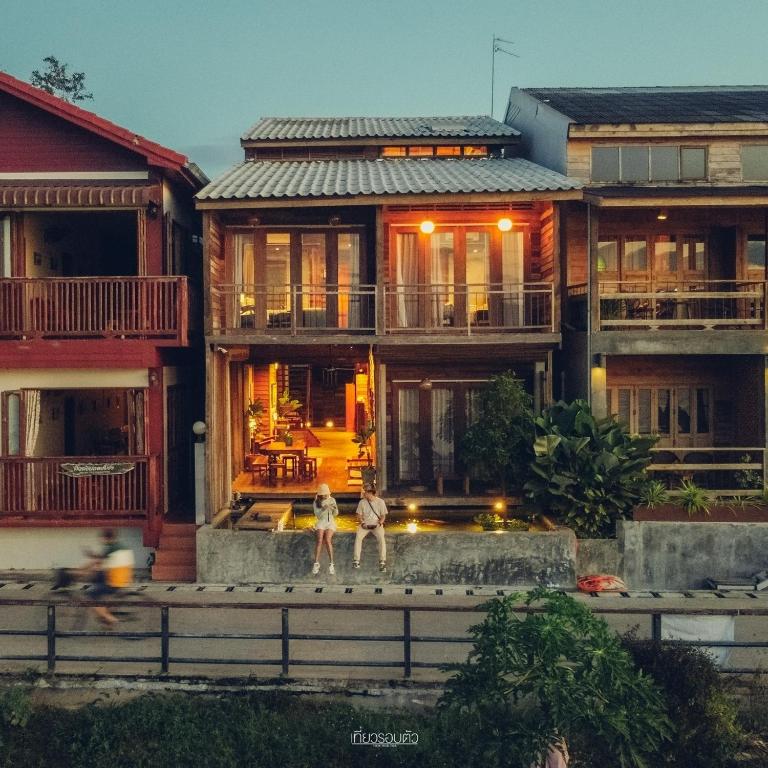
Chiang Khan is a small town in Loei province on the bank of the Mekong, with Laos on the far side. Its fame rests on one street: Chai Khong Road, a lane of century-old teak shophouses that becomes a street-food walking market every evening and, at dawn, the route for a Lao-style sticky-rice alms-giving to the town's monks.
Most visitors add a sunrise trip up Phu Thok, the hill about six kilometres away known for its sea of mist, and a bicycle ride along the riverside lane to the Kaeng Khut Khu rapids.
There is no train and no direct flight: you fly Bangkok to Loei in about an hour and continue roughly 50 kilometres by shuttle, bus or songthaew, or take a direct bus from Bangkok's Mo Chit terminal in around nine hours. The town is walkable and cycle-friendly — tuk tuks cover the rest, and motorbike rental is barely available.
November to February brings cool, misty mornings and the biggest crowds; weekends fill up all year.
Common questions
How do you get to Chiang Khan?
The usual route is a one-hour flight from Bangkok to Loei (LOE), then about an hour more by road — the AirAsia-linked shuttle van from the airport drops at hotels, and local buses and songthaews run between Loei town and Chiang Khan through the day. Several direct day and night buses also run from Bangkok's Mo Chit terminal straight to Chiang Khan, taking around nine hours. Most travellers transit in Loei, where departures are far more frequent.
What is the morning alms-giving and can visitors join?
Every dawn, monks from the town's temples walk Chai Khong Road collecting offerings, and visitors line the street to give sticky rice — a Lao-style tradition Chiang Khan is known for. Many hotels and guesthouses prepare or sell alms sets, so ask at check-in. Dress modestly, keep quiet, and stay out of the monks' path while photographing.
How do I see the sea of mist at Phu Thok?
Leave town around 5:00-5:30 for the hill about six kilometres away. Private vehicles are not allowed up the winding road: park at the base and take the local shuttle truck to the top. The mist depends on weather and is most reliable from October to December (and often in the rainy season); cool-season mornings are cold, so bring a layer. The alms-giving happens at the same time — with two mornings, do one each day.
When is the best time to visit, and how long do I need?
November to February is the comfortable peak: cool air, misty mornings and clear river views. Weekends and Thai public holidays are busy year-round — the town is a domestic-tourism favourite, so book rooms ahead. The rainy months are greener and quieter. Two days covers the walking street, alms-giving, Phu Thok sunrise, the Kaeng Khut Khu bike ride and the skywalk.
Do I need a scooter or car in Chiang Khan?
No — and scooters are barely available to rent here. The old town is made for walking, and bicycles (free at many guesthouses, cheap to rent on Chai Khong Road) cover the riverside lane to Kaeng Khut Khu. Tuk tuks handle everything else, including the Phu Thok sunrise run.
Prices are set by the booking site. We may earn a small fee, at no cost to you.