About Sukhothai
Sukhothai was the first capital of Siam in the 13th century, and its ruins — brick temples, graceful walking Buddhas and lotus ponds — form a UNESCO-listed historical park that is far calmer than Ayutthaya.
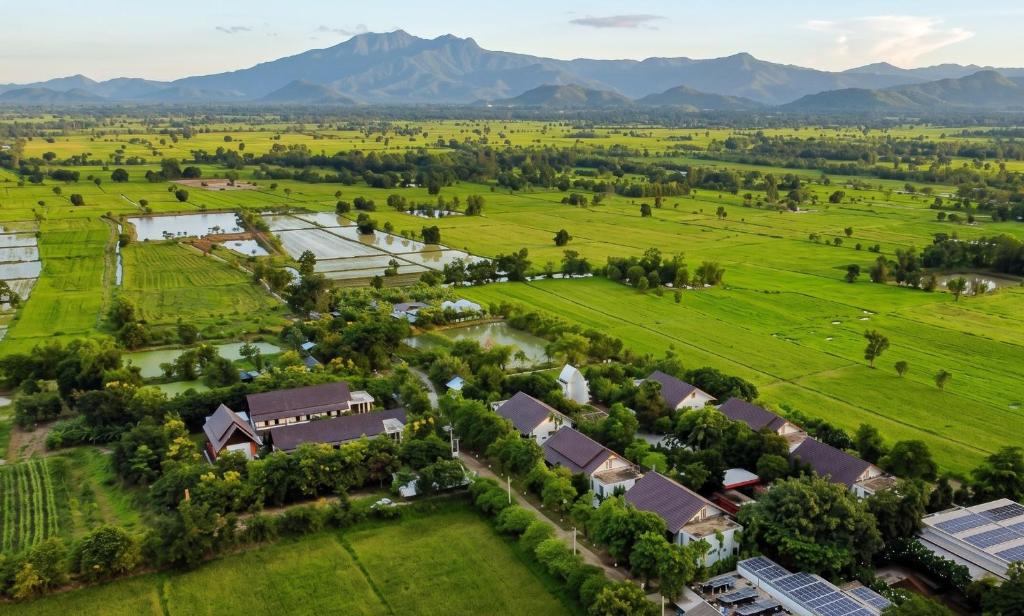
The place is really two towns: the Old City (Mueang Kao), a quiet village at the park's gate with guesthouses, small resorts and a night market, and New Sukhothai, the modern riverside town 12 km east with the bus terminal and most services.
The park itself is flat and made for bicycles; cars are kept out and the central, north and west zones hold the famous temples, from Wat Mahathat to the giant seated Buddha of Wat Si Chum. Getting here takes effort — a 6-7 hour bus from Bangkok, a short Bangkok Airways flight, or a train to Phitsanulok plus an hour by local bus — which is exactly why the park stays peaceful.
Come in November if you can: Sukhothai is the birthplace of Loy Krathong, and the festival among the illuminated ruins is the most beautiful in Thailand.
Common questions
Old City or New Sukhothai — where should I stay?
The Old City (Mueang Kao) for almost everyone: you sleep beside the historical park, walk or cycle to the gate and reach the temples at sunrise, with a night market and enough restaurants for a couple of evenings. New Sukhothai, 12 km east, has the bus terminal, banks and cheaper rooms, but every park visit costs a 20-25 minute songthaew or tuk-tuk ride. Buses to Bangkok and Chiang Mai can also pick up in the Old City, so staying by the ruins rarely complicates onward travel.
How do I get to Sukhothai from Bangkok?
Three options. The classic is a direct bus from Bangkok's Mo Chit terminal, roughly 6-7 hours, with some departures continuing to the Old City side near the park. Fastest is Bangkok Airways' direct flight to Sukhothai Airport, about 1 hour 20 minutes, then a 30-50 minute transfer. The rail option is a train to Phitsanulok (about 4-7 hours depending on the service), then an hourly local bus or minivan for the last 60 km.
When is the best time to visit Sukhothai?
November to February brings the coolest, driest weather and the best cycling conditions. The unmissable date is Loy Krathong in November — the festival of lights was born in Sukhothai, and for over a week around the full moon the historical park fills with candles, floating krathongs and nightly light-and-sound shows among the ruins. Book Old City rooms well ahead for those dates. March to May is seriously hot, and June to October sees the most rain.
How do I get around the historical park?
By bicycle: the park is flat, shaded in parts and closed to cars, and rental shops by the gate and most guesthouses provide bikes. Electric golf carts can be hired for those avoiding the midday heat. The park is divided into zones — the central zone holds Wat Mahathat and the museum, while Wat Si Chum's giant Buddha is in the north zone and Wat Saphan Hin sits on a hill in the west — each with its own entry ticket. Go at opening time for empty temples and soft light, rest through midday, and return for late afternoon.
How many nights should I spend in Sukhothai?
Two nights is ideal. Day one for the park's central, north and west zones at sunrise and late afternoon; day two for the Ramkhamhaeng National Museum, the old town's temples and markets, or a trip 60 km north to Si Satchanalai, the quieter sister city of the same kingdom that many visitors rate even more highly for its forest setting. One night works only if you are organised and take an early bus in and a late one out.
Prices are set by the booking site. We may earn a small fee, at no cost to you.