About Astoria
Astoria sits where the Columbia River meets the Pacific, and its history as a busy port is visible in everyday details: pilings along the waterfront, working ships on the channel, old canneries and steep streets lined with nineteenth-century houses. It is a compact town for a weekend, but the hills and long river frontage matter when picking a hotel.
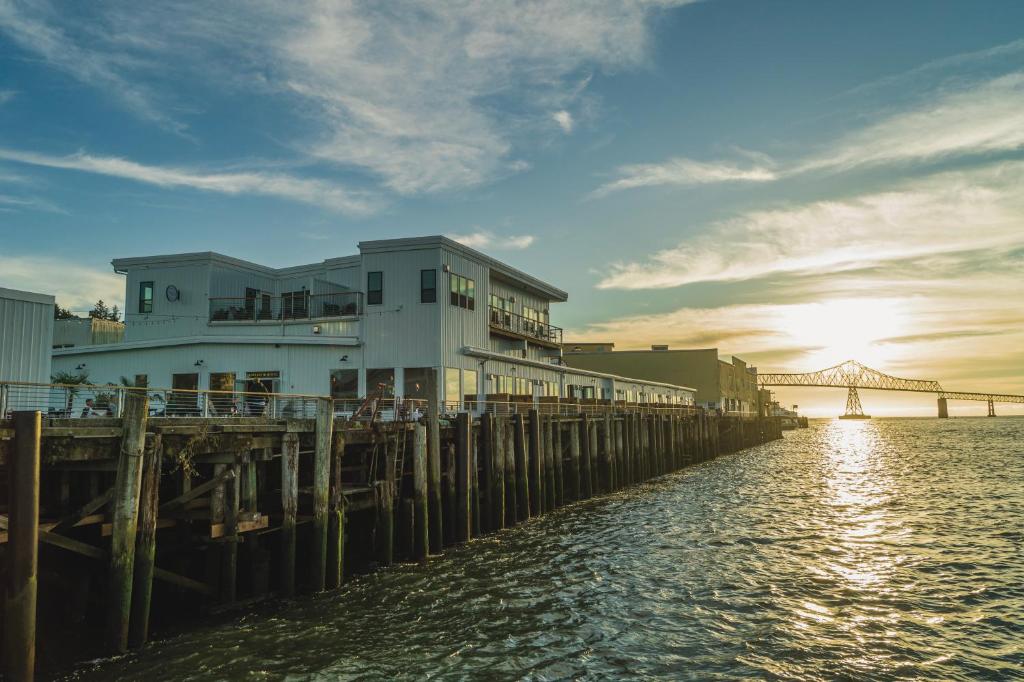
The commercial centre climbs south from the waterfront. Around 12th Street you can walk to cafés, the Liberty Theatre, the Oregon Film Museum and Flavel House, then come back after dinner without driving. Down by 9th Street, Bowline Hotel puts the river itself at the centre of the stay, while still being near downtown.
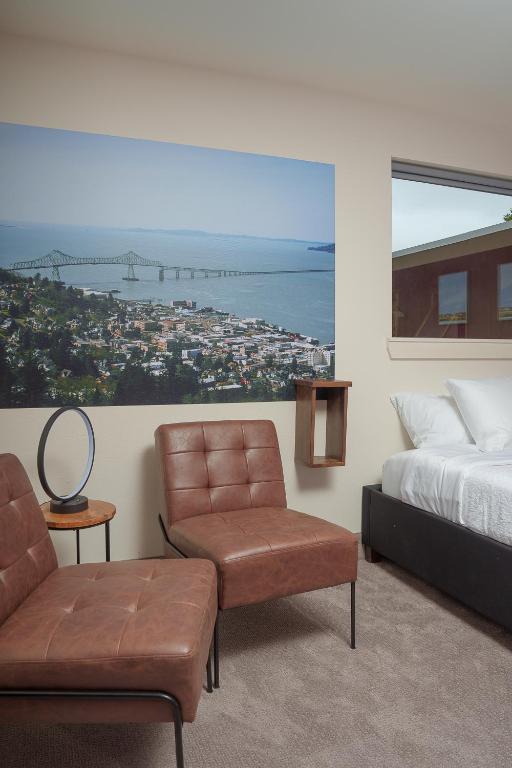
East around 15th Street, the Columbia River Maritime Museum, Fort George Brewery and the old Fort Astoria area are close together. To the west, hotels on West Marine Drive and near the Astoria–Megler Bridge offer a more open view of the crossing, though they are less embedded in the narrow streets of the historic core.
The Astoria Riverwalk extends for more than five miles alongside the waterfront and is a good way to connect several sights without taking the steep streets. A restored riverfront trolley sometimes runs along part of the route, but it is weather-dependent and has no fixed, guaranteed timetable; treat it as an extra, not your main transportation plan.
You can arrive from Portland without renting a car on intercity buses such as NorthWest POINT, but the trip takes roughly three hours and visiting Fort Stevens or the beaches farther south requires another connection. Astoria is often wet and breezy, even when other Oregon towns are warm.
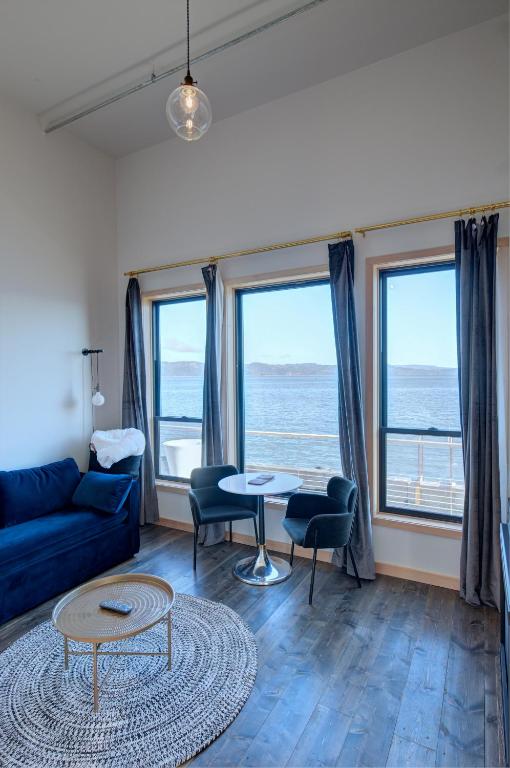
Pack for rain, allow time for the Columbia River Maritime Museum, and do not assume that a room marketed as 'riverfront' automatically has an unobstructed river view.
Common questions
Can I visit Astoria without renting a car?
Yes, especially for a downtown and museum-focused stay. NorthWest POINT and other intercity services connect Portland with Astoria in roughly three hours; the downtown bus centre is at Marine Drive and 9th Street. Walking, local buses and a bicycle cover many sights, but Fort Stevens and farther beaches require planning or a car.
Does the Astoria Riverfront Trolley run all year?
Do not count on it as a regular transit line. The restored trolley operates when volunteers and weather permit, with no fixed timetable guaranteed. The paved Riverwalk offers a more dependable way to follow the Columbia for more than five miles on foot or bicycle.
Is Astoria on the ocean or a river?
The town stands on the south bank of the Columbia River near its mouth at the Pacific Ocean. You see ships, river traffic and the Astoria–Megler Bridge from the waterfront. For broad sandy Pacific beaches, plan a separate trip toward Fort Stevens, Seaside or farther down the coast.
How many nights do I need in Astoria?
Two nights are a comfortable start. On one day visit the Columbia River Maritime Museum and downtown historic blocks, with time for the Oregon Film Museum or Flavel House. On the other, walk the riverfront, climb to the Astoria Column if conditions allow, or drive to Fort Stevens.
Where can I stay for the best bridge views?
The west waterfront around the Astoria–Megler Bridge, including West Marine Drive, has the most direct proximity. Holiday Inn Express and other properties have different city- and river-facing rooms. Even here, a bridge panorama is not guaranteed unless your exact room description confirms it.
Will the hilltop Astoria Column be an easy walk from downtown?
It sits above town, and the route climbs steep streets rather than following the level riverwalk. The column itself has a spiral staircase of 164 steps, so allow extra time, wear comfortable shoes and expect that fog or rain may limit the view. Driving or arranging a short lift can make the outing easier.
Prices are set by the booking site. We may earn a small fee, at no cost to you.