About Salazie
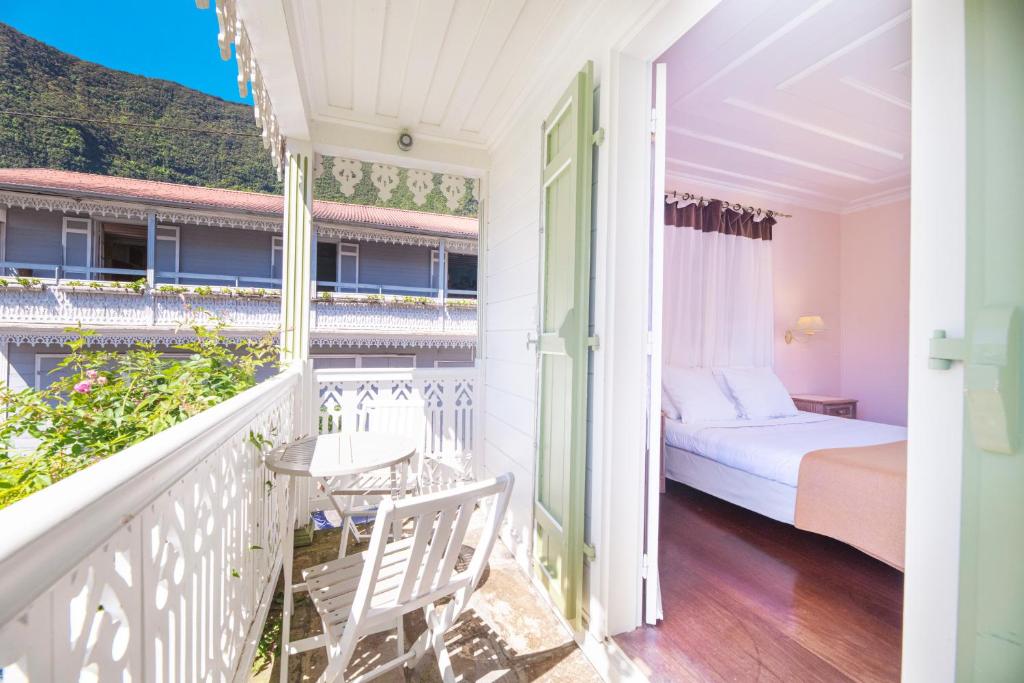
Salazie is a whole mountain cirque, with villages on different road branches and waterfalls running down its green walls. Enter from Saint-André through the Rivière du Mât gorge, then choose where you want the evening to happen. Hell-Bourg brings Creole houses, a historic garden and places to eat into a compact village.
Mare à Vieille Place suits a stay built around mountain views and time at the accommodation. Grand-Îlet puts you on the approach to the Col des Bœufs and walking routes into Mafate. Sleeping here gives you time for an early start, a chouchou lunch and a slower afternoon when clouds arrive.
Leave room for changing weather: the landscape that makes Salazie so lush also makes road and trail conditions part of planning a stay.
Common questions
How many nights should I spend in Salazie?
Two nights make a balanced first visit: arrive through the gorge, settle into a village and keep a full day for a walk or cultural visits. Three nights give you more flexibility for a substantial hike and a quieter day if the weather changes. Choose one base according to your main outing rather than changing rooms between neighbouring villages. An overnight inside Mafate needs its own accommodation reservation and luggage plan. If you leave bags behind during a trek, agree storage and collection with your host beforehand.
Can I visit without renting a car?
Yes, with a central address and a timetable-based plan. Estival line 83 links Saint-André with Hell-Bourg, while line 82 serves Mare à Vieille Place and Grand-Îlet. Published journeys from Saint-André take about fifty minutes to Hell-Bourg Monday to Saturday; on Sundays and holidays, allow about sixty to sixty-five minutes including a change at Salazie mairie. Grand-Îlet takes about seventy minutes. Each village has six connections Monday to Saturday and three on Sundays and holidays in the published schedules. Check the current last bus and the walk to your room; an early hike or late dinner elsewhere may need an arranged transfer.
How do I arrive from Roland Garros Airport?
The road approach follows the RN2 toward Saint-André, then the RD48 into Salazie. Continue on the Hell-Bourg branch or take the RD52 toward Mare à Vieille Place and Grand-Îlet according to the accommodation address. For public transport, plan the airport-to-Saint-André leg separately from the mountain bus. A prearranged transfer is useful for a late flight or an isolated cottage. The department announced rehabilitation work on the RD48 and RD52 in November 2026; check current traffic notices and leave extra time, especially after heavy rain.
Can I use Salazie as a base for Mafate?
Yes. Grand-Îlet is convenient for reaching the Col des Bœufs approach, but Mafate has no road network and the journey continues on foot. Tourism information lists the Col des Bœufs–La Nouvelle return walk at about eleven kilometres and four and a half hours, before adding rests and your transfer. Treat that as a proper hiking day, including the climb back out. Check the route’s current permission and forecast, and reserve a gîte if you want to sleep inside Mafate. Organize collection from the trailhead as well as getting there.
What should I know about Bélouve and Trou de Fer?
The footpath from Hell-Bourg to Bélouve climbs roughly 520 metres, so it needs walking fitness and suitable shoes; the national park discourages it in rain because the ground can be slippery. Do not add Trou de Fer casually to a short village walk. The prefectural order of 5 November 2026 already closes the Trou de Fer section from the Bélouve lodge to the Fleurs Jaunes forest road. Separately, at the November 2026 check, ONF decision 34 scheduled the Trou de Fer path to close from 23 November to 3 December inclusive, replacing the earlier dates. Consult ONF’s live map and notices for your exact route: permissions elsewhere can differ, and a scheduled reopening is not a weather guarantee.
What works for a gentler day?
Book a guided visit to Maison Folio for its Creole house and garden, then leave time for lunch in Hell-Bourg. The tourism office’s double loop at Mare à Poule d’Eau covers about 2.4 kilometres in an hour and includes picnic areas, although surfaces can be slippery after rain. Waterfalls such as the Voile de la Mariée are a reason to enjoy the scenery, not to assume bathing is permitted. In November 2026, the tourism office listed Maison Morange’s music museum as temporarily closed for works; confirm reopening before counting on an indoor visit.
When should I come, and what should I pack?
Météo-France places the longer dry season between May and November and the wet season mainly between January and March; April and December vary. Eastern Réunion can still be wet during the drier months. Plan walking mornings around the local forecast and keep an alternative for low cloud or rain. Bring warm layers for mountain evenings, waterproof clothing and shoes with grip. Confirm heating in the room or pool if that matters to you. A change of clothes is useful when several damp walking days leave little drying time.
What should families and self-catering travellers check?
Check the exact room’s age policy and beds: some cottages welcome adults only, and a family room does not automatically accommodate an infant. Establish whether you have a private kitchen, a shared meal-preparation area or simply a kettle and fridge. Reserve a guesthouse dinner in advance and ask about early breakfast when hiking. Local chouchou, or chayote, appears in gratins and curries, while its tender shoots are cooked as brèdes. Restaurant opening nights vary, so arrange the first evening’s food before taking a secluded room, and discuss dietary needs directly.
Prices are set by the booking site. We may earn a small fee, at no cost to you.