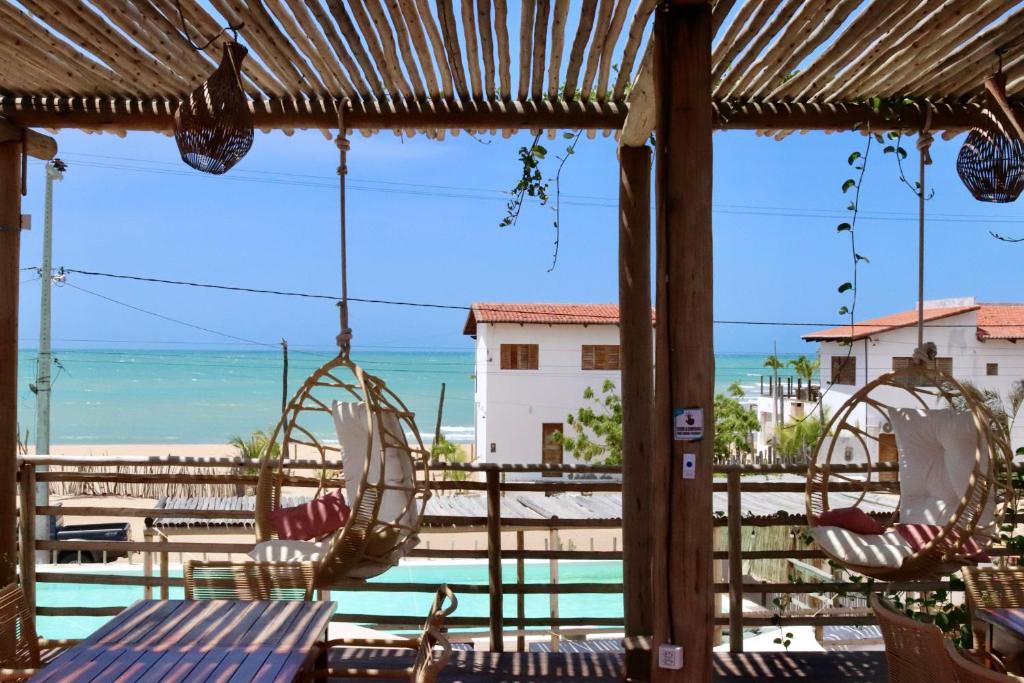
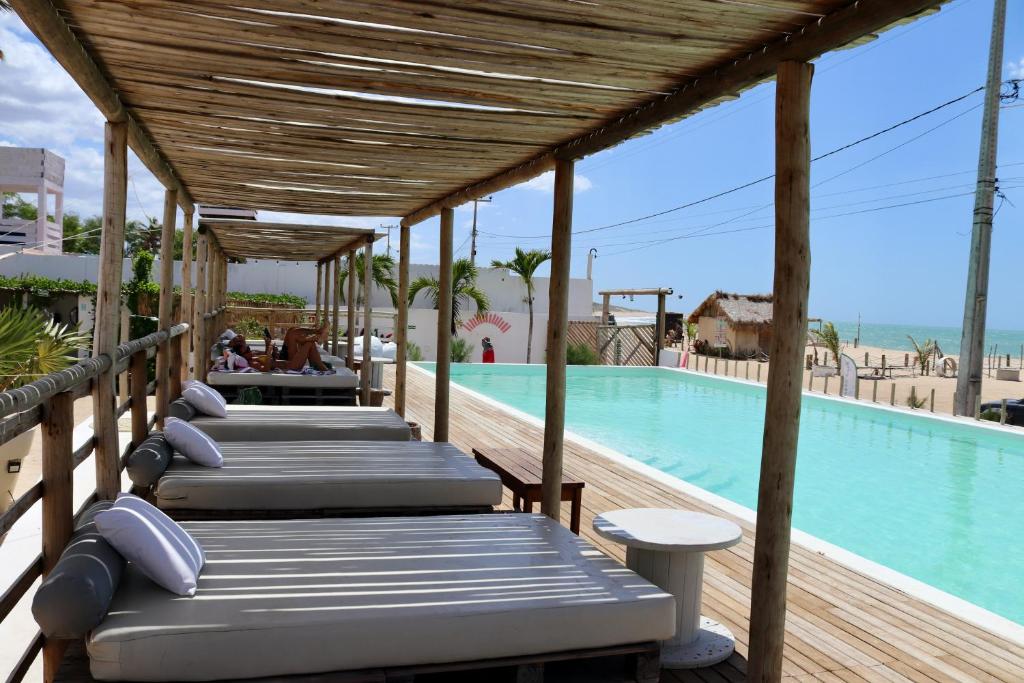
About Galinhos
Galinhos makes more sense as a slow coastal stay than as a beach to tick off between long drives. You leave the ordinary road network at Pratagil, cross a saltwater channel, and arrive in a village where the estuary and Atlantic shore are close together but offer different places to sleep.
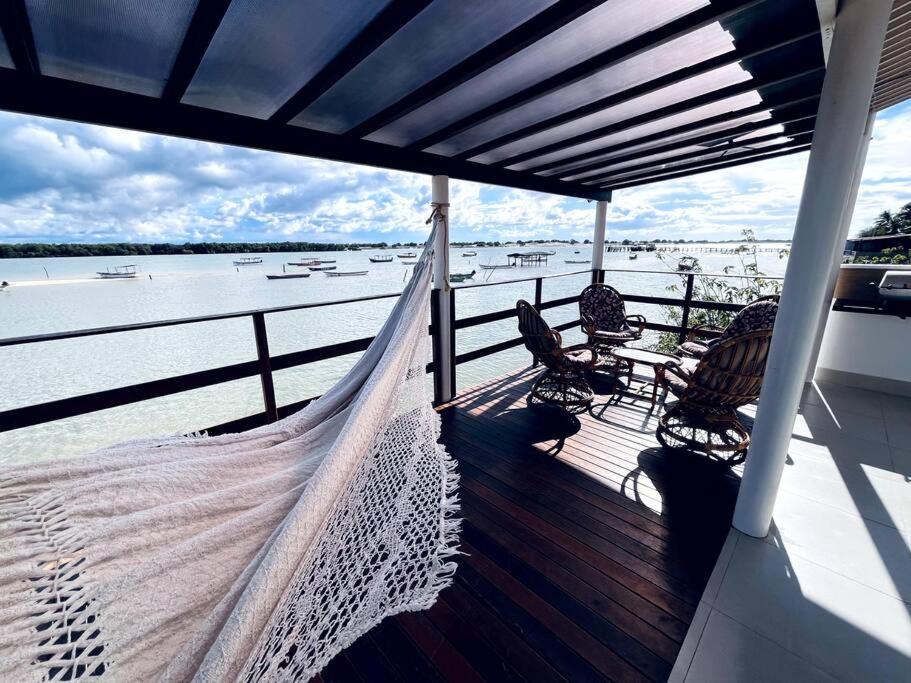
The river side has small pousadas near the landing pier; the ocean side puts you beside the broad beach and kite activity. Further along the same peninsula, Galos offers a quieter village setting that needs its own arrival arrangements.
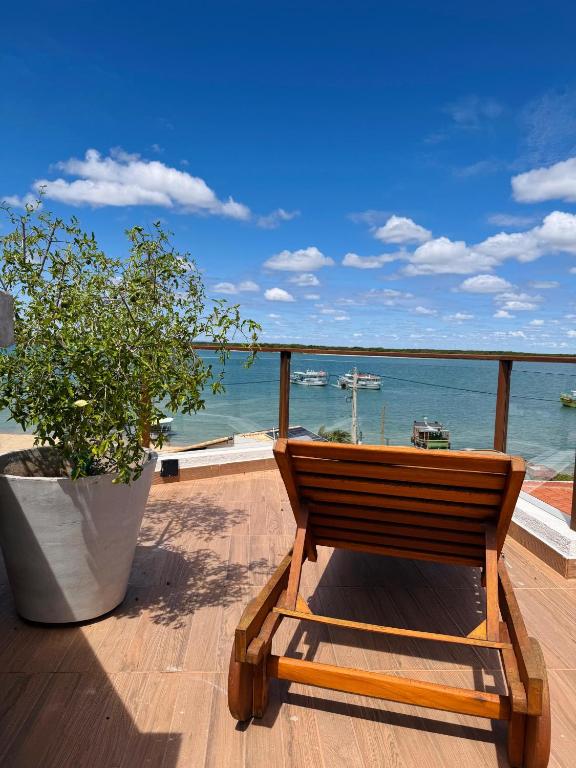
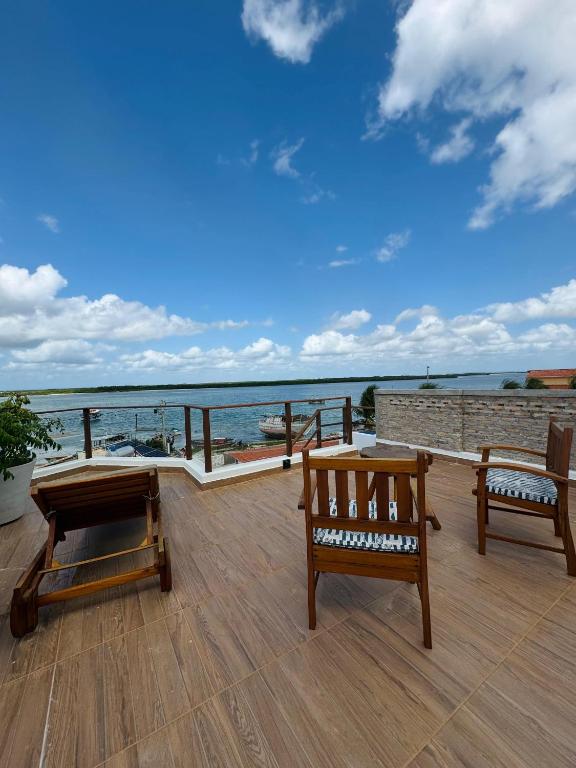
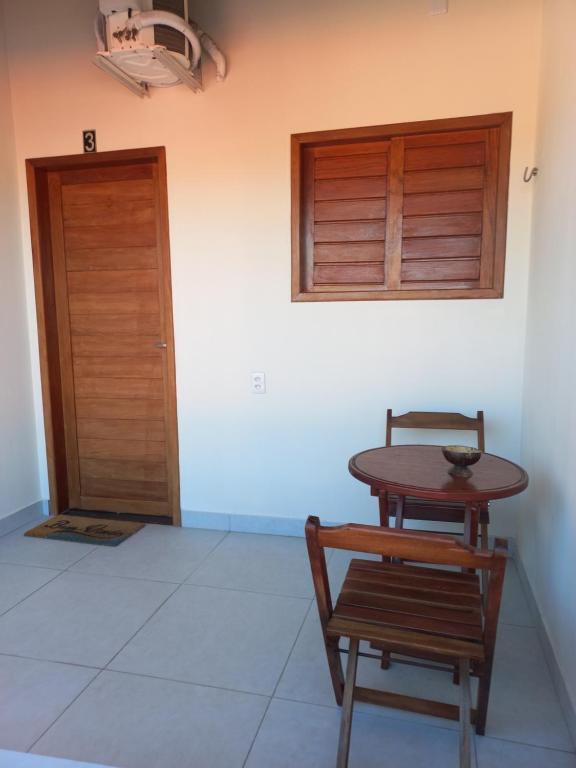
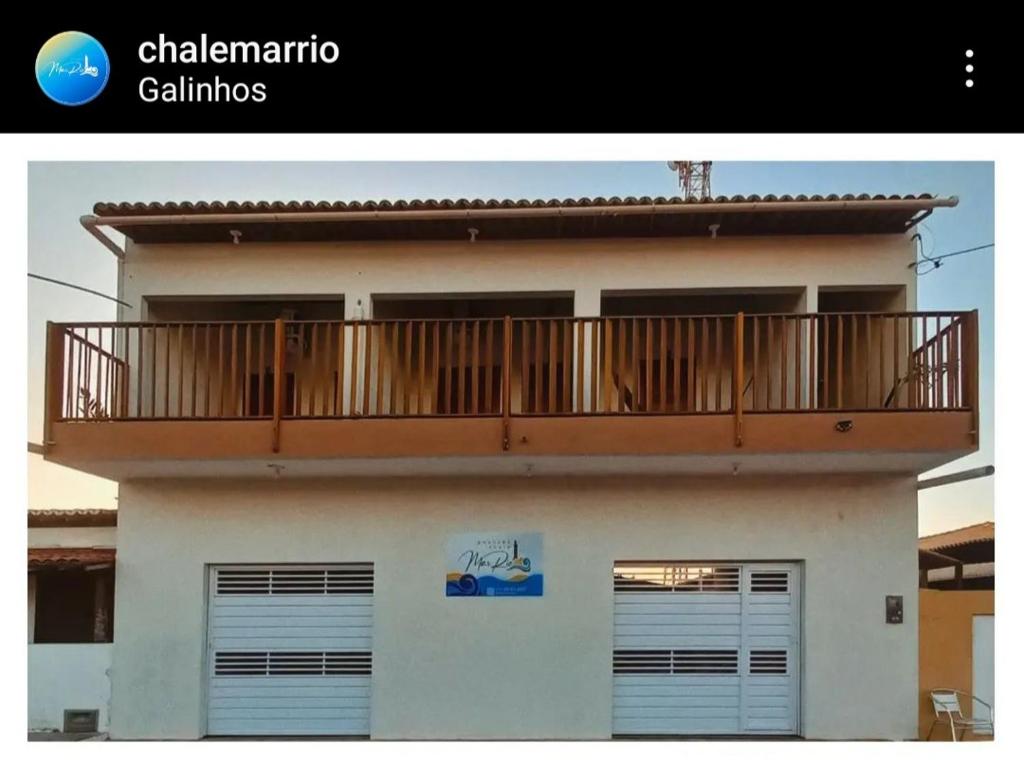
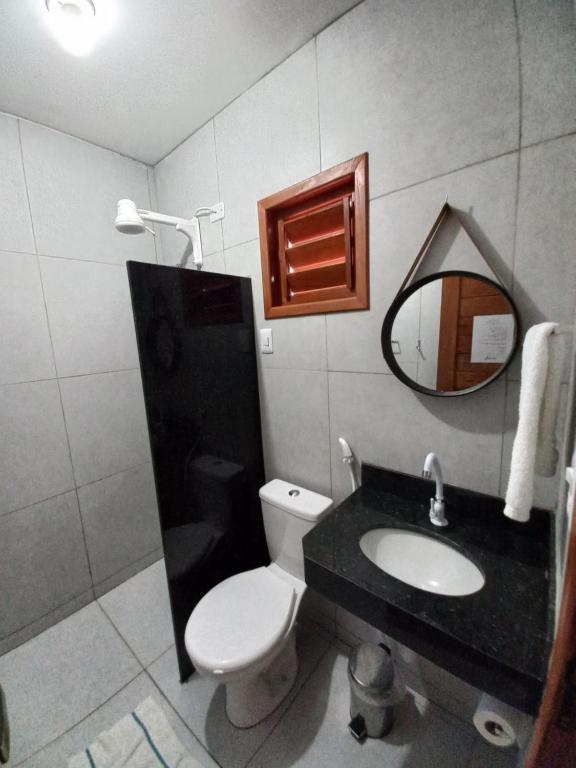
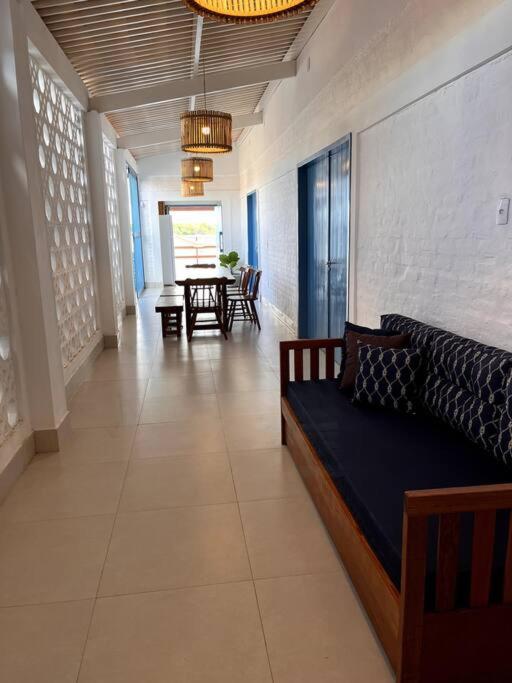
Choose the shore and the daily routine first, then compare rooms: a decorative chalet, a balcony over the estuary and a whole family house are very different stays.
Common questions
How many nights should I spend in Galinhos?
Three nights make a useful first stay: one day for the estuary and dunes, another for the beach and lighthouse, with time around them for the boat arrival and unhurried meals. Four or more nights work better for kite lessons or a holiday built around the accommodation. Day excursions from Natal exist, but an overnight stay lets you enjoy the village after the excursion groups leave. Keep Galinhos and Galos within the same peninsula plan rather than treating them as two separate destinations to collect.
How do I get here from Natal, and can I bring a normal car?
Natal Airport is the usual starting point. Local accommodation providers allow about two and a half hours by road to Pratagil, mainly via the BR-406 and then the RN-402. Leave a normal car at the mainland parking area and take the boat across; the crossing to Galinhos is roughly ten minutes, before waiting, loading and the final transfer to your room. Arrange early or late arrivals with your host, especially for Galos. A prearranged 4x4 or buggy route across the sands is a separate service, not a reason to drive an ordinary rental car into the dunes.
Should I choose Galinhos village or Galos?
Galinhos is the easier first base when you want to walk between meals, the arrival pier and the two shores. Galos is further along the peninsula and makes more sense for a quieter stay with a chosen pousada or house, local meals and organised outings. Confirm that the boat or transfer goes to Galos itself rather than leaving you at the Galinhos pier. For a whole-house stay, arrange access with the host and buy what you need for the kitchen before the final crossing; do not assume the services of a hotel.
When is a good time for a kite-focused trip?
Start by discussing July to January with a local school or your accommodation: a current local operator describes this as the main stronger-wind period. Other specialist providers extend their preferred Galinhos season into March, and the best shore or launch can change with wind direction and month. These calendars describe different spots rather than a promise for every day. Book several nights if riding is important, explain your level before choosing dates, and check the current forecast and lesson availability rather than copying another beach’s season.
Can beginners kite from any beachfront hotel?
No. Arrange instruction and ask where the lesson will actually take place, how you reach that launch and what assistance is provided. The local sports guide notes substantial tidal variation, fishing boats and scattered rocks or coral; higher water can be choppier, while low water exposes flatter areas. It specifically warns about offshore wind in the bay behind the village, which can carry riders toward the mangroves. A calm-looking estuary and a room by the water are not enough to choose a launch. Keep swimming and children away from kite lines and follow the instructor’s choice of spot.
What is worth doing without kitesurfing?
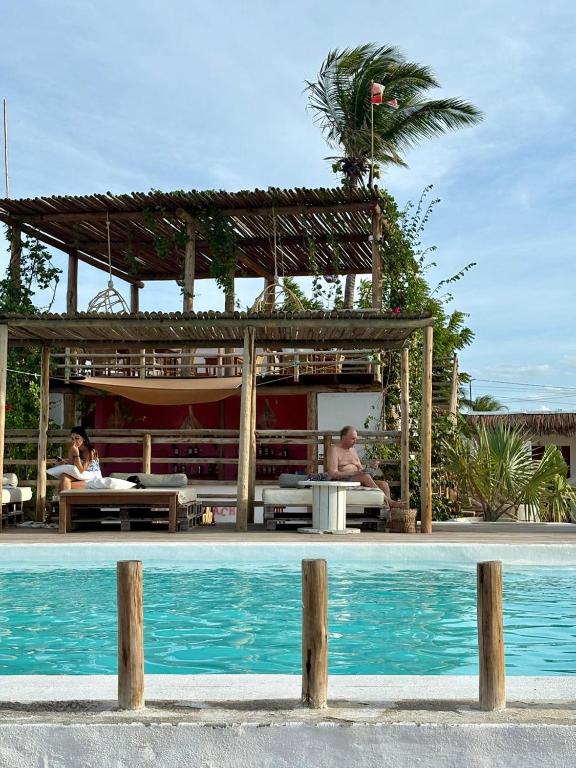
A canoe or boat outing can combine mangrove channels, the saltworks landscape and the dunes around Capim and Galos. Book with a local organiser and agree on boarding, stops, meals and the return, since not every excursion includes the same route. The lighthouse beach is another rewarding outing, especially around sunset, and the village is pleasant to explore on foot. Buggy excursions can be arranged through local operators or the association. Choose the pace you want: a long boat outing, a beach walk and an afternoon by the pool do not all need to fit into the same day.
Does Galinhos suit families or travellers with limited mobility?
It can, with accommodation and transfers chosen carefully. Families should compare actual bed layouts, shade, pool facilities and where meals are served; a three-bedroom house offers a different routine from a double room with no extra bed available. Sandy lanes, small-boat boarding and upper-floor rooms can be more important than the distance shown on a map. Describe any mobility needs to the host and boat organiser before booking, asking about steps, assistance and the complete route to the room. Do not assume that a beachfront label means easy access or a sheltered, supervised swimming place.
What should I know about water and packing?
Ask the property how it supplies drinking water and what to expect from the shower. Brackish bathing water is a feature of some local stays; one established pousada explains that it offers a final mineral-water rinse, but arrangements vary between properties. Hot water, cots and equipment storage should also be checked for the actual room. Pack essentials before the crossing, keep drinking water and sun protection accessible, and use luggage you can manage between the vehicle, boat and sandy paths. These practical details matter more here than a long list of in-room extras.
Prices are set by the booking site. We may earn a small fee, at no cost to you.